- He explained that Nigeria’s future defence capability would be built through homegrown innovation
- He recalled that DICON was established to drive local defence manufacturing
- He cited figures from the National Bureau of Statistics to highlight the urgency of local manufacturing
The Federal Government has announced plans to halt the importation of defence and security equipment, revealing that all required assets will be produced locally within the next two to five years.
Eko Hot Blog gathered that the Minister of State for Defence, Bello Matawalle, made this known on Thursday in Abuja during the unveiling of the DICON X-Shield light tactical armoured vehicle alongside a range of locally manufactured civilian armoured vehicles.
EDITOR’S PICK
- ADC Requests INEC Postpone FCT Area Council Elections
- Tope Alabi Welcomes Grandchild
- CBN to Introduce New Policy to Regulate Debit Card Issuance, ATM Operations
Represented at the event by the Director-General of the Defence Industries Corporation of Nigeria (DICON), Major General Babatunde Alaya, Matawalle said the current drive toward indigenous defence production is only the beginning of a broader national strategy.
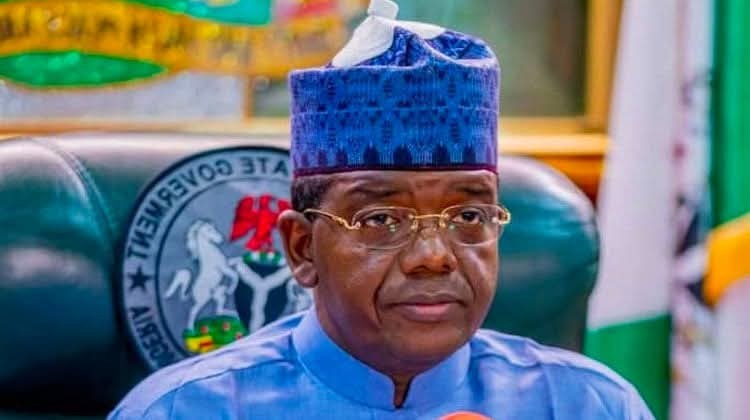
“This is just the starting point. We will intensify efforts to ensure that all defence and security equipment are produced locally, and within two to five years, Nigeria will no longer depend on imports,” he said.
He explained that Nigeria’s future defence capability would be built through homegrown innovation and strategic partnerships, stressing that local production would strengthen national security and boost industrial growth.
According to him, manufacturing defence assets locally would not only reduce dependence on foreign suppliers but also open doors for exports, create skilled jobs, facilitate technology transfer and conserve foreign exchange.
Matawalle noted that the unveiling of the armoured vehicles was more than a product launch, describing it as a clear demonstration of Nigeria’s growing technical capacity and confidence in indigenous solutions.
He recalled that DICON was established to drive local defence manufacturing, reduce reliance on external supply chains and position Nigeria as a credible producer of military and security equipment, adding that achieving this mandate requires strong collaboration with capable private sector partners.
Commending X-Shield for its expertise in vehicle armour, ballistic engineering and systems integration, the minister described the company as a key partner in Nigeria’s defence industrial expansion.
He said the newly unveiled tactical armoured vehicle was designed to meet modern operational demands, including mobility, protection and adaptability, while remaining cost-effective and suitable for local production and maintenance.
Matawalle further assured that the collaboration between DICON and X-Shield would strengthen Nigeria’s defence industrial base and create long-term economic and security benefits, reaffirming the government’s commitment to similar partnerships.
Speaking at the event, X-Shield Chief Executive Officer, Charles Ibanga, said the company is positioning itself as a reliable indigenous solution provider amid growing demand for armoured mobility across defence agencies, critical infrastructure operators and the private sector.
He cited figures from the National Bureau of Statistics to highlight the urgency of local manufacturing, revealing that Nigeria spent over ₦5.06 trillion on imported armoured vehicles in the last quarter of 2023 alone—far exceeding its expenditure on petrol during the same period.
Nigeria’s renewed push for indigenous defence production comes against the backdrop of rising security challenges and increasing concerns over the high cost and sustainability of importing military equipment, a practice that has long exposed the country to foreign exchange pressure and supply chain disruptions.
FURTHER READING