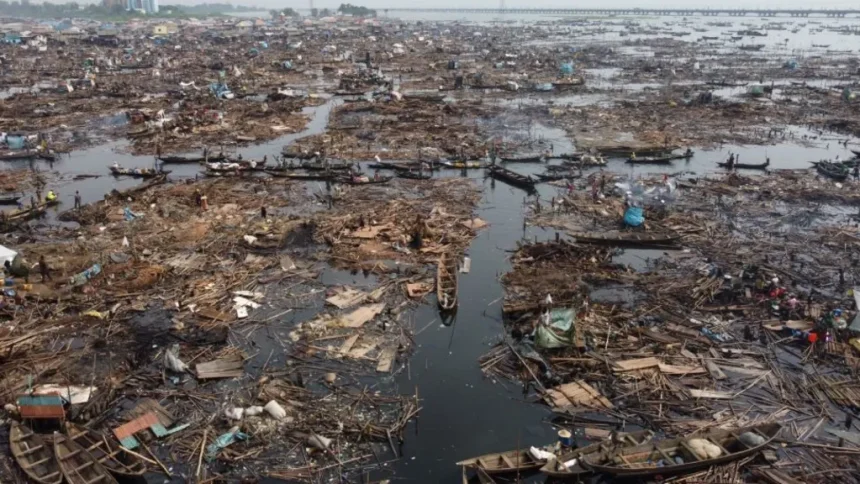
Perched between land and water on Lagos Mainland, Makoko is home to hundreds of thousands of people who live, work, love and raise families in a community the government still pretends does not exist.
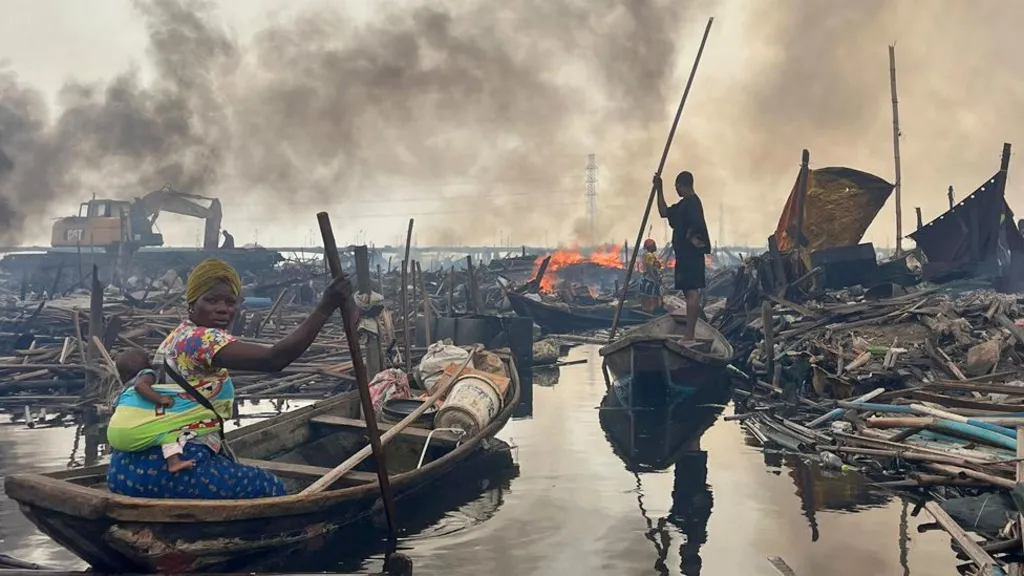
Half of Makoko stands on land. The other half rises from water, houses balanced on wooden stilts, connected by narrow waterways that function as streets. Canoes replace cars. Paddles replace tyres. Children glide to school across the lagoon, traders hawk food from boats, and fishermen return daily with the catch that feeds much of Lagos.
EDITOR’S PICK
- ADC Requests INEC to Postpone FCT Area Council Elections
- Tope Alabi Welcomes Grandchild
- CBN to Introduce New Policy to Regulate Debit Card Issuance, ATM Operations
Makoko is not new. Contrary to the way it is often framed as an “illegal settlement” or an “eyesore” the community traces its roots back to the 18th century, when it was founded as a fishing village. Generations of people, mostly from the Egun ethnic group of Badagry and present-day Benin Republic, have known no other home.
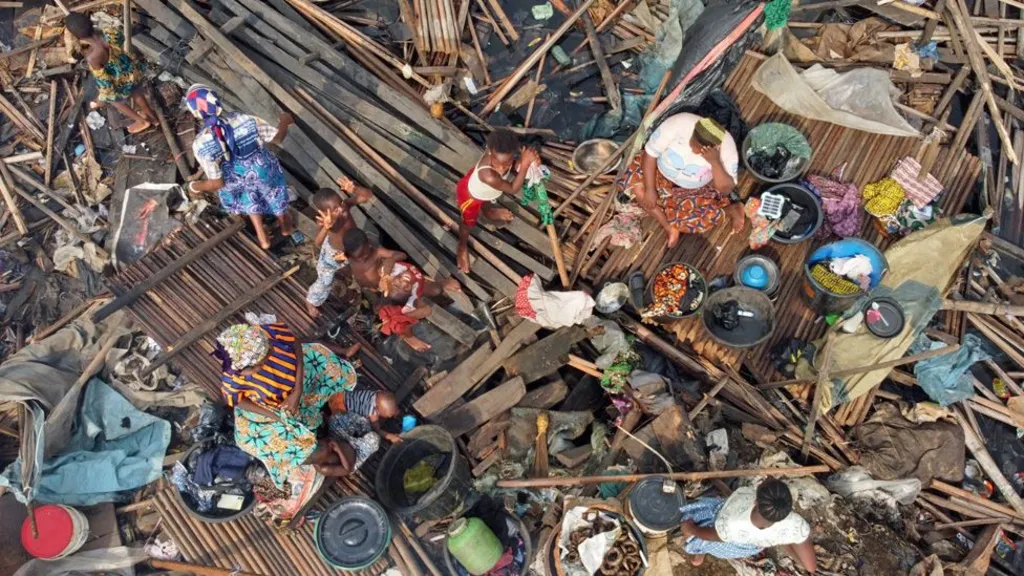
Yet Makoko remains officially unrecognised. Because the government refuses to acknowledge it, no accurate population count exists. Community leaders estimate that over 400,000 people live across Makoko’s land and water settlements. The World Bank puts the land population alone at over 85,000. The people on water? They are erased on paper, but painfully visible in reality.
Life in Makoko is hard, but it is organised. Homes, often shared by six to ten people, are built from hardwood driven deep into the lagoon bed. Economic life revolves around fishing, firewood trade, sand dredging, salt making and sawmills. Markets like Makoko-Asejere supply Lagos with affordable seafoods, croakers, prawns, crabs, barracudas, sustaining both the city’s economy and its stomach.
What Makoko lacks are the basics many Lagosians take for granted. There is little access to electricity, healthcare or proper schools. Sanitation is communal and inadequate, with waste flowing directly into the lagoon, not because residents choose pollution, but because infrastructure has never been provided.
Clean water is bought from vendors or fetched from plastic tanks connected to boreholes. Despite this neglect, Makoko largely polices itself, with residents reporting low crime rates and strong community structures..
In July 2012, Makoko woke up to terror. Residents were given a 72-hour quit notice, three days to erase their lives. The government cited “environmental nuisance,” “security risks” and Lagos’ “megacity vision” as justification. Armed police and state officials stormed the waterfront, cutting down homes with machetes, sending families, including children, into the water.
Over 200 people were rendered homeless. No resettlement. No compensation. No plan.
The demolition only stopped after five days, when a community leader was shot by a police officer. Some residents slept in canoes with their children and salvaged belongings. Others rebuilt hurriedly within a narrow boundary allowed under high-tension power lines, ironically, the same cables the government claimed made the settlement unsafe.
History Repeating Itself
More than a decade later, the nightmare is returning.
In recent weeks, parts of Makoko have again faced demolitions, with homes pulled down and residents displaced under the familiar language of “urban renewal” and “environmental concerns.” Once again, families are losing shelter without consultation, adequate notice or alternative housing. Once again, development is being used as a weapon against the poor.
For Makoko residents, this pattern is not new. They remember Maroko, another Lagos community wiped out in the name of progress, only for the land to later become one of the most expensive real estate zones in the state. The fear is not unfounded: Makoko sits on valuable waterfront land in a city bursting at its seams.
What is happening is not environmental protection. It is not urban planning. It is forced eviction.
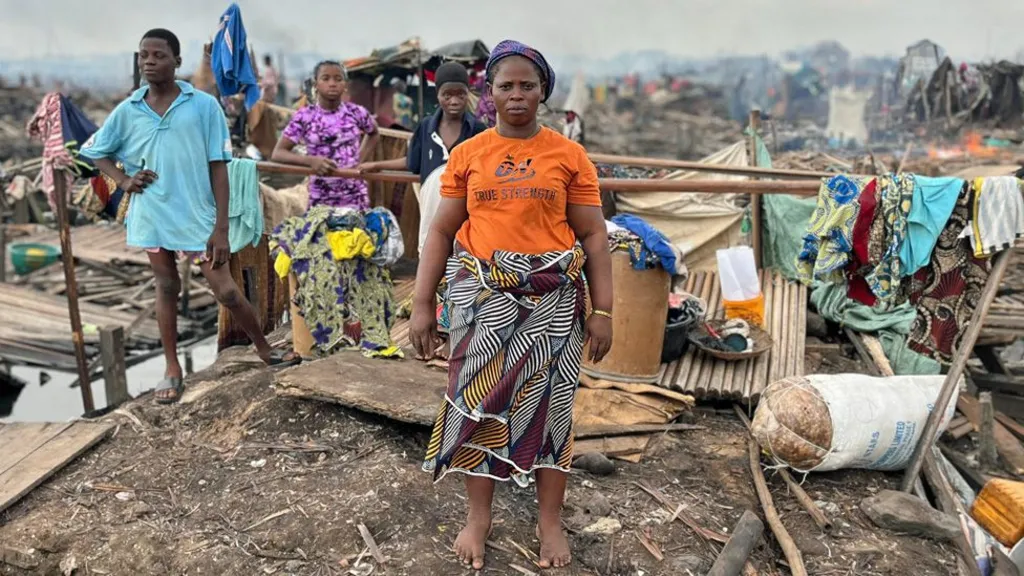
Demolition Is Not Development
The Lagos State Government has repeatedly argued that Makoko undermines the city’s megacity ambitions. But whose city is Lagos? Who gets to belong.
Makoko residents have consistently said they are not against development. What they reject is demolition without dignity. When the government proposed relocating displaced residents to Agbowa in Ikorodu in 2012, the community refused, not out of stubbornness, but survival. Fisherfolk cannot live far from water. Their culture, economy and identity are tied to the lagoon.
In response to years of pressure, protest and media attention, Makoko residents took an unprecedented step. Instead of waiting to be erased, they planned their future.
In 2013, the Makoko Waterfront Regeneration Plan was submitted, a people-driven blueprint for inclusive development. It was created through collaboration between five waterfront communities, SERAC, urban planners, environmentalists, academics, NGOs, private sector actors and government agencies.
The plan addressed housing, land use, tourism, economic development, environmental sustainability, tenure security and governance. It proved one powerful truth: Makoko does not need to be destroyed to be improved.
A Call That Refuses to Sink
Makoko is not just a slum. It is not a mistake. It is a living community that has survived centuries of water, neglect and state violence.
Each demolition, past or present, deepens inequality and violates the right to housing, dignity and participation. Development that excludes the poor is not progress. It is displacement by another name.
Makoko continues to call on the Lagos State Government to abandon demolition as policy and embrace development as partnership. The water has carried this community for over 200 years. The least the state can do is stop trying to drown it.
FURTHER READING