- Yakubu explained that President Bola Tinubu has directed that electricity subsidies must no longer remain hidden or loosely managed
- He noted that beginning in 2026, electricity subsidies would no longer be treated as an unlimited federal obligation
- He emphasised that the policy is not intended as a punitive measure but as a way to align incentives across government
Plans are underway to restructure how electricity subsidies are funded in Nigeria, with the Federal Government set to stop bearing the cost alone from 2026.
Eko Hot Blog gathered that under the new arrangement, subsidy obligations will be shared among the federal, state and local governments.
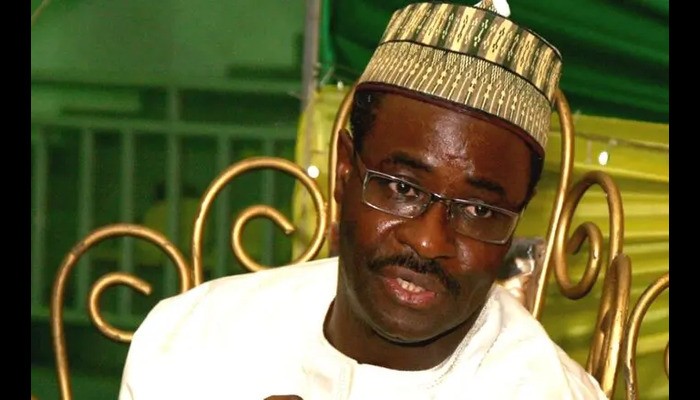
This policy shift was disclosed in Abuja on Monday by the Director-General of the Budget Office of the Federation, Tanimu Yakubu, during a training and sensitisation workshop for ministries, departments and agencies (MDAs) on the 2026 post-budget preparation process using the Government Integrated Financial Management Information System (GIFMIS) Budget Preparation Sub-System.
EDITOR’S PICK
- ADC Requests INEC to Postpone FCT Area Council Elections
- Tope Alabi Welcomes Grandchild
- CBN to Introduce New Policy to Regulate Debit Card Issuance, ATM Operations
Yakubu explained that President Bola Tinubu has directed that electricity subsidies must no longer remain hidden or loosely managed, stressing that they should be clearly identified, monitored and fairly distributed across all tiers of government.
He warned that the existing model has continued to generate concealed liabilities and persistent instability in the power sector.
According to him, keeping electricity tariffs below the actual cost of supply inevitably creates a financial gap that must be paid for.
“When tariffs are not cost-reflective, the difference becomes a subsidy, and that subsidy is a bill that someone must settle,” he said, adding that sustainable power supply depends on governments taking responsibility for such decisions.
He noted that beginning in 2026, electricity subsidies would no longer be treated as an unlimited federal obligation, especially in cases where policy choices and political gains are enjoyed collectively by different levels of government.
Yakubu further revealed that the President has instructed authorities to rely on existing electricity sector laws to ensure that the new subsidy-sharing framework is workable, transparent and enforceable.
This, he said, would prevent subsidy costs from resurfacing as unpaid arrears, liquidity shortfalls or hidden debts within the power market.
“If any level of government opts for affordability measures, the funding responsibilities must be clearly defined, mutually agreed and enforceable,” he said.
He emphasised that the policy is not intended as a punitive measure but as a way to align incentives across government and encourage efficiency in the electricity sector.
According to him, when all parties contribute their fair share, there is greater motivation to support cost-reflective pricing, protect vulnerable consumers and build a power market capable of delivering reliable service.
Yakubu advised MDAs to clearly reflect subsidy-related expenses in their 2026 budget proposals and avoid shifting unfunded liabilities into the electricity value chain.
Beyond electricity subsidies, he said the 2026 Budget would mark a departure from rollover budgeting and disjointed project lists, which he noted had weakened accountability and implementation over time.
He described the new approach as a unified execution framework designed to consolidate government commitments into a single, visible delivery pipeline.
Calling it a “single-train” model, Yakubu said the framework would improve prioritisation, strengthen oversight and reduce duplication across government. “One plan, one pipeline, one execution logic,” he stated, noting that the system would allow government to track its delivery commitments at any point.
He also disclosed that President Tinubu has ordered a review of the Fiscal Responsibility framework to make fiscal rules more flexible yet enforceable, rather than discarding them entirely.
The review, he said, would introduce clearer fiscal anchors, better-defined escape clauses for genuine economic shocks and a credible route back to compliance, alongside stronger reporting on contingent liabilities.
For MDAs, Yakubu said the changes would alter how spending proposals are evaluated, with greater emphasis on fiscal sustainability, compliance with rules and measurable outcomes.
On capital spending, he added that the 2026 Budget would deepen the transition from long project lists to project financing, insisting that only delivery-ready and, where applicable, finance-ready projects would be considered.
“What citizens experience is delivery, completed roads, stable electricity, functional schools and hospitals,” he said, stressing that fewer but properly funded projects would have greater impact.
Yakubu described the GIFMIS Budget Preparation Sub-System as central to restoring confidence in the budgeting process, noting that it enhances transparency and traceability from budget submission through execution.
He concluded that while the Budget Office would enforce standards and coordinate the process, the success of the 2026 Budget and the Renewed Hope Agenda ultimately depends on MDAs delivering tangible results.
The workshop, he said, is aimed at aligning agencies with the new expectations and strengthening the link between planning, funding and outcomes in the 2026 fiscal year.
Meanwhile, recent reports by the Nigerian Electricity Regulatory Commission showed that the Federal Government incurred about N1.98 trillion in electricity subsidy obligations between October 2024 and September 2025, amid ongoing challenges in settling over N4 trillion owed to power generation companies.
FURTHER READING