The Central Bank of Nigeria (CBN) made a small but symbolic move on Tuesday when it cut the benchmark interest rate from 27 per cent to 26.5 per cent — a reduction of just 50 basis points.
The CBN’s Monetary Policy Committee (MPC) announced the decision at the end of its two-day meeting held in Abuja on February 23 and 24.
EDITOR’S PICKS
CBN Governor Olayemi Cardoso said the cut was based on encouraging signs: inflation is falling, the naira has been stable, and food prices have eased. But while the decision was welcomed, it barely moved the needle.
Checks by EKO HOT BLOG revealed that Nigeria’s interest rate remains one of the highest in Africa — and the gap between the country and its neighbours is stark.
The CBN noted that Nigeria’s headline inflation fell slightly to 15.10 per cent in January 2026, from 15.15 per cent in December, while the naira strengthened by over six per cent in February.
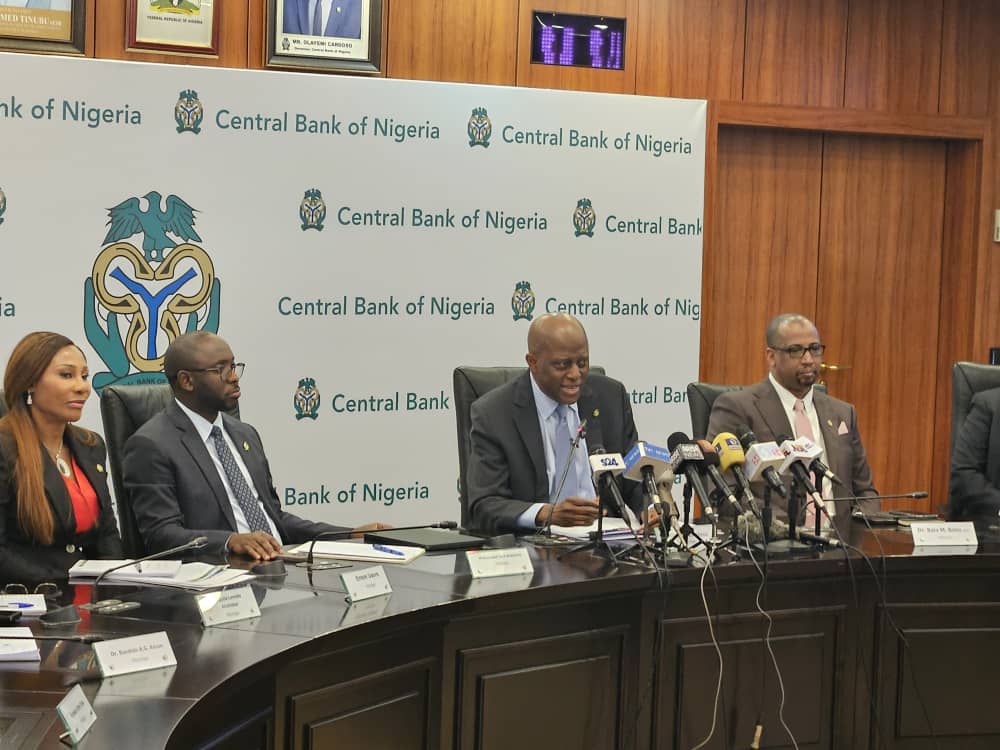
These improvements, Cardoso said, show that previous monetary tightening is working. The committee also adjusted its lending corridor around the rate to discourage banks from keeping idle funds with the CBN, and left the Cash Reserve Ratio (CRR) for commercial banks unchanged at 45 per cent.
Far Above Its Neighbours: How Nigeria Compares With the Rest of Africa
Even after Tuesday’s cut, Nigeria’s rate at 26.5 per cent dwarfs what most African countries are paying.
In South Africa, the benchmark rate sits at 6.75 per cent. In Kenya, it is 8.75 per cent. Egypt, which has been battling its own economic crisis, recently cut its rate to 19 per cent — still considerably lower than Nigeria’s. Ghana, which went through a severe debt crisis just a few years ago, has cut its rate to 15.5 per cent. And in the francophone countries of West and Central Africa — including Côte d’Ivoire, Senegal, and Cameroon — rates are dramatically lower still.
Côte d’Ivoire and Senegal, which share the West African CFA franc and a single central bank (the BCEAO), operate at a rate of just 3.25 per cent. Cameroon and other Central African CFA franc countries, governed by the BEAC, operate at 4.5 per cent. These figures are not just marginally lower, they are many multiples below Nigeria’s.
The implication is that a Nigerian entrepreneur borrowing money today faces a rate environment that is roughly eight times worse than a Senegalese counterpart and about three times worse than a Kenyan.
The gap reflects how deeply entrenched Nigeria’s inflation crisis has been. While other African central banks have been in easing cycles, steadily cutting rates to stimulate growth, the CBN only began cutting in September 2025 after years of aggressive tightening. Nigeria’s path back to competitive borrowing costs remains long.
How High Rates Are Squeezing Nigerian Enterprises
For businesses across Nigeria, the rate cut offers little immediate comfort. The CBN’s benchmark rate is just the floor; the rate at which it lends to commercial banks. By the time that money flows to ordinary businesses, the cost is far higher. Nigerian banks typically lend to small and medium enterprises at rates ranging from 29 to 35 per cent per annum, with some borrowers paying even more depending on their credit profile and the type of facility.
Many businesses do not even get that far. Banks, faced with high default risk in a difficult economy, have become increasingly selective. Millions of small business owners — traders, artisans, farmers, manufacturers — are effectively shut out of the formal credit market altogether. They turn instead to informal lenders, microfinance institutions, or personal savings, all of which carry their own constraints and costs.
The consequences are visible across the economy. Businesses that do manage to secure loans must price their goods and services higher to cover borrowing costs, contributing to the very inflation the CBN is trying to fight. Investment in expansion, new equipment, and job creation slows. Entrepreneurs who might otherwise scale operations sit still, unable to afford the capital they need. For manufacturers and exporters, competing with regional peers operating in much cheaper credit environments becomes even harder.
The CBN’s easing is a step in the right direction, but the pace matters. A 50 basis point cut — the same modest reduction made in September 2025 — does little to shift the calculations for a business staring down a 30 per cent loan rate. What businesses need, analysts say, is sustained and faster easing, accompanied by structural reforms that make banks more willing to lend and at rates that make repayment realistic.
A Long Road Ahead
Tuesday’s rate cut is a signal, not a solution. It tells markets and businesses that the CBN believes the worst of Nigeria’s inflation crisis may be passing. Cardoso pointed to “sustained exchange rate stability” and “enhanced food supply” as reasons for cautious optimism. These are real improvements. But with inflation still above 15 per cent and borrowing costs still among the highest on the continent, the relief for everyday Nigerians and their businesses remains distant.
FURTHER READING
For Nigeria to close the gap with countries like South Africa, Kenya, or even Ghana, the disinflation trend must not only continue, it must deepen and hold. Only then can the CBN cut more aggressively and bring rates to levels where credit becomes a tool for growth rather than a luxury few can afford.
Philip Ibitoye is a Special Correspondent with EKO HOT BLOG. Click here to find daily analysis and critical insight on trending issues in Lagos and other parts of Nigeria.
Click to watch the video of the week below: