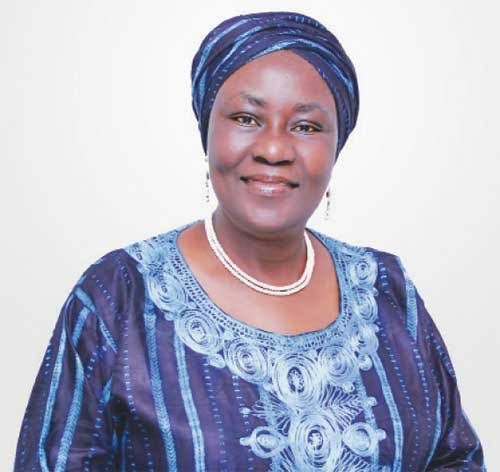
When former presidential candidate Remi Sonaiya boarded a train at Agege station in Lagos for her first journey to Ibadan, she expected a smooth, modern ride along one of Nigeria’s flagship infrastructure projects.
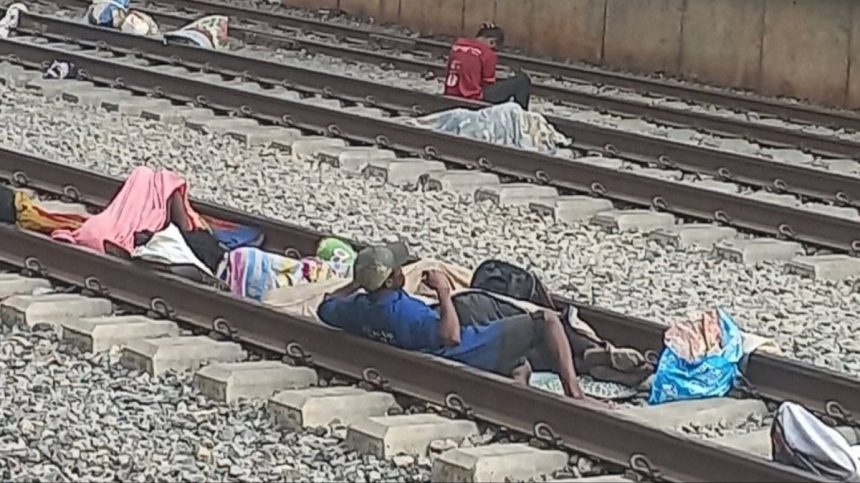
What she encountered instead was a sobering reminder of the gap between ambition and reality: people sleeping directly on sections of the rail tracks.
EDITOR’S PICKS
Sonaiya shared her experience on social media, noting that officials of the Nigerian Railway Corporation (NRC) told passengers they were unable to move the individuals off the tracks.
“I’m taking the train to Ibadan for the first time, boarding at Agege. My excitement was greatly dampened by the sight that greeted passengers as we approached the train — people sleeping on some of the tracks,” she wrote.
Her account, brief as it was, cut to the heart of a wider problem — one that no ribbon-cutting ceremony has yet resolved.
A Corridor Under Pressure
The Lagos–Ibadan standard gauge railway was designed to be a transformational project: faster travel, reduced road congestion, and a model for modern rail in Nigeria. In many respects, it has delivered. Trains now run between the two cities in roughly two to three hours, offering relatively greater safety than road travel.
But infrastructure of this scale attracts pressure from many directions. Communities living close to the tracks have, over time, encroached on the corridor. In urban areas like Agege, where poverty and overcrowding are visible facts of daily life, the boundary between public infrastructure and personal survival is often blurred.
Alongside encroachment, vandalism has become a serious concern. In October 2025, the NRC reported that unknown persons had tampered with signalling components between Agege and Agbado stations — removing signal machine cap protectors and cutting connection cables on a Switch Point Machine. Such interference does not merely cause inconvenience. It can make a moving train dangerous.
Enforcement or Engagement?
The federal government’s response to these challenges has largely followed a pattern of public appeals and stern warnings. The NRC has repeatedly urged communities to protect rail assets and obey safety rules.
In Ibadan, the corporation went further, accusing the chairman of Ibadan South-West Local Government Area, Kehinde Amanda, of personally leading the destruction of railway assets in the Mile One/Odo Ona axis, a claim that, if true, points to a crisis of authority that words alone cannot resolve.
The tension here is not simply between law and lawlessness. It is between the logic of infrastructure investment, which demands protected corridors, working signals, and unobstructed tracks, and the reason of lived experience, which asks why people are sleeping on railway tracks at all. Both are legitimate concerns. One does not cancel out the other.
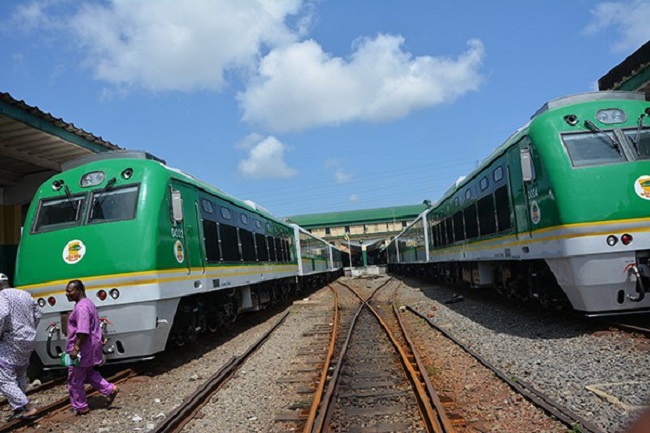
Effective rail management requires physical security, yes. Fencing, surveillance, and firm enforcement at critical points such as Agege are practical necessities. But enforcement without accompanying social investment tends to be short-lived. Communities that see no benefit from a railway running through their neighbourhood have little incentive to protect it.
The Bigger Question
Nigeria has invested heavily in the Lagos–Ibadan line. The expectation was that it would serve as a foundation; something to build on, replicate, and expand. That ambition remains worthwhile. But a rail line is only as strong as the environment around it.
People sleeping on tracks at a busy urban station is not simply a safety violation. It is a symptom — of inadequate housing, weak community policing, poor coordination between federal agencies and local government, and the absence of meaningful consultation with the communities most directly affected by the rail corridor.
FURTHER READING
Sonaiya’s account is useful precisely because it is ordinary. She was not making a political speech. She was a first-time passenger whose excitement gave way to concern. If the federal government is serious about making the Lagos–Ibadan railway a success story rather than a cautionary tale, it must find a way to hold both the logic of infrastructure and the reason of human need in the same hand at the same time.
Philip Ibitoye is a Special Correspondent with EKO HOT BLOG. Click here to find daily analysis and critical insight on trending issues in Lagos and other parts of Nigeria.
Click to watch the video of the week below: