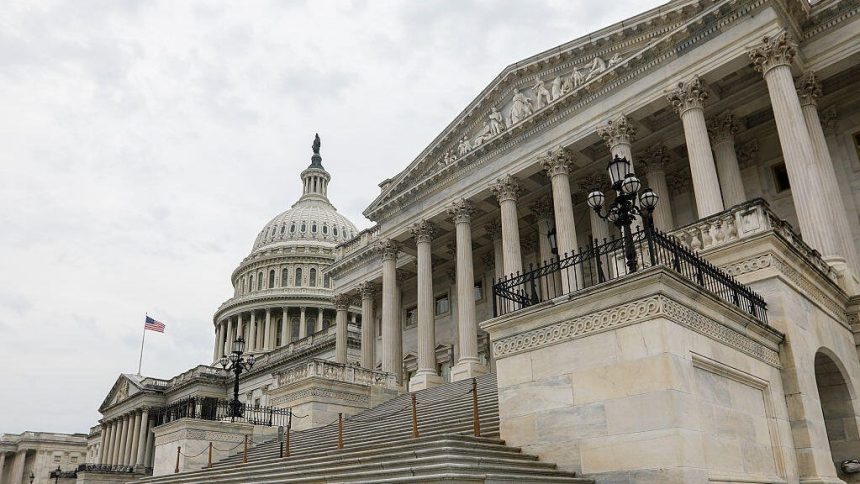
- The U.S. House of Representatives is set to vote Thursday on a war powers resolution intended to block President Trump from further military strikes against Iran without explicit congressional approval.
- This legislative move follows a high-stakes week in the Middle East, including a joint U.S-Israeli operation, dubbed “Operation Epic Fury”, that reportedly resulted in the death of Iran’s Supreme Leader, Ayatollah Ali Khamenei.
- Despite the push from Democrats and a small group of anti-interventionist Republicans, the resolution faces a difficult path in the GOP-controlled House, especially after a similar measure was defeated in the Senate on Wednesday.
The debate over the separation of powers has reached a fever pitch in Washington as the U.S House of Representatives prepares for a pivotal vote on the Massie-Khanna War Powers Act.
The resolution seeks to reassert Article I of the Constitution, which grants Congress the sole power to declare war.
EDITOR’S PICK
- 540 Candidates Cleared as Lagos APC Moves to Elect LGA Executives
- Court Sentences Pastor to Death for Killing UniUyo Student
- Lagos Teacher Questions Lack of Recognition for One-Day Governor Mentors
Advocates for the measure, led by Representative Thomas Massie (R-KY) and Representative Ro Khanna (D-CA), argue that the current military campaign against Iran is an unauthorized “war of choice” that risks dragging the United States into another decades-long conflict in the Middle East.
On the other side of the aisle, House Speaker Mike Johnson has labeled the resolution “dangerous,” arguing that it would tie the hands of the Commander-in-Chief at a critical moment for national security.
Johnson and other Republican leaders contend that the strikes were necessary to dismantle Iran’s nuclear capabilities and protect U.S assets from “imminent threats.”
However, critics point out that the administration’s justifications have frequently shifted, and the word “imminent” was notably absent from initial war powers notifications provided to Congress.
The conflict, which intensified dramatically following a surprise air and naval campaign on February 28, has already resulted in significant casualties.
Military reports estimate that over 1,000 Iranians have been killed, while at least six U.S. service members have lost their lives in retaliatory strikes.
The humanitarian toll is also rising, with reports of schools and civilian airports being caught in the crossfire. In the U.S, public sentiment appears divided; while some polls show a slim majority disapproving of the unilateral action, others reflect a nation split on whether to continue the offensive to its conclusion.
As the House convenes for the vote, the political stakes could not be higher.
Even if the resolution manages a narrow victory in the House, it would almost certainly face a presidential veto, one that Congress currently lacks the two-thirds majority to override.
Nonetheless, the vote will force every member to go on the record, providing a clear snapshot of where the nation’s representatives stand as the drums of war continue to beat in the Persian Gulf.
For many, this isn’t just a vote on a resolution, but a vote on the future of American foreign policy and the very definition of executive authority.