When President Bola Tinubu told media executives on Friday to stop “bombarding” him alone and start scrutinising states and local governments, he was not deflecting. He was identifying one of the most persistent failures in how Nigerians — and the media — engage with governance.
The centre has long been the default address for every complaint. Roads in Anambra, classroom shortages in Kano, unpaid teachers in Ondo — the buck gets passed all the way to Abuja, even when the responsible tier of government is far closer to home.
EDITOR’S PICKS
That habit has consequences. It lets governors and local government chairmen govern in comfortable obscurity while the presidency absorbs public fury meant for them.
EKO HOT BLOG explores the accountability gaps.
States Are Getting More Money
Tinubu’s economic reforms, whatever their pain, have changed the fiscal picture for state governments.
The removal of the petrol subsidy unlocked funds that previously disappeared into a broken system. FAAC allocations to states have grown substantially since mid-2023, with several states receiving monthly figures that were unthinkable during the subsidy era.
Tinubu made this point plainly on Friday. “Today, there is no state that is borrowing to pay the salaries of employees,” he said. That claim is broadly verifiable. For years, salary defaults by state governments were a monthly crisis. The Oronsaye reforms, the federal wage bill debates, the bail-out packages: these were symptoms of states that were structurally insolvent. That picture has shifted.
If states are now better funded, the question of what they are doing with that money becomes urgent and legitimate.
Infrastructure gaps, failing primary schools, dysfunctional primary healthcare centres, decaying rural roads: these are largely state and local government responsibilities under the 1999 Constitution. Holding only the president responsible for them is both constitutionally illiterate and politically convenient for those who benefit from the confusion.
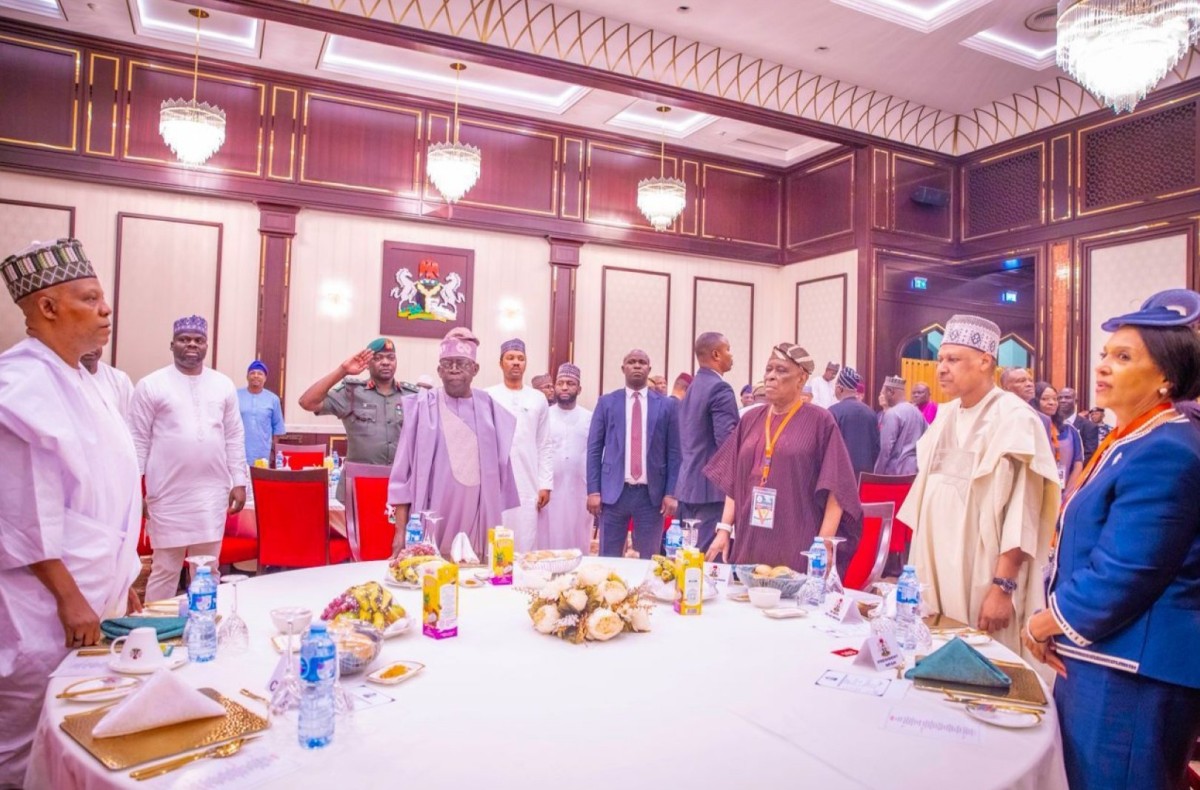
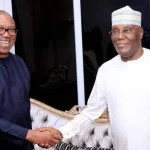
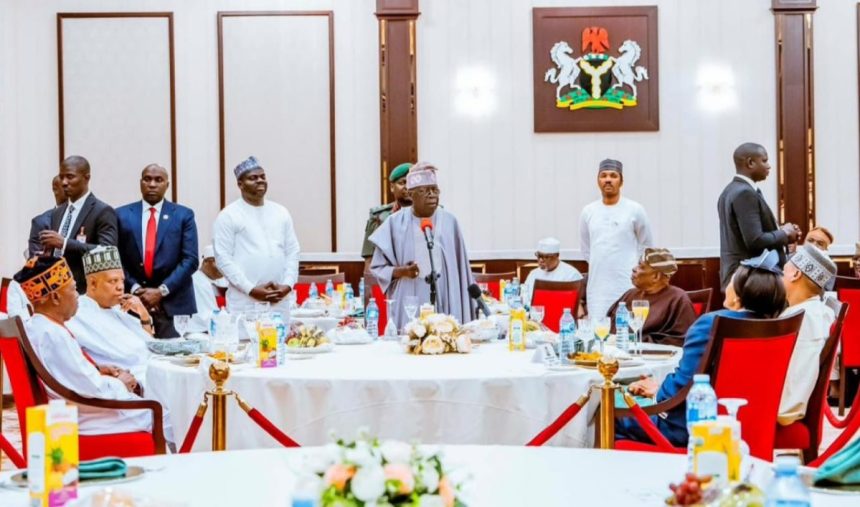
both Ramadan and Lent at the State House Banquet
Hall, Presidential Villa, Abuja, on Friday. There, he called for greater scrutiny of states and LGs’ increased allocations
Local Government Accountability Is Practically Nonexistent
The problem is worse at the local government level. The Supreme Court’s 2024 ruling affirming the financial autonomy of the 774 local government areas was a structural shift. Direct FAAC allocations to LGAs, bypassing state governments, mean local councils are now sitting on real money. Yet local government accountability journalism in Nigeria is almost entirely absent.
Most Nigerians cannot name their local government chairman. Fewer still know what the council’s monthly allocation is, what it has been spent on, or whether council meetings are even holding. The media, concentrated in state capitals and fixated on the presidential villa, has not helped.
Tinubu’s point about federalism is well taken here. A functioning federal system requires accountability at every level, not just at the apex. When the president alone is the subject of budget tracking, investigative reporting, and public outrage, it distorts democratic pressure in ways that protect bad governance at the lower tiers.
Where the President’s Argument Falls Short
None of this means the federal government is beyond scrutiny.
President Tinubu himself heads a government with significant expenditure responsibilities: security, federal infrastructure, monetary policy, debt management. The current hardship that ordinary Nigerians feel is substantially connected to federal decisions. Media scrutiny of the presidency is not misplaced; it is constitutionally appropriate.
The risk in Tinubu’s framing is that it reads, at least partly, as an attempt to spread blame horizontally rather than a genuine call for multi-tier accountability. Both things can be true simultaneously: the president deserves scrutiny, and so do governors and LG chairmen.
FURTHER READING
But on the narrow point — that states and local governments have been let off the hook for too long — Tinubu is correct. The media’s job is to follow the money, wherever it goes.
Philip Ibitoye is a Special Correspondent with EKO HOT BLOG. Click here to find daily analysis and critical insight on trending issues in Lagos and other parts of Nigeria.
Click to watch the video of the week below: