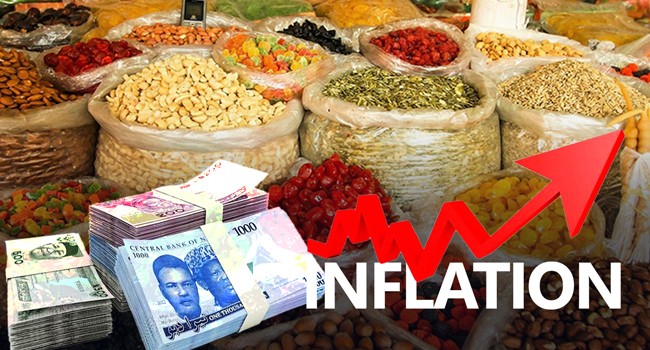
Nigeria’s headline inflation rose for the second consecutive month in April 2026, climbing to 15.69 per cent from 15.38 per cent in March, according to fresh data from the National Bureau of Statistics (NBS) on Friday.
The 0.31 percentage point increase, though modest, signals that the disinflation trend that defined much of 2025 is losing steam.
EDITOR’S PICKS
The uptick came despite a sharp slowdown in month-on-month inflation, which dropped to 2.13 per cent in April from 4.18 per cent in March, a sign that while prices are still rising, they are doing so at a slower pace than the previous month.
Food prices remain the primary culprit
Food inflation was the dominant driver of April’s headline figure, rising to 16.06 per cent on a year-on-year basis. The NBS identified a broad range of staples behind the increase, including millet, yam flour, fresh ginger, beef, garri, beans, tomatoes, wheat grain, soybeans, and plantain.
The pressure was not evenly distributed. Enugu recorded the highest food inflation in the country at 32.67 per cent year-on-year, followed by Kwara at 30.77 per cent and Adamawa at 30.14 per cent. Borno, Jigawa, and Taraba fared comparatively better, recording some of the slowest increases nationally.
Rural Nigerians bore a heavier burden than their urban counterparts. Rural inflation stood at 16.36 per cent year-on-year in April, compared to 15.40 per cent in urban areas, a gap that reflects the structural vulnerability of rural food markets to supply disruptions and poor logistics infrastructure.
Global pressures compounded domestic woes
Beyond Nigeria’s borders, a deteriorating global commodity environment added fuel to domestic price pressures.
Brent crude surged to $120.4 per barrel in April from $103.7 in March, driven by rising geopolitical tensions in the Middle East and disruptions around the Strait of Hormuz. The World Bank Energy Index climbed correspondingly, while the FAO Food Price Index rose for the third consecutive month, reaching 130.7 points.
Global wheat and maize prices also increased during the period. For an import-dependent economy like Nigeria, these movements translate quickly into higher costs for manufacturers, transporters, and ultimately consumers.
The broader global inflation trend reinforced the pattern, with the United States recording 3.8 per cent inflation in April, up from 3.3 per cent, and the Euro Area rising to 3.0 per cent from 2.6 per cent.
What it means going forward
Despite the uptick, there are reasons for cautious optimism. April’s headline figure came in below the 16.42 per cent projection issued by the Financial Markets Dealers Association, suggesting that some segments of the economy may be adjusting faster than anticipated. Core inflation — which strips out volatile food and energy prices — stood at 15.86 per cent year-on-year in April, down sharply from 26.05 per cent recorded in the same period in 2025.
The twelve-month average CPI also eased slightly to 19.16 per cent, compared to 19.33 per cent in April 2025 — a further indication that the broader disinflation trajectory, while disrupted, has not been fully reversed.
The data arrives ahead of the Central Bank of Nigeria’s 305th Monetary Policy Committee meeting, where policymakers will weigh whether to hold or adjust the current Monetary Policy Rate of 26.5 per cent.
FURTHER READING
At its last meeting, the CBN cut the rate by 50 basis points. With inflation ticking upward again amid global commodity shocks, the committee faces a difficult call between sustaining monetary easing and defending price stability.
Philip Ibitoye is a Special Correspondent with EKO HOT BLOG. Click here to find daily analysis and critical insight on trending issues in Lagos and other parts of Nigeria.
Click to watch the video of the week below: