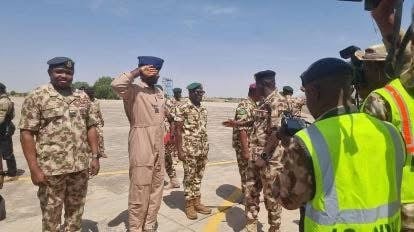
When the Chief of Defence Staff, Olufemi Oloyede, and the Chief of Army Staff, Waidu Shaibu, touched down at the Maiduguri Air Force Base on Wednesday in a white and red-painted jet, they were received by the theatre commander of Operation Hadin Kai, Abdulsalam Abubakar, and other senior military officials.
The optics were deliberate.
EDITOR’S PICKS
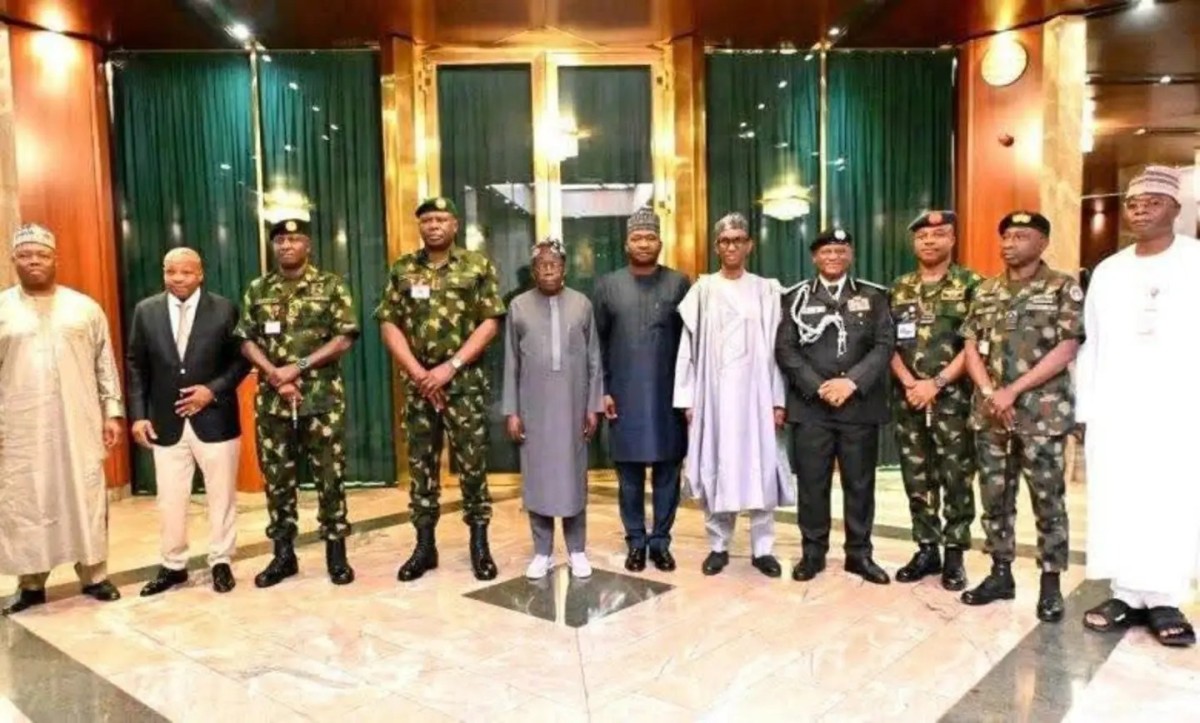
Less than 24 hours earlier, President Bola Tinubu had directed security chiefs to relocate to the Borno State capital following a coordinated wave of bombings that killed 23 people and injured 108 others. The message from Abuja was clear: the government is taking this seriously.
But the more important question is not whether the military chiefs have arrived. It is what happens after the cameras leave.
The Limits of a Symbolic Gesture
The deployment of service chiefs to a theatre of conflict is a familiar move in Nigeria’s counterinsurgency playbook.
It signals political will. It may lift morale among troops who have endured weeks of devastating losses — at least 40 soldiers were killed across Borno State between March 3 and 9 alone, including two Lieutenant Colonels and two Majors, with more than 40 others unaccounted for after the assault on Ngoshe. For men and women under that kind of pressure, the physical presence of their commanders carries weight.
But symbolism has a short shelf life. Former President Muhammadu Buhari, who made the northeast insurgency a centrepiece of his two presidential campaigns, oversaw similar high-profile deployments of military chiefs to Maiduguri on multiple occasions.
Each visit generated headlines. Each time, the underlying dynamics of the conflict shifted little. ISWAP and Boko Haram adapted, regrouped, and struck again. The last major attack before this week’s bombings was in 2021. But in December 2025, a suspected suicide bomber killed at least seven people in a city mosque.
The March 2026 escalation — ISWAP raids on four military bases in a single night, followed by the Maiduguri bombings — suggests the group had been planning, not retreating.
No one, in truth, will measure the success of this week’s visit by whether Oloyede and Shaibu were present in Maiduguri. The measure of success is simpler and far harder to achieve: whether there is another attack tomorrow, or next week, or next month.
What Actually Moves the Needle
Tinubu stated that just before the bombings, he had approved additional equipment and operational support for security agencies at a weekend meeting with intelligence chiefs. That, if implemented rapidly, matters more than any visit.
The March 5 raids on the Mainok, Jakana, Marte, and Konduga bases gave ISWAP access to military vehicles, motorcycles, and a cache of weapons, resources the group likely used to sustain its operational tempo. A military strategist had warned publicly on March 10 that the insurgents had “huge quantities of ammunition” seized from the army and were preparing to strike Maiduguri. That warning preceded the bombings by six days.
Intelligence-to-action timelines, equipment deficits, and the persistent porousness of Maiduguri’s security perimeter are operational problems. They are not solved by presence. They are solved by sustained investment, better intelligence integration, and the kind of unglamorous logistics work that rarely generates press statements.
Borno State Governor, Babagana Zulum, connected the recent surge to intensified military operations in the Sambisa forest, suggesting ISWAP is fighting back against pressure rather than operating from strength. That reading may be accurate. But a group fighting from a position of pressure can still detonate a bomb at Monday Market during iftar, or target the gate of a teaching hospital. Desperation and capability are not mutually exclusive.
The Only Metric That Matters
The Nigerian military has genuine wins to its name in the northeast. Operation Hadin Kai has disrupted ISWAP’s command structure at various points. The United States began deploying 200 troops last month to provide technical and training support, a quiet but significant development. These are pieces of a longer effort.
FURTHER READING
What this week’s visit cannot do is substitute for that effort. Security chiefs in Maiduguri is a statement. The absence of the next bombing would be the result. Until then, the gap between the two remains the only thing worth measuring.
Philip Ibitoye is a Special Correspondent with EKO HOT BLOG. Click here to find daily analysis and critical insight on trending issues in Lagos and other parts of Nigeria.
Click to watch the video of the week below: