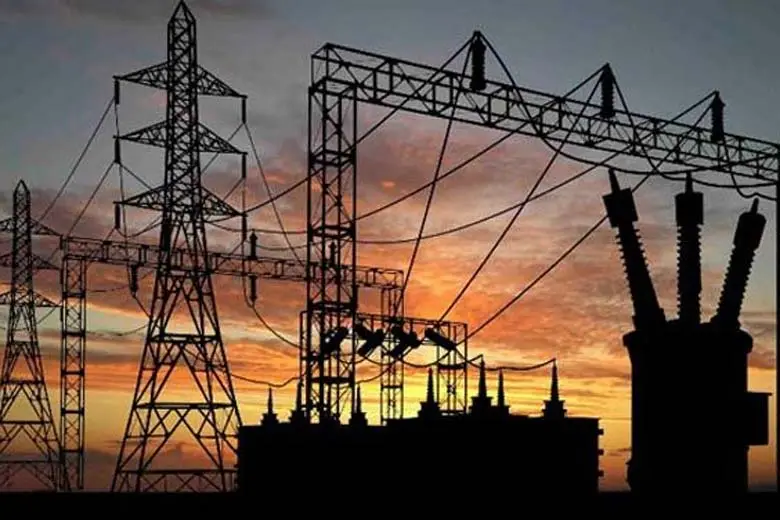
Nigeria’s electricity sector is in a debt spiral deep enough to swallow what remains of the national grid.
Power generation companies (GenCos) — the firms responsible for producing electricity that reaches homes, hospitals, factories, and markets — are owed N6.8 trillion.
EDITOR’S PICKS
The debt has been accumulating since 2015, growing by approximately N200 billion every month. Now, some of these companies are shutting down. The consequences for ordinary Nigerians, already among the most electricity-deprived people on the continent, could be severe.
Understanding what is at stake requires understanding how the system works. GenCos generate electricity, but they only get paid after the power moves through a chain of distributors and government intermediaries.
When payments stall anywhere along that chain — and they have, chronically — generation companies absorb the losses. They still owe gas suppliers. They still owe banks. They still owe their own workers. The N6.8 trillion figure is not an abstraction. It represents years of delivered electricity for which companies received little or nothing in return.
When the Lights Go, Everything Goes
The most immediate consequence of this crisis is one that Nigerians know too well: darkness. As of last Tuesday, 16 of Nigeria’s 33 power plants were not generating any electricity. The remaining plants were producing a combined 3,705 megawatts — a figure that has barely moved in years. For context, South Africa, a country with roughly a third of Nigeria’s population, has historically generated several times that amount.
The effects cascade quickly. Households lose food to heat, burn money on generator fuel, and watch phones die. Small businesses — tailors, phone repairers, cold room operators — lose income by the hour. Hospitals lose patients.
Gas-fired plants account for nearly 70 per cent of Nigeria’s electricity generation. When gas suppliers, themselves owed a substantial portion of the N6.8 trillion, become reluctant to deliver without payment guarantees, the entire system is at risk of a deeper collapse than Nigeria has experienced before.
What Collapse Looks Like in Practice
The Association of Power Generation Companies has painted a grim picture of what companies are dealing with internally. Some have taken bank loans simply to remain operational. Others are struggling to pay salaries. In certain cases, company owners have offered personal collateral to secure financing — a sign that these are no longer companies operating on commercial logic, but individuals making desperate personal bets to keep the lights on for a country that is not paying its bills.
If more companies follow those already shutting down, the shortfall in generation capacity will not be a gradual inconvenience. It will be a crisis that compounds every other crisis Nigeria is managing: rising inflation, unemployment, and the already fragile business environment that the government insists it is trying to fix.
The Government’s Response and Why It Must Move Faster
The Federal Government has announced plans to raise N4 trillion from domestic capital markets to settle part of the backlog. Bond issuances are planned in phases, and the initiative has received cautious support from industry stakeholders. But the pace of implementation has drawn concern. Only a fraction of the targeted amount has been raised, and the debt continues to grow faster than any proposed remedy.
There is also the question of sufficiency. N4 trillion does not cover N6.8 trillion, and by the time any phased settlement reaches completion, the outstanding balance will have grown further.
FURTHER READING
Setting this debt is not charity. It is the minimum condition for keeping the electricity sector functional. Without it, the government’s broader economic ambitions — industrialisation, job creation, foreign investment — rest on a grid that literally cannot stay on.
Philip Ibitoye is a Special Correspondent with EKO HOT BLOG. Click here to find daily analysis and critical insight on trending issues in Lagos and other parts of Nigeria.
Click to watch the video of the week below: