- A British government spokesperson said ministers reached the decision after reviewing the ongoing crisis
- Iran’s Foreign Minister, Seyyed Abbas Araghchi, condemned the decision
- Prime Minister Keir Starmer had earlier indicated that Britain would avoid direct involvement in the conflict
The government of United Kingdom has approved a request by the United States to use British military bases for strikes targeting Iranian missile facilities linked to attacks on vessels in the Strait of Hormuz.
Eko Hot Blog reports that the move has drawn sharp criticism from Iran, which described it as direct involvement in the conflict.
EDITOR’S PICK
- Why Return of Lagos Monthly Sanitation Exercise is Long Overdue
- Four Killed as Truck Crashes Into Bus on Lekki–Epe Expressway
- Uzodimma: Tinubu Reforms Prevent Fuel Crisis
A British government spokesperson said ministers reached the decision after reviewing the ongoing crisis, including Iran’s disruption of shipping routes in the strategic waterway.
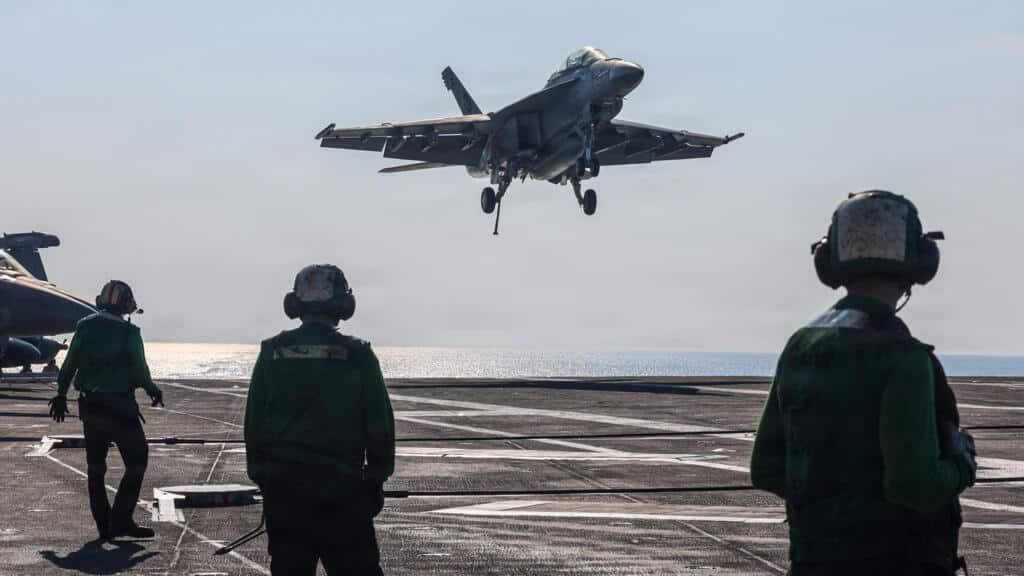
According to the statement, the arrangement allows US forces to carry out what were described as defensive operations aimed at weakening missile systems used against commercial and military ships.
Iran’s Foreign Minister, Seyyed Abbas Araghchi, condemned the decision, warning that Tehran views Britain’s cooperation as an act of aggression.
He also criticised London’s stance during discussions with his UK counterpart, accusing it of siding with Washington and its allies.
Prime Minister Keir Starmer had earlier indicated that Britain would avoid direct involvement in the conflict and initially declined the US request, citing the need to confirm the legality of any military action.
However, his position shifted after Iran launched attacks against British allies in the region.
Following that escalation, the UK granted the US access to key ռազմական facilities, including RAF Fairford and Diego Garcia.
The decision comes amid pressure from Donald Trump, who has publicly criticised Britain’s response to the conflict, suggesting it had not provided sufficient support.
Despite the authorisation, the British government reiterated calls for de-escalation and urged a quick resolution to the crisis.
Previously, the UK’s role had been limited to defensive measures, such as intercepting missiles and drones threatening its assets and allies.
Tensions have further intensified after Iran effectively blocked oil shipments through the Strait of Hormuz, a critical global energy route responsible for transporting a significant share of the world’s oil.
The disruption has triggered concerns over rising energy prices and supply shortages.
The confrontation involving Iran, the United States, and Israel has now entered its fourth week, with casualties continuing to rise on all sides.
FURTHER READING