For nearly a decade, Lagos lived without one of its most recognisable civic rituals. No early morning sweeping, no cleared drains, no collective pause to reckon with the mess that 24 million people generate daily.
The monthly environmental sanitation exercise, once a national institution, quietly disappeared from Lagos in November 2016 under former Governor Akinwunmi Ambode, following a court ruling that struck down the compulsory restriction of movement that traditionally accompanied it. What followed was not a replacement. It was a void.
EDITOR’S PICKS
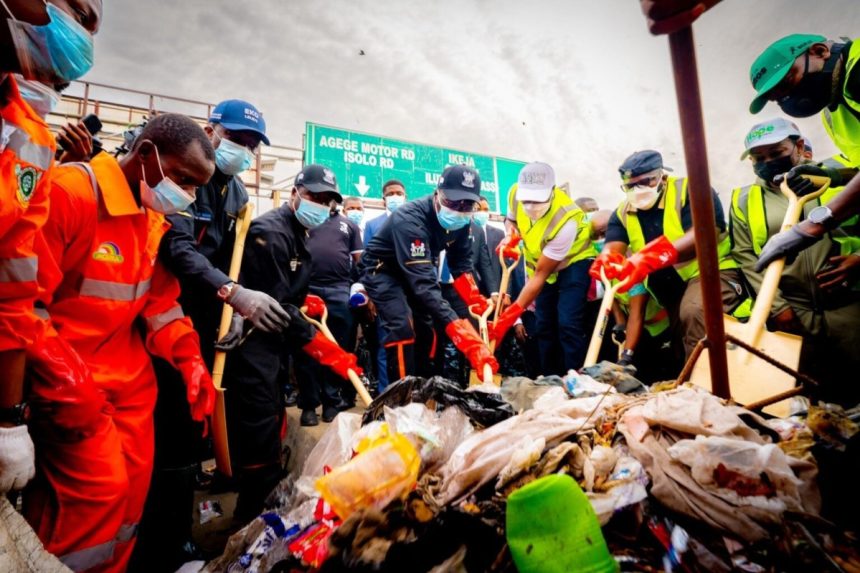
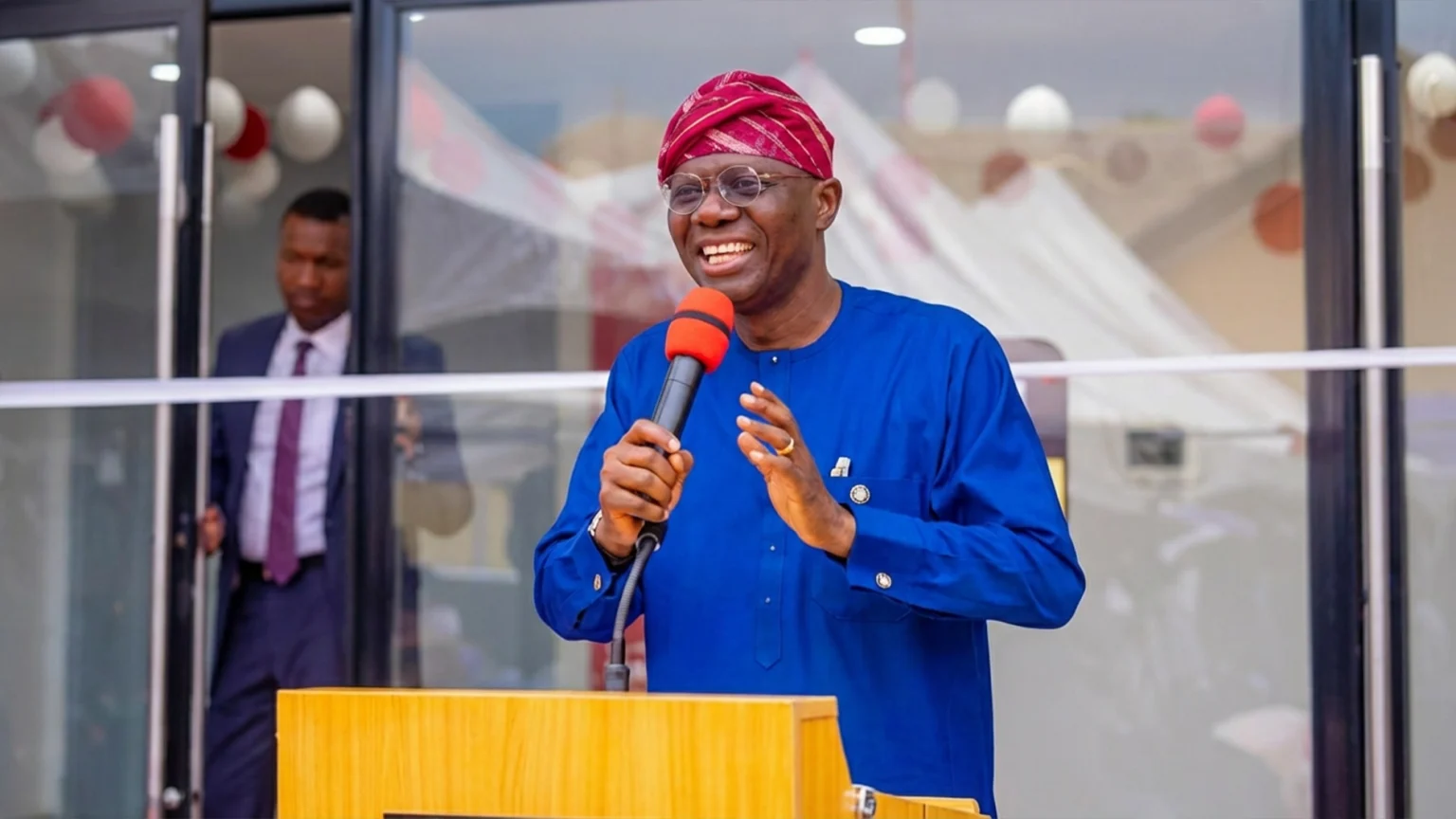
That void ended on Saturday, March 14, 2026, when Governor Babajide Sanwo-Olu flagged off the revival of the exercise along the Mushin-Agege Motor Road corridor.
Effective April 25, the exercise will hold on the last Saturday of every month between 6:30 a.m. and 8:30 a.m. — without movement restrictions this time.
The return is welcome. But the more important question is: what took so long? EKO HOT BLOG unpacks the factors at play.
A City That Outgrew Its Own Discipline
Lagos is the largest city in Africa by population. It is also one of the most flood-prone. Every rainy season brings the same images: submerged roads in Lekki, waterlogged markets in Mushin, stranded commuters on the Lagos-Ibadan Expressway.
The causes are not mysterious. Drainage channels clogged with plastic waste, open gutters choked with refuse, and indiscriminate dumping across streets and public spaces have made flooding a recurring annual emergency rather than an occasional misfortune.
These are not problems that government trucks alone can solve. LAWMA does its rounds. Enforcement drives come and go. But between official interventions, the city keeps producing waste faster than it can be managed.
The monthly sanitation exercise was never glamorous, but it enforced a basic principle: that residents have a role in maintaining the spaces they occupy. Without it, that principle eroded. Streets that were once cleaned by collective effort became everyone’s responsibility and, therefore, no one’s.
Why the Old Model Broke Down
The suspension of the exercise in 2016 was not entirely without basis. The restriction of movement that used to accompany it was legally challenged and struck down. Critics also argued that the exercise had become performative; observed in some neighbourhoods, ignored in others, and unevenly enforced across class lines. Wealthy estates rarely felt the pressure; low-income communities bore the brunt of sanctions.
These were legitimate concerns. But the response — abandonment — only deepened the problem. Between 2024 and early 2026, the Lagos State Government announced plans to revive the exercise multiple times. Each announcement faded. Stakeholder consultations stretched. At one point, the government had to publicly deny reports that the exercise had already resumed, clarifying that no date had been set. The prolonged delay suggested institutional hesitation more than genuine consultation.
What Has to Be Different This Time
The revived exercise carries a meaningfully different design. There will be no restriction of movement — a direct response to the legal and civil liberties concerns that killed the original programme. Compliance will be driven by awareness and voluntary participation, with state officials monitoring and sanctions reserved for clear offenders.
The Commissioner for Environment and Water Resources, Tokunbo Wahab, has framed the exercise explicitly under the T.H.E.M.E.S Plus Agenda, positioning it as a governance commitment rather than an ad hoc directive.
Yesterday, I was in company of Mr Governor,@jidesanwoolu , the Deputy Governor,@drobafemihamzat and other state executives, along the Mushin-Agege Motor Road Corridor for the symbolic flag-off of the reintroduction Monthly Environmental Sanitation Exercise in Lagos State.… pic.twitter.com/nsfb1Qlhtn
— Tokunbo Wahab (@tokunbo_wahab) March 15, 2026
That framing matters. For the exercise to work, it cannot be treated as a campaign event or a seasonal spectacle. It has to become routine, the kind of thing that happens whether or not cameras are present, whether or not a commissioner is watching.
Wahab acknowledged as much: “While the enforcement mechanism has changed, our collective responsibility has not.”
FURTHER READING
That is the correct instinct. The condition of Lagos — its drains, its markets, its streets — is ultimately a product of what its people and its government are willing to do together. The monthly sanitation exercise, imperfect as it is, creates a structure for that shared effort. It is not a solution to Lagos’s environmental crisis. But it is a necessary habit that the city should never have abandoned.
Philip Ibitoye is a Special Correspondent with EKO HOT BLOG. Click here to find daily analysis and critical insight on trending issues in Lagos and other parts of Nigeria.
Click to watch the video of the week below: