- He is also set to tour Catholic-run institutions such as schools and hospitals, and meet President Paul Biya
- He will also spend time in quiet prayer at a chapel honoring 19 clergy members killed during the civil war of the 1990s
- The final stop is Equatorial Guinea, where the pope’s visit will require careful diplomacy
Pope Leo XIV is set to begin an 11-day journey on Monday, traveling across Algeria, Cameroon, Angola, and Equatorial Guinea. This marks his first major international tour since becoming pontiff last year.
Throughout the trip, the American-born leader of the world’s 1.4 billion Catholics will tackle a wide range of issues, including interfaith dialogue with Islam, peacebuilding, inequality, and human rights, Eko Hot Blog gathered.
EDITOR’S PICK
- Easter Celebration: Sanwo-Olu Encourages Love, Sacrifice, Coexistence
- Enough Is Enough Defend Yourselves’ – CAN Urges Northern Christians
- NLC Orders Street Protests Over Minimum Wage
His itinerary spans more than 18,000 kilometres (11,000 miles) across Africa.
Since assuming leadership in May, the 70-year-old pope has already made trips to Turkey, Lebanon, and Monaco. During this visit, he is scheduled to deliver 11 speeches, celebrate seven masses, and stop at around a dozen locations before returning on April 23.
Given ongoing global tensions, particularly the conflict in the Middle East and its economic ripple effects, his remarks are expected to carry significant weight.
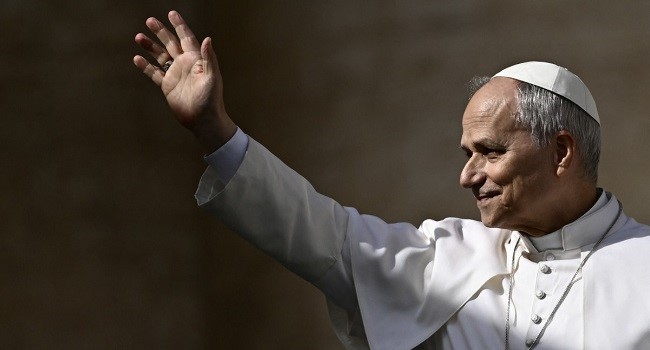
In Algeria, where Islam is the official religion, Leo will make history as the first pope to visit the country. His schedule includes a stop at the Great Mosque of Algiers, a meeting with President Abdelmadjid Tebboune, and a visit to Annaba, historically linked to Saint Augustine and the Augustinian order to which the pope belongs.
He will also spend time in quiet prayer at a chapel honoring 19 clergy members killed during the civil war of the 1990s. Ahead of his arrival, several international organizations have urged him to address concerns about religious freedom.
The next leg takes him to Cameroon, where a message of unity is expected to be central. The country has faced years of unrest in its English-speaking regions, and the pope will visit Bamenda, a key area affected by the conflict, where he will hold a mass under tight security.
He is also set to tour Catholic-run institutions such as schools and hospitals, and meet President Paul Biya, one of the longest-serving leaders in the world.
In Angola, Leo will likely focus on social justice issues. Despite its abundant natural resources, the country continues to struggle with poverty and inequality following a prolonged civil war. The pope is expected to highlight the need for fair distribution of wealth and stronger anti-corruption efforts.
While many Catholics in Angola are enthusiastic about the visit, some citizens have expressed concern over the cost. His itinerary includes both the capital, Luanda, and the historic religious site of Muxima, located along a former slave trade route.
The final stop is Equatorial Guinea, where the pope’s visit will require careful diplomacy. The country has been under the long-standing rule of President Teodoro Obiang Nguema Mbasogo. Although a large majority of the population is Catholic, papal visits have been rare.
Observers expect Leo to strike a balance between encouraging the local Church and addressing sensitive issues such as governance, human rights, and social justice.
In the lead-up to his arrival, public displays and media coverage have highlighted the significance of the visit.
Overall, the trip is seen as a defining moment in Pope Leo XIV’s early papacy, as he engages with some of Africa’s most pressing challenges while strengthening ties with its Catholic communities.
FURTHER READING