- According to him, the conclusions being drawn from the report do not reflect its actual finding
- He stressed that these transactions are lawful and do not amount to revenue leakages
- Reacting to the same World Bank report, Obi said Nigeria had generated about ₦84 trillion in three years
Federal Government has dismissed claims circulating in some quarters that a large share of Nigeria’s federation revenue is being diverted or hidden.
Eko Hot Blog reports that the clarification was made in a statement issued on Sunday by the Minister of State for Finance, Taiwo Oyedele, who said the interpretation of a recent World Bank report had been distorted.
EDITOR’S PICK
- Benue Mortician Arrested for Using Corpse Part as Walking Stick
- Baba Yusuf: Bandits May Reach National Assembly
- PDP Asks INEC To Withdraw Recognition Of Anyanwu As National Secretary
According to him, the conclusions being drawn from the report do not reflect its actual findings. He explained that suggestions of missing or misused funds stem from a misunderstanding of how the country’s fiscal system operates.
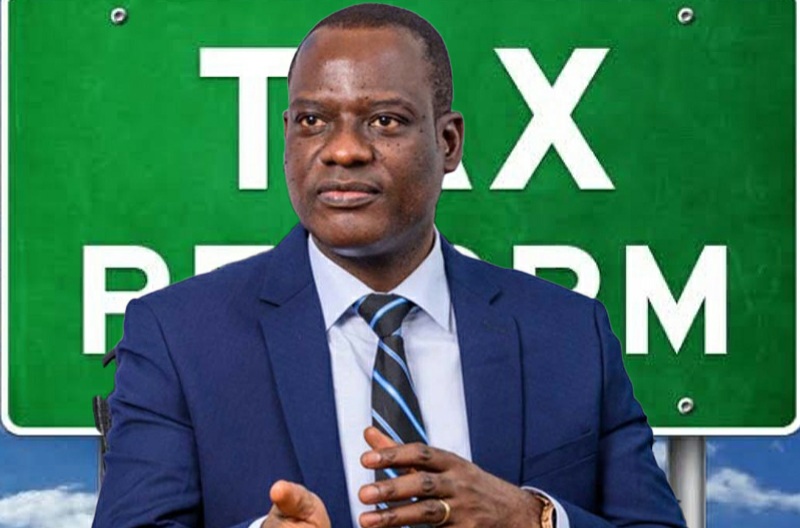
He noted that the report’s references to deductions from the Federation Account Allocation Committee are being wrongly described as waste or unaccounted funds.
In reality, he said, such deductions are legitimate and form part of established financial processes.
These include statutory transfers, savings and investments, security spending, cost of revenue collection, refunds to government agencies, and allocations to states and other tiers of government.
He stressed that these transactions are lawful and do not amount to revenue leakages.
The response follows remarks by former presidential candidate Peter Obi, who had raised concerns about alleged revenue losses.
Reacting to the same World Bank report, Obi said Nigeria had generated about ₦84 trillion in three years but claimed a significant portion was not remitted to the Federation Account.
He argued that the unaccounted figure, estimated at over ₦34 trillion, was substantial when compared to recent capital budgets, describing it as evidence of internal financial leakages.
However, Oyedele disagreed with that position, insisting that such interpretations ignore the structure of government finances.
He maintained that transfers and refunds captured in the report represent valid fiscal obligations rather than missing funds.
The minister also accused some commentators and media platforms of selectively presenting data while overlooking ongoing reforms highlighted in the report.
He pointed out that recent policy measures, including an executive order aimed at improving petroleum revenue remittances, are already addressing transparency concerns.
According to him, the World Bank’s broader assessment presents a more positive outlook.
He said the report indicates that economic growth is becoming more diversified, inflation is gradually easing, and Nigeria’s external reserves have improved alongside a current account surplus.
He added that debt indicators have also shown progress, including a reduction in the debt to GDP ratio for the first time in over a decade.
Oyedele emphasised that the report does not suggest a breakdown of Nigeria’s fiscal system but instead recognises that reforms are yielding results and should be sustained.
He reaffirmed the commitment of the administration of Bola Tinubu to improving transparency, boosting revenue generation, and ensuring prudent public spending.
He also called on the media and the public to engage responsibly with financial data, warning that inaccurate interpretations could undermine confidence in ongoing reforms and create unnecessary public tension.
FURTHER READING