- NiMet, CBN Sign MoU on Data Sharing for Economic Planning
- Anosike explained that climate change and extreme weather conditions continue to affect agricultural productivity and food security across Africa
- Muhammad Sani Abdullahi described the agreement as a major step toward strengthening evidence-based policymaking in Nigeria
The Nigerian Meteorological Agency (NiMet) and the Central Bank of Nigeria (CBN) have signed a Memorandum of Understanding (MoU) aimed at strengthening collaboration through data sharing to support national economic planning and policy development.
Eko Hot Blog reports that the agreement was signed on Wednesday at the CBN headquarters in Abuja by NiMet Director General and Chief Executive Officer, Prof. Charles Anosike, and the Deputy Governor of the CBN’s Economic Policy Directorate, Muhammad Sani Abdullahi.
EDITOR’S PICK
- Fresh Details Emerge on Death of Odomola Monarch, Oba Adebowale Adeshina
- Sanwo-Olu Applauds LASU’s Academic Excellence After JAMB Ranking
- NRC Moves 176,820 Tonnes Of Cargo Through Lagos Ports In Q1
Speaking during the signing ceremony, Prof. Anosike stressed the growing importance of weather and climate information in shaping economic decisions, particularly in key sectors such as agriculture, transportation, and energy.
He explained that climate change and extreme weather conditions continue to affect agricultural productivity and food security across Africa, making accurate climate data increasingly important for planning and policy implementation.
According to him, the partnership aligns with the Federal Government’s Renewed Hope Agenda, especially its focus on improving food security through increased agricultural investments and mechanised farming.
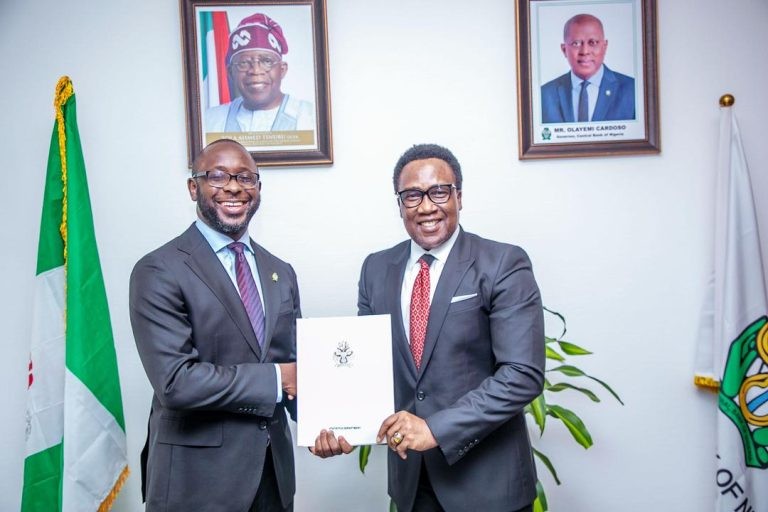
Anosike cited recent global reports indicating that millions of people across Africa are facing hunger due to the impact of climate-related challenges, while rising global temperatures continue to influence food production and energy markets.
He noted that stronger collaboration between institutions like NiMet and the CBN would help improve forecasting, economic research, and policy responses to climate-related risks.
In his remarks, CBN Deputy Governor Muhammad Sani Abdullahi described the agreement as a major step toward strengthening evidence-based policymaking in Nigeria.
He said the CBN depends on reliable and timely statistical data from NiMet for inflation monitoring, agricultural assessments, and broader economic policy planning.
According to him, the current economic environment requires stronger institutional partnerships capable of improving the country’s data systems and supporting informed decision-making.
Both institutions expressed optimism that the partnership would improve research, policy coordination, and national planning efforts across critical sectors of the economy.
FURTHER READING
- Tinubu Calls For Africa’s Shift From Sea Blindness To Ocean Sovereignty
- Nigeria, Germany Finalise New Bilateral Cooperation Framework
- LASG Funds 80 Researchers, 75 Startups With N900m
Click here to watch video of the week