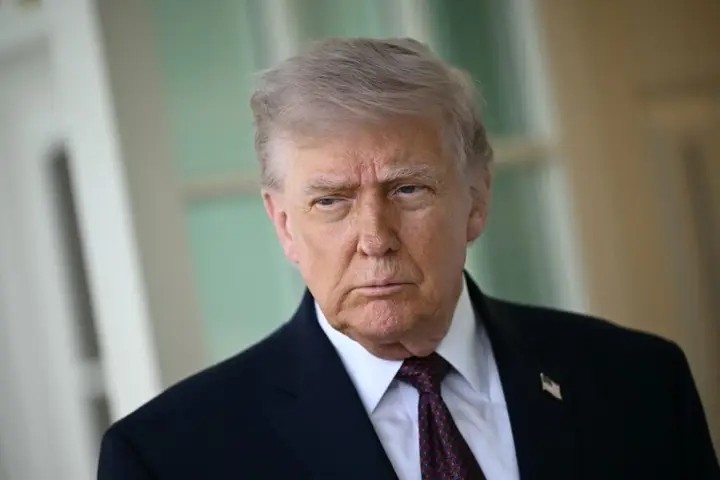
- A charter flight carrying migrants expelled from the United States landed at Freetown International Airport on Wednesday, May 20, 2026, as part of the Trump administration’s ongoing third-country removal policy.
- Under a newly signed Third Country National Agreement, Sierra Leone has agreed to temporarily host up to 300 deported citizens from the ECOWAS sub-region annually, capped at a maximum of 25 individuals per month.
- The United States government is providing a $1.5 million operational grant to Sierra Leone to cover the humanitarian, logistical, and housing costs associated with the processing and repatriation of the migrants.
The government of Sierra Leone has officially commenced the processing of West African migrants expelled from the United States under a controversial bilateral agreement.
Eko Hot Blog reports that a charter flight transporting the first batch of third-country deportees arrived at the international airport just outside Freetown on Wednesday morning.
EDITOR’S PICK
- Fresh Details Emerge on Death of Odomola Monarch, Oba Adebowale Adeshina
- Sanwo-Olu Applauds LASU’s Academic Excellence After JAMB Ranking
- NRC Moves 176,820 Tonnes Of Cargo Through Lagos Ports In Q1
While initial projections from local authorities indicated that 25 individuals were scheduled for the flight, diplomatic sources confirmed that nine migrants, comprising seven men and two women holding citizenships in Nigeria, Ghana, Guinea, and Senegal, ultimately disembarked the aircraft under close security supervision.
The arrival of the migrants required an immediate multi-agency response, with police escorts, medical teams, and senior health ministry officials deployed to the tarmac.
According to Doris Bah, a representative from the Sierra Leonean Ministry of Health, the deportees exhibited severe trauma stemming from spending months in chains while held in American detention facilities.
Local administrative records revealed that several of the individuals were summarily arrested by U.S. immigration agents while at their workplaces, walking on public streets, or participating in recreational activities, completely disrupting their lives before their sudden expulsion.
Under the operational guidelines of the agreement, Freetown has agreed to serve as a transit hub specifically for nationals belonging to member states of the Economic Community of West African States (ECOWAS), many of whom possess historical or long-expired Sierra Leonean residence permits.
Foreign Minister Timothy Musa Kabba clarified via telephone that the incoming individuals are legally permitted to remain within designated local hospitality facilities for a maximum duration of 90 days.
Within this window, the transitional architecture expects to permanently return the individuals to their respective home countries within two weeks.
The logistical framework is financed by a $1.5 million grant from the U.S. State Department to offset immediate humanitarian overhead, though Western capitals have faced intense scrutiny over the lack of transparency surrounding the diplomatic concessions.
Sierra Leone joins an expanding list of African nations, including Cameroon, the Democratic Republic of Congo, Ghana, Rwanda, Uganda, and South Sudan, that have accepted millions in financial and security aid in exchange for taking in third-country deportees.
Human rights organizations have strongly condemned these opaque arrangements, arguing that the transfer of vulnerable migrants to third-party states systematically violates international human rights laws and undermines global asylum protections.