- Petroleum regulators and oil-producing companies have strongly opposed a legislative proposal seeking to compel operators to contribute three percent of their total annual budgets to the South-South Development Commission.
- Industry leaders warn that the proposed levy introduces an ambiguous, expenditure-based tax that duplicates existing statutory obligations, risking Nigeria’s global investment competitiveness.
- The House of Representatives Committee on the South-South Development Commission reconvened public hearings to evaluate alternative, sustainable funding models that support regional development without burdening operators.
Oil industry operators and petroleum regulatory authorities have raised strong objections to a proposed legislative amendment seeking to mandate oil and gas companies to contribute three percent of their total annual budgets to the South-South Development Commission (SSDC).
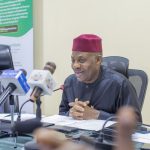
Eko Hot Blog reports that the opposition was voiced during a resumed public hearing organized by the House of Representatives Committee on the South-South Development Commission.
EDITOR’S PICK
- Tinubu Approves Army Expansion, Recruitment of 28,000 Personnel
- Aregbesola Claims Record as First Nigerian Governor to Serve Eight Years Without Owning a House
- Ikosi-Ejinrin LCDA Commissions Fully Equipped NSCDC Divisional Headquarters, Donates Patrol Vehicle and Motorcycle to Boost Security
Committee Chairman Hon. Julius Pondi explained that the session was reconvened to gather critical input from key energy sector players regarding an amendment bill to the South-South Development Commission (Establishment) Act, 2025.
Pondi emphasized that while the South-South region remains the primary economic engine of Nigeria through crude oil production and maritime commerce, it continues to face severe environmental degradation and infrastructural deficits that require predictable financing to address.
However, key regulatory bodies argued that the proposed funding model introduces significant legal and financial risks.
Representing the Commission Chief Executive of the Nigerian Upstream Petroleum Regulatory Commission (NUPRC), Mrs. Oritsemeyiwa Eyesan, the Head of Regulations and Statutory Compliance, Kingsley Chikwendu, stated that the bill fails to define “total annual budget”.
He noted that the ambiguity creates uncertainty regarding assessment criteria, tax deductibility, and remittance timelines, effectively imposing a compulsory levy regardless of a company’s actual production or profitability.

The NUPRC further reminded lawmakers that upstream operators are already subject to multiple mandatory contributions, including royalties, petroleum profit taxes, the Niger Delta Development Commission (NDDC) levy, Host Community Development Trust Fund payments under the Petroleum Industry Act (PIA), and environmental remediation funds.
Corroborating this stance, Ahmed Laido of the Nigerian Midstream and Downstream Petroleum Regulatory Authority (NMDPRA) urged the committee to align any new fiscal provisions with the framework of the PIA 2021 to safeguard regulatory certainty and maintain the Federal Government’s ease-of-doing-business objectives.
The Oil Producers Trade Section (OPTS) of the Lagos Chamber of Commerce and Industry also presented a firm stance against the bill.
OPTS Chairman Bala Wudiri warned that layering additional financial obligations onto existing statutory commitments would artificially inflate operational costs and weaken Nigeria’s position as an attractive destination for foreign direct investment.
While all participating stakeholders agreed on the fundamental necessity of accelerating socio-economic development across the six South-South states, they urged the House Committee to explore non-disruptive, alternative funding mechanisms before presenting its final report to the floor of the House.
FURTHER READING