By every measurable standard, Nigerian women have proven that they can lead.
They have run some of Africa’s largest banks, managed multinational corporations, headed universities, supervised ministries, presided over courtrooms and built businesses that employ thousands.
EDITOR’S PICK
- Fresh Details Emerge on Death of Odomola Monarch, Oba Adebowale Adeshina
- Sanwo-Olu Applauds LASU’s Academic Excellence After JAMB Ranking
- NRC Moves 176,820 Tonnes Of Cargo Through Lagos Ports In Q1
In markets across the country, women control vast informal economies. In homes battered by inflation and insecurity, many have become the chief providers, making impossible decisions with limited resources and holding families together.
Yet, when the conversation turns to who should occupy Aso Rock, the confidence often disappears.
The idea of a woman becoming President of Nigeria is still treated as an extraordinary political experiment rather than a legitimate democratic possibility.
The 2027 presidential primaries have once again exposed that contradiction.
While the country’s political space has been dominated by familiar male figures such as President Bola Tinubu, Atiku Abubakar, Peter Obi, Omoyele Sowore and several others, only a handful of women have managed to emerge as presidential candidates, and almost all of them are flying the flags of relatively smaller political parties rather than the dominant platforms that have historically produced Nigeria’s presidents.
Their emergence is significant. Their isolation is even more telling.
Four women in a field dominated by men
According to the outcomes of the recently concluded party primaries, 18 political parties have produced presidential candidates for the 2027 election cycle.
Four of those candidates are women, while 14 are men.
Among the women is Dr. Esther Nkem Okereke, who emerged as the presidential candidate of the National Rescue Movement (NRM) after the party’s convention in Abuja.
Okereke, known both as a medical practitioner and Nollywood producer, described her emergence as a call to national service and pledged to focus on security, economic revival and youth empowerment.
Another female flagbearer is Ada Fredrick Okwori, who secured the presidential ticket of the National Democratic Party (NDP) through a consensus affirmation conducted across the 36 states and the Federal Capital Territory.
The party has projected her as a grassroots politician whose campaign will focus on inclusion, infrastructure and social welfare.
The Young Progressives Party (YPP) also produced Anita Zugwai-Chukwu as its presidential candidate after she emerged unopposed during the party’s national convention, making her one of the few women contesting the nation’s highest office.
The fourth widely reported female aspirant is Juliet Onuoha, whose ambition has drawn public attention.
However, reports indicate that while she declared for the presidency, the final certification of her party’s ticket has been subject to procedural questions, illustrating the uncertainty that can surround smaller parties during the nomination process.
The fact that Nigerians can easily mention the names of more than a dozen male presidential hopefuls but struggle to identify even four female contenders says something profound about the country’s political culture.
It is access to structures where power is negotiated long before citizens cast their votes.
The barriers begin before election day
The conversation about women in politics often starts with election results.
Perhaps it should begin with party primaries.
Political parties remain the gatekeepers of power in Nigeria. They decide who gets nomination forms, who receives institutional backing and who benefits from alliances with influential party leaders.
Gender advocates argue that these internal structures continue to disadvantage women through expensive nomination forms, consensus arrangements, money politics and weak legal protections for inclusive participation.
A recent audit of party primaries warned that these factors continue to shut women out before campaigns even begin.
In practical terms, many female politicians lose long before Nigerians ever see their names on a ballot paper.
The presidency is not the only example.
Women’s representation in the National Assembly remains among the lowest globally. Despite constituting nearly half of Nigeria’s population, women occupy only a tiny fraction of elected legislative seats, creating a democracy that often legislates for women without adequately representing them.
The irony at the centre of Nigerian politics
Nigeria has produced women who transformed industries.
The banking sector has repeatedly elevated women to chief executive positions.
Women have headed regulatory agencies, served as ministers of finance, education and petroleum, and represented Nigeria at the highest levels of international diplomacy.
No one asks whether a woman can negotiate with the World Bank. No one asks whether she can manage a billion-dollar institution.
No one questions whether she can supervise thousands of employees. Yet the presidency is somehow treated as a bridge too far.
This contradiction cannot be explained by competence. It can only be explained by political culture.
For decades, women have largely been assigned supporting roles in politics.
They mobilise rallies, organise campaigns, coordinate women’s wings and deliver votes, but when the highest offices become available, the structures often shift in favour of men with deeper political networks and financial influence.
The world has moved ahead
Nigeria would not be entering unfamiliar territory if it elected a woman president.
Several countries are currently led by women, and their experiences demonstrate that leadership is ultimately judged by performance rather than gender.
In Mexico, President Claudia Sheinbaum inherited one of Latin America’s largest economies and has continued major infrastructure investments while pursuing social welfare programmes and expanding clean energy initiatives.
In Namibia, President Netumbo Nandi-Ndaitwah assumed office after decades in public service, marking another milestone for women’s political leadership on the African continent.
Samia Suluhu Hassan, President of Tanzania, has won praise for reopening the country’s economy after the pandemic, encouraging foreign investment and restoring stronger diplomatic engagement with international partners.
In Barbados, Prime Minister Mia Mottley has become one of the world’s most influential voices on climate finance, earning international recognition for advocating reforms to help vulnerable developing countries cope with debt and environmental challenges.
Denmark’s Prime Minister Mette Frederiksen continues to lead one of Europe’s strongest welfare states while navigating security concerns and economic pressures arising from regional conflicts.
Meanwhile, Italy’s Prime Minister Giorgia Meloni presides over the eurozone’s third-largest economy and remains a central figure in European debates on migration, defence and fiscal policy.
None of these countries is perfect. Each faces inflation, political opposition and policy disputes. But none questions whether a woman has the constitutional capacity to lead.
The debate centres on ideas, not gender.
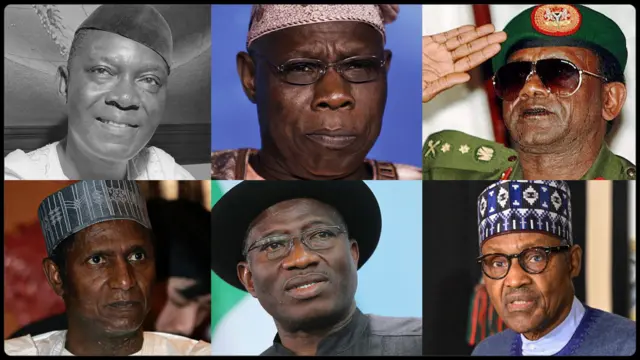
Nigeria’s democracy is limiting its own choices
Democracy thrives when citizens have the broadest possible range of credible candidates.
When political structures consistently produce leadership from one demographic group, democracy itself becomes narrower.
The exclusion of women is a national issue. Every qualified woman discouraged from contesting represents another potential reformer, economist, diplomat or visionary leader who may never have the opportunity to present her ideas to the electorate.
History shows that societies progress when leadership is opened rather than restricted. Nigeria’s greatest political challenge may not be finding capable leaders.
It may be allowing capable people to compete.
A question for the next election
As campaign posters begin to appear and politicians make familiar promises about electricity, security and economic revival, another question deserves equal attention.
Why has Africa’s most populous nation never elected a woman president?
The answer cannot be that there are no qualified women.
The country has produced distinguished jurists, academics, business executives, diplomats and administrators whose records compare favourably with many male politicians who have sought the presidency.
Perhaps the more uncomfortable truth is that Nigeria still struggles to imagine power in female hands.
The 2027 primaries have reminded the country that women are willing to contest.
The challenge now rests with political parties and ultimately with voters. One day, Nigeria will elect its first female president.
When that moment comes, it should not be regarded as a social experiment or a symbolic victory.
It should simply be recognised as democracy functioning the way democracy was always meant to function: giving every qualified citizen, regardless of gender, an equal opportunity to lead.
Until then, the question will remain unanswered. Not whether a woman can lead Nigeria but why Nigeria still seems unwilling to find out.