- Elon Musk has officially cemented his status as the wealthiest individual in human history, hitting a jaw-dropping net worth of $1.11 trillion on paper following a monumental Wall Street debut by his aerospace venture.
- In the largest-ever stock market debut, rocket, telecommunications, and artificial intelligence giant SpaceX went public on the Nasdaq at a valuation of $2.2 trillion, opening at $150 per share before closing out its first trading day at an impressive $161.
- While the historic listing has created over 4,400 new millionaires among current and former staff, the company’s prospectus reveals aggressive long-term bets on building a “lunar economy” and data centers in orbit, despite losing over $9 billion across 2025 and 2026 due to intensive AI infrastructure spending.
The global financial landscape was fundamentally rewritten on Friday, June 12, 2026, as technology tycoon and aerospace pioneer Elon Musk officially crossed the threshold to become the world’s first-ever trillionaire.
Eko Hot Blog reports that the unprecedented milestone was triggered by an explosive surge in the value of his rocket manufacturing and satellite communication outfit, SpaceX, during its highly anticipated initial public offering (IPO) on the Nasdaq stock exchange.
EDITOR’S PICK
- Hamzat Appoints Obanikoro as Campaign DG Ahead of 2027 Lagos Governorship Race
- Tinubu’s State Police Plan Gains Momentum as Amendment Looms
- Residents Raise Alarm After Two Bodies Found in Lagos Waterway
According to the latest Bloomberg Billionaires Index, Musk’s aggregated personal net worth now sits at a historic $1.11 trillion, comfortably distancing him from global wealth peers and placing his personal capital on par with the total gross domestic product of sovereign nations like Switzerland or Poland.
The public listing of SpaceX represents a watershed moment for Wall Street, with the enterprise commanding a staggering opening valuation of $2.2 trillion.
Though initial prospectuses valued the shares at a baseline of $135 each, rampant investor enthusiasm drove the opening bell price up to $150, briefly touching a intraday peak of $176.50 before settling at a firm closing price of roughly $161 per share.
Financial analysts note that the IPO successfully raised an eye-watering $75 billion from global investors and underwriters prior to hitting the open market. Musk’s tight 42 percent direct equity stake in the company gives the controversial billionaire absolute, unilateral control over the newly injected capital, enabling him to steer corporate reserves toward his ambitious deep-space projects at will.
Musk’s stratospheric financial ascent has immediately ignited a fierce international discourse regarding extreme wealth inequality and the expanding political influence of ultra-wealthy individuals.
The historic milestone drew sharp, coordinated rebukes from prominent United States lawmakers, including Democratic Senators Bernie Sanders and Elizabeth Warren, who collectively framed the trillionaire development as a systemic wake-up call highlighting an urgent need for structural wealth taxes.
Beyond finance, Musk’s massive capital pool has increasingly positioned him as a highly polarizing force in Western governance, following his multi-million dollar campaign funding backing US President Donald Trump and his recent leadership of the Department of Government Efficiency (DOGE), where aggressive budget slashes led to the dramatic dissolution of the US Agency for International Development (USAID).
While institutional market experts caution that Musk’s trillionaire status remains heavily tied up in volatile corporate equities, with standard lock-up agreements preventing him from liquidating his new SpaceX holdings for at least 12 months, the listing has yielded immediate, life-changing windfalls at the grassroots level.
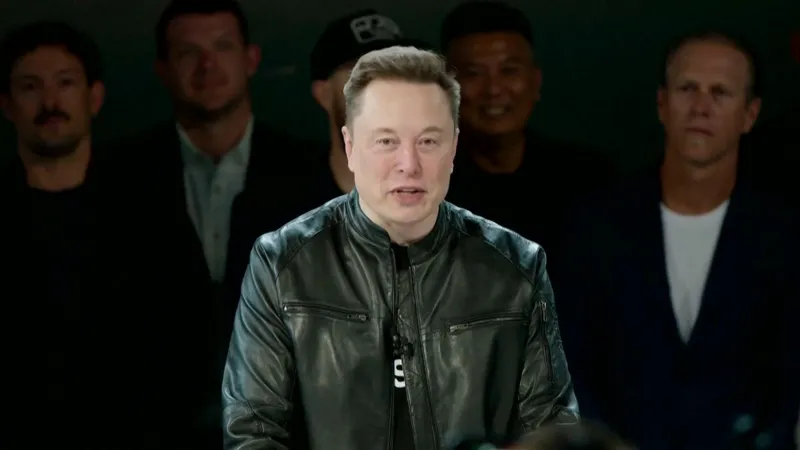
The IPO structure has effectively minted over 4,400 new millionaires among past and present SpaceX workers who held internal performance stock options.
Despite the massive market euphoria, retail investment watchdogs have urged a degree of financial caution, noting that SpaceX is currently unprofitable and burned through over $9 billion between 2025 and early 2026 to finance its orbital data center concepts and its aggressive absorption of xAI’s “Grok” infrastructure.
Nevertheless, institutional backers remain deeply committed to the firm’s ultimate prospectus goal: establishing an operational “lunar economy” capable of extending human civilization to the stars.