Nigeria’s inflation is up again. The National Bureau of Statistics (NBS) on Monday said the country’s headline inflation rate climbed to 15.93 percent in May 2026, up from 15.69 percent in April.
It is the third straight monthly increase this year and it raises fresh questions about how durable the earlier disinflation really was.
EDITOR’S PICKS
The Numbers in Context
The headline figure is still far lower than where it stood a year ago.
In May 2025, inflation was running at 26.06 percent. That year-on-year drop of over 10 percentage points was celebrated as proof that monetary tightening and naira stabilisation were working. That narrative is now being tested.
The month-on-month reading, which shows how fast prices moved within the month, actually fell, from 2.13 percent in April to 1.75 percent in May. That is the one piece of good news in this report: the pace of price increases is slowing down, even if the direction of headline inflation is still upward. Prices are rising, just not as fast.
Food is the pressure point
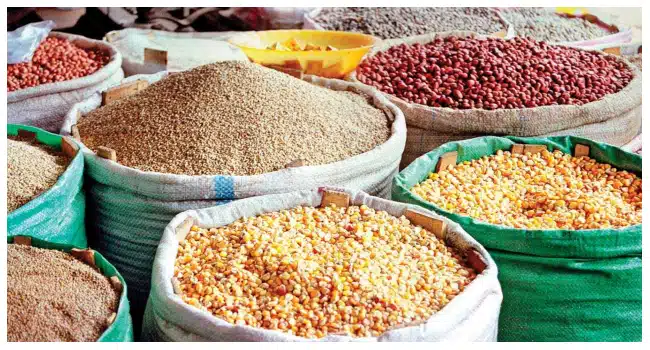
Food inflation, which hits ordinary Nigerians hardest, came in at 16.96 percent year-on-year in May, up from 16.68 percent in April.
The items driving prices up include onions, maize, egusi, yam, cassava, tomatoes, pepper and crayfish. These are not luxury goods. They are the raw materials of the everyday Nigerian meal.
The state-by-state data reveals a country that is not experiencing inflation equally.
Adamawa, Kwara and Rivers recorded the highest food inflation year-on-year, at 29.62, 28.47 and 28.40 percent respectively.
Borno recorded a negative reading of -6.53 percent, meaning food prices there actually fell compared to a year ago, though conflict dynamics may distort that figure.
On a month-on-month basis, Bauchi, Ogun and Jigawa led the surge.
What Three Consecutive Rises Mean
A single monthly increase can be noise. Two can be coincidence. Three in a row is a signal.
Nigeria’s inflation began declining sharply in late 2025 after the the Central Bank of Nigeria (CBN) held interest rates high and the naira found relative stability.
But the May figure confirms what many economists had flagged: that base effects — comparing current prices to an already-high baseline from a year ago — are beginning to fade. As those favourable comparisons disappear, the underlying cost pressures in the economy become more visible again.
Structural problems have not gone away. Nigeria still imports significant quantities of food and industrial inputs. Logistics costs remain high. Energy prices continue to pass through into production costs across sectors.
What to Watch Next
If June’s CPI data shows a fourth consecutive increase, it will be harder for policymakers to frame the trend as temporary.
The CBN’s Monetary Policy Committee will be under pressure to respond, either by holding rates firm or, depending on the trajectory, considering further tightening.
FURTHER READING
For now, Nigerians are caught between two realities: prices are much lower than they were a year ago, and yet they are still creeping upward month by month. That distinction matters in policy rooms. On the street, only the direction of the price tag matters.
Philip Ibitoye is a Special Correspondent with EKO HOT BLOG. Click here to find daily analysis and critical insight on trending issues in Lagos and other parts of Nigeria.
Click to watch the video of the week below: