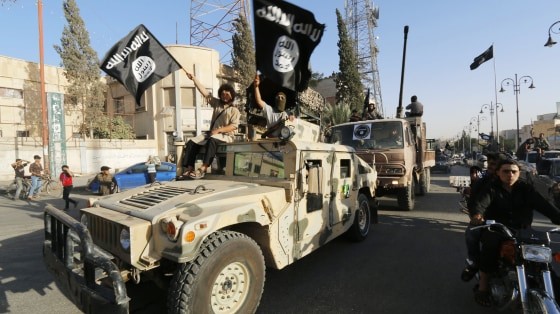
The United States government has designated a Nigerian national and three Nigerian companies as alleged financial facilitators for the Islamic State of Iraq and Syria, better known as ISIS.
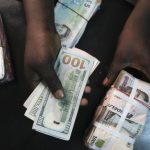
The Nigerian, Mukhtar Adamu Muhammad, who operates from Agege in Lagos State, is accused of running money exchange businesses that served as conduits for ISIS financing. Three Bureau de Change (BDC) operations linked to him — Generation Currency Bureau de Change in Lagos, Nine to Nine Exchange Bureau de Change in Ikeja, and Manhattan Bureau de Change in Kano — have been placed on the US Specially Designated Nationals list.
EDITOR’S PICKS
The designations, announced by US Department of State spokesperson Thomas Pigott, are part of a broader action targeting a network of three individuals and six entities spanning France, Syria, Türkiye, and Nigeria. They were made under Executive Order 13224 — America’s primary legal instrument for choking off terrorist financing.
Terror Has Always Had a Local Face
Nigeria’s security agencies have long acknowledged that Boko Haram and its offshoot, ISIS-West Africa, do not operate in a vacuum. Weapons, logistics, and personnel all cost money and that money has to come from somewhere. What has remained frustratingly elusive is the answer to who, specifically, is bankrolling the violence.
This is not a new problem. Security analysts have warned for years that terror financiers are embedded in ordinary economic life in markets, in religion houses, in the financial sector. They are neighbours, traders, and businessmen. Their identities have been shrouded in secrecy, protected by the informality of cash transactions, the opacity of BDC operations, and the sheer difficulty of following money across borders and currencies.
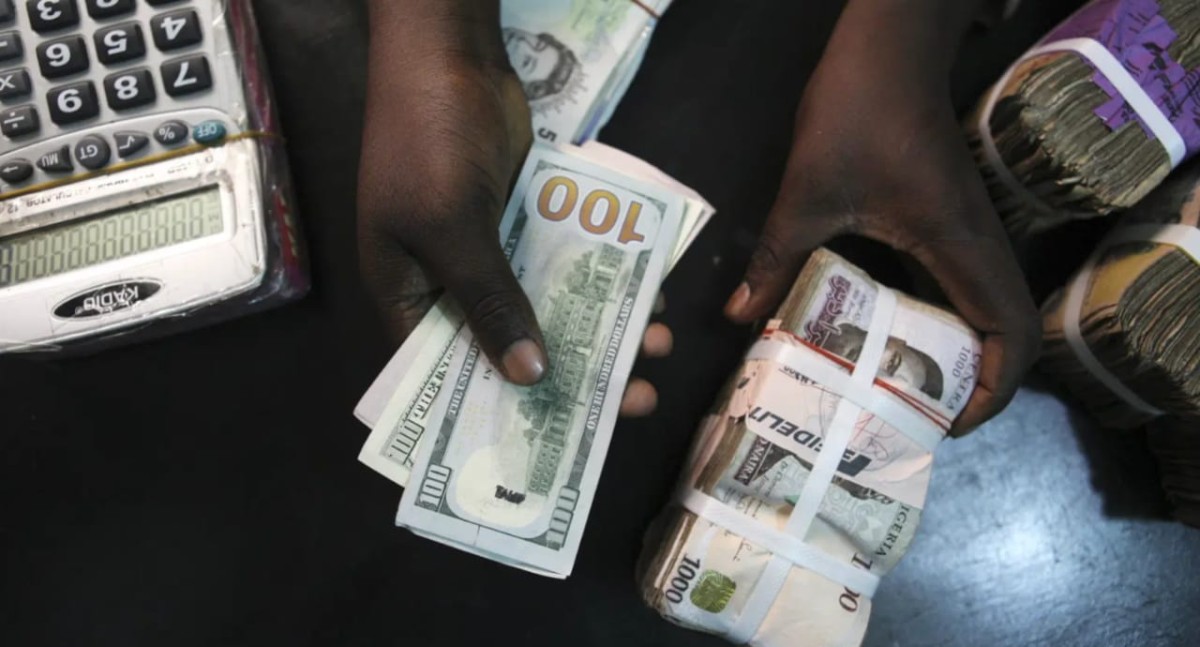
The Mukhtar Adamu case strips away some of that secrecy. In a rarity in the Nigerian public domain, named individuals and registered companies — with Corporate Affairs Commission registration numbers — stand accused of moving money for ISIS. These are not shadowy figures operating from ungoverned spaces. They are registered businesses, in Lagos and Kano, in the middle of Nigeria’s two most economically active cities.
The Challenge This Unmasking Poses
The exposure creates both an opportunity and an awkward question for Nigerian security agencies. The opportunity is obvious: with identities now public and assets potentially freezable, agencies like the Economic and Financial Crimes Commission (EFCC), the Nigerian Financial Intelligence Unit (NFIU), and the Department of State Services (DSS) can build cases, seize accounts, and send a deterrent signal across the BDC sector.
The awkward question is harder to answer: how long had this been going on, and why did it take a US designation to surface it?
Bureau de Change operators in Nigeria are regulated by the Central Bank of Nigeria and are supposed to comply with Anti-Money Laundering and Combating the Financing of Terrorism (AML/CFT) rules. Every licensed BDC is required to file suspicious transaction reports, conduct customer due diligence, and flag unusual cash flows. That three BDCs allegedly linked to ISIS financing were able to operate in Lagos and Kano suggests either a failure of regulatory oversight, a failure of intelligence sharing, or both.
Nigeria’s counter-terrorism architecture has deepened considerably in recent years, and the country’s joint operation with the US in May 2026 that killed Abu-Bilal al-Minuki, ISIS’s second-in-command, demonstrated real operational capacity. But killing fighters is one thing. Dismantling the financial networks that sustain them is another.
FURTHER READING
The unmasking of Mukhtar Adamu and his BDC network is not an ending. It is, at best, a beginning and a pointed reminder that the most dangerous threat actors are not always the ones carrying weapons.
Philip Ibitoye is a Special Correspondent with EKO HOT BLOG. Click here to find daily analysis and critical insight on trending issues in Lagos and other parts of Nigeria.
Click to watch the video of the week below: