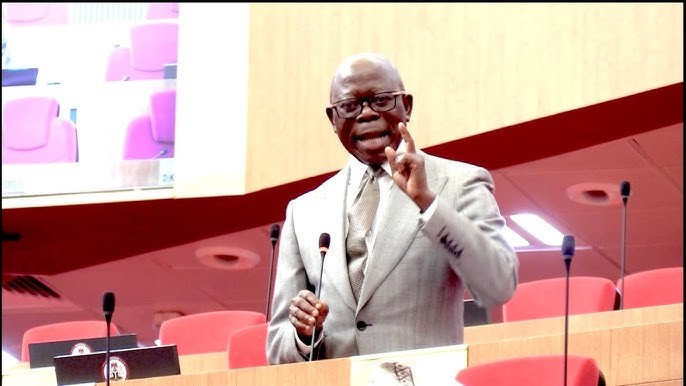
Senator Adams Oshiomhole has disowned remarks he made on live television only two days earlier, insisting they were “misrepresented”, even though a transcript of the broadcast shows he said precisely what he is now denying.
In a statement issued on Wednesday, the Edo north senator described as “an obvious misrepresentation” his comments on AIT’s “Politics Today,” aired Monday 15 June.
EDITOR’S PICKS
He went further, calling the suggestion that he alleged forged signatures “a complete misrepresentation of what I actually said.”
The Claim Versus the Tape
The problem is that nothing was misrepresented. On the programme, Oshiomhole said: “So there are one or two or three senators who say, ‘We didn’t sign oh, but our name was there.'”
“The suspension of Senator Natasha Akpoti from the senate was the senate's lowest point in the last three legislative years. There are some Senators who claimed their signatures were forged on that document”
~ Senator Adams Oshiomhole says pic.twitter.com/3DXs42ggG5
— Nigeria Stories (@NigeriaStories) June 16, 2026
He made this comment while discussing the report that recommended the suspension of Natasha Akpoti-Uduaghan, the Kogi central senator, in 2025.
To say a senator’s name appeared on a document they did not sign is, by definition, to describe an improper or forged inclusion. There is no other reasonable reading of “we didn’t sign… but our name was there.”
Oshiomhole did not merely report a vague grievance; he specifically attributed the claim to identifiable colleagues, including Senator Ireti Kingibe, whom he quoted directly as saying she did not sign the report.
His Wednesday statement does not dispute that he said this. Instead, it disputes the word “forged,” arguing that what he actually described was a committee member’s claim that “signatures of attendance” were attached to the final report.
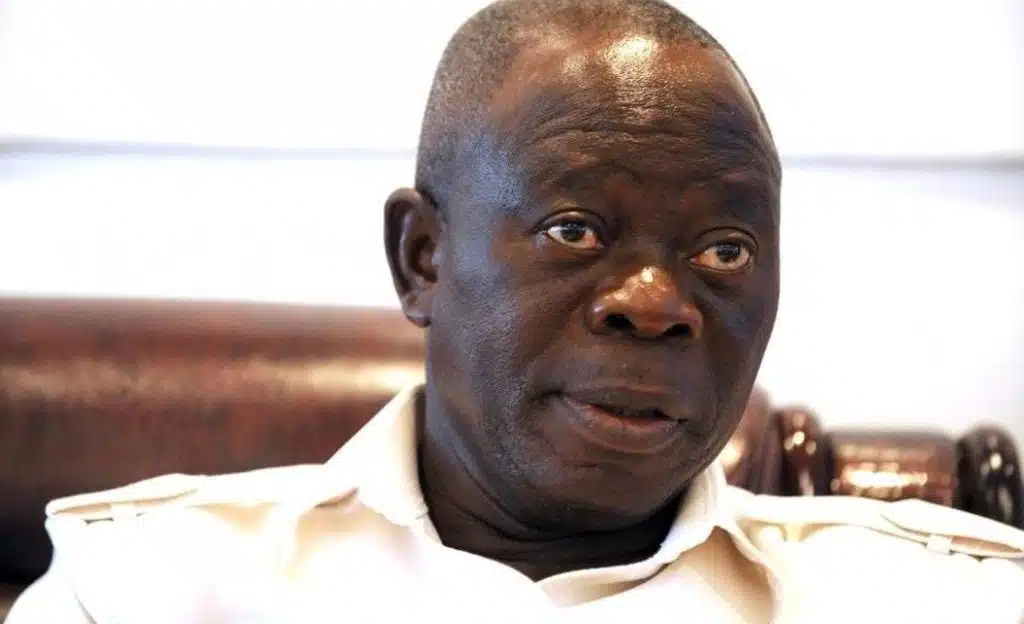
In the retraction statement, he also claimed that “no Senator complained to me that his or her signature was forged”, but his interview clearly stated that Kingibe implied to him that her signature was forged, although he did not directly state that term.
In the interview, he said: “There are even people who claim that their signatures were forged on that document. I mean, someone like Senator Kingibe. She told me, ‘Ah, but I didn’t sign that report. I didn’t agree with the content, but my name was published’.”
In essence, Oshiomhole’s own words on tape describe senators’ names being used on a document without their consent which is the essence of what he now calls a misrepresentation.
A Retraction That Came After a Denial
The reversal followed a public denial by Yemi Adaramodu, the Senate spokesperson, who insisted no senator’s signature was forged during the Akpoti-Uduaghan suspension process.
Oshiomhole’s statement explicitly aligns with Adaramodu’s position, declaring: “I agree absolutely with the spokesperson of the Senate… that no signature of Senators was forged.”
The timing raises an obvious question: why would a senator disown a claim he made so clearly, so soon after making it, and only after a fellow lawmaker publicly contradicted him?
Why the U-turn?
One likely answer lies in Oshiomhole’s already strained relationship with Senate President Godswill Akpabio.
In the days before the AIT interview, Oshiomhole had been engaged in an open and escalating feud with Akpabio, clashing with him on the Senate floor over rule changes restricting eligibility for principal offices, demanding his resignation, accusing him of personal interest in the NNPC, and claiming Akpabio sees him as “the devil” who would lock him out of the Senate if he could. He had also predicted that the 11th Senate “will not be like the 10th,” citing what he called widespread discontent with Akpabio’s leadership.
Against that backdrop, his forgery-adjacent remarks on the Natasha suspension report carried extra weight. The Senate has a track record of disciplining members for statements deemed embarrassing to the institution or its colleagues — Akpoti-Uduaghan’s own suspension was partly rooted in sexual harassment accusations she made against Akpabio.
Having named a colleague directly and implied wrongdoing in a process the Senate leadership had defended, Oshiomhole risked giving Akpabio fresh grounds to move against him at a moment when their rivalry was already public and bitter.
His swift alignment with Adaramodu’s denial and his insistence that the matter “has been put to rest” suggests an attempt to defuse tension before it could escalate into a formal complaint or sanction.
FURTHER READING
The sequence of events — a clear claim on tape, a public denial from the Senate spokesperson, then a swift and selective retraction — fits a familiar pattern of lawmakers walking back remarks once the institutional cost becomes clear.
Philip Ibitoye is a Special Correspondent with EKO HOT BLOG. Click here to find daily analysis and critical insight on trending issues in Lagos and other parts of Nigeria.
Click to watch the video of the week below: