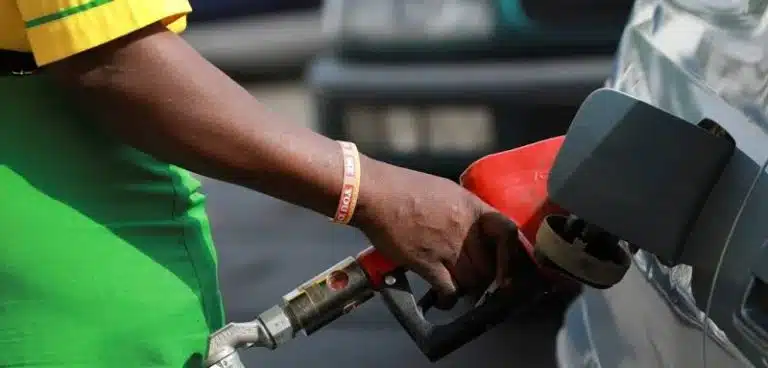
- Why Petrol Prices May Not Drop Despite Falling Global Oil Prices
- Petrol prices in Nigeria remain significantly higher than before
- Analysts say exchange rate stability is key to fuel cuts.
The recent decline in global crude oil prices has raised hopes among Nigerians that the cost of petrol could soon reduce. However, despite international oil prices falling close to levels recorded before the recent United States-Iran conflict, pump prices across Nigeria have remained largely unchanged.
EDITOR’S PICKS
- Akpabio Makes Demand From Senators Over State Police
- JUST IN: State Police Move Gains Momentum as Tinubu Sends Bill to Senate
- Malami Appears in Court Over ₦8.7bn Trial
EKO HOT BLOG reports that Brent crude, the global oil benchmark, dropped to $73.14 per barrel on Wednesday, while West Texas Intermediate (WTI) fell to $69.85 per barrel. The decline follows easing tensions between the United States and Iran after a peace agreement helped calm fears of supply disruptions through the Strait of Hormuz, one of the world’s most important oil transit routes.
Before the conflict, petrol sold for between ₦770 and ₦800 per litre in several parts of Nigeria. However, concerns over possible disruptions to global oil supply pushed fuel prices significantly higher, with pump prices rising to between ₦1,200 and ₦1,300 per litre depending on location.
Although crude oil prices have continued to decline in recent days, petrol prices in Nigeria have only dropped marginally, by about ₦75 per litre in some areas. This has triggered renewed public calls for marketers to reduce pump prices and ease the financial burden on consumers.
Industry analysts say lower crude prices would ordinarily create room for cheaper refined petroleum products if market conditions remain favourable. A petroleum marketer who spoke on the development argued that the ex depot price of petrol should not exceed ₦700 per litre, compared to the current average of about ₦1,180.
The marketer maintained that falling crude prices and improved supply conditions should be reflected in domestic fuel prices.
However, oil and gas analyst, Dr. Ayodele Oni, said Nigerians may not see an immediate or significant reduction in petrol prices despite the drop in global crude prices.
“For the ordinary Nigerian, the honest answer is that even if crude falls back, pump prices are unlikely to follow it all the way down,” Oni said.
He explained that Nigeria’s deregulated petroleum market is influenced not only by crude oil prices but also by exchange rate fluctuations.
“Our market is deregulated, and the binding factor is no longer Brent or crude prices alone, but the exchange rate, since landed petrol cost is priced in dollars,” he stated.
According to Oni, a stable naira is critical to achieving meaningful reductions in petrol prices. He noted that while lower crude prices can help reduce pressure on transportation and food costs, exchange rate stability remains a key factor.
“Lower crude is necessary, but on its own it is not enough. The naira does much of the heavy lifting,” he added.
With fuel costs continuing to affect transportation fares, food prices and the overall cost of living, many Nigerians are watching developments closely. Industry observers believe that if crude prices remain low and the naira maintains stability, pressure will increase on marketers to reduce pump prices in the coming weeks.