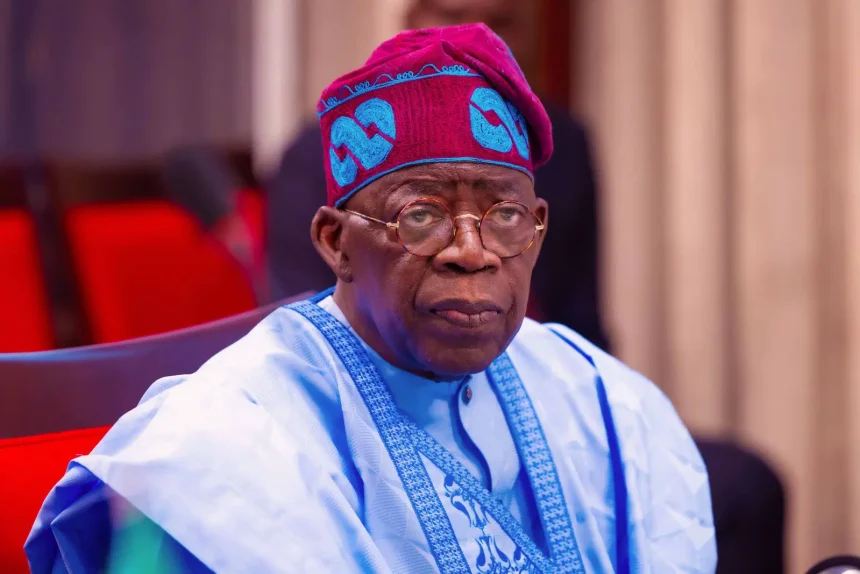
President Bola Tinubu has approved the establishment of the National Health Technology and Data Analytics Office (NHTDAO), appointing Obi Adigwe, director-general of the National Institute for Pharmaceutical Research and Development (NIRD), as its pioneer national coordinator.
According to a statement issued on Friday by the president’s spokesperson, Bayo Onanuga, the agency will be domiciled in the office of the coordinating Minister of Health and Social Welfare, Ali Pate.
EDITOR’S PICKS
- Can “Waste Police” Fix Lagos’s Trash Epidemic?
- LAWMA Is Clearing Lagos’s Trash. But Who Stops the Next Pile?
But beyond the announcement, a key question follows: why does Nigeria need another health agency?
A Fragmented System
Nigeria’s health sector has long struggled with one fundamental problem: its many institutions do not speak to each other. Hospitals, insurance bodies, primary healthcare agencies, and state health ministries each operate their own data systems, often incompatible with one another. Patient records do not follow patients. Disease outbreaks are detected late. Policy decisions are made on incomplete information.
The NHTDAO is designed to address precisely this.
According to the presidential statement, the office will serve as a “meta-level national platform” — meaning it will sit above existing agencies, not replace them, but coordinate them. It will set the standards that connect public and private health institutions across the country.
What the Office Will Actually Do
The NHTDAO’s primary mandate is to operationalise the National Digital Health Architecture, a framework approved by the National Council on Health in November 2025. In practical terms, this means building the infrastructure for a health system where data flows securely between institutions, so a patient’s records at a federal teaching hospital can be accessed by a primary health centre, or where an insurance claim can be verified instantly.
The office will also harmonise digital health efforts currently scattered across multiple agencies, ending duplication and establishing clear national standards for health technology.
The Leadership Choice
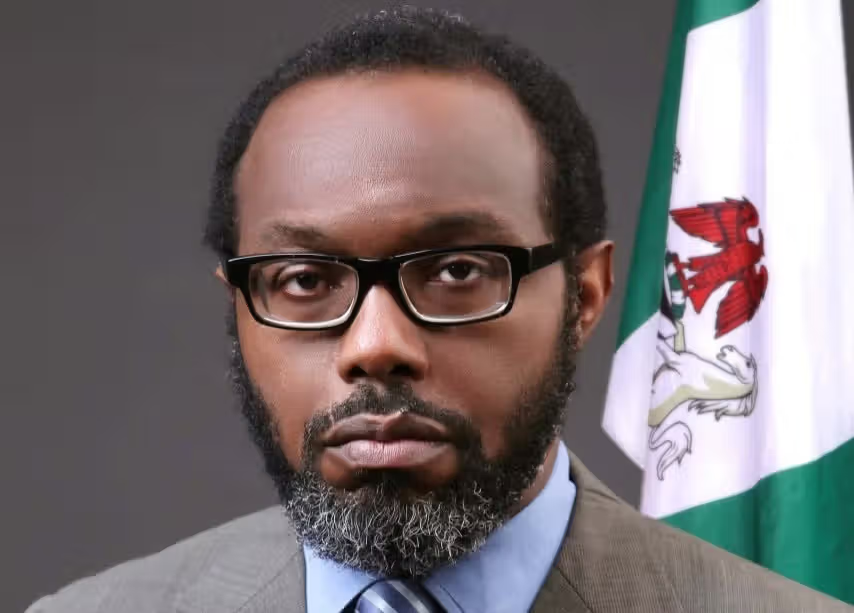
Adigwe’s appointment signals that the administration is approaching this as a science and technology challenge, not merely a bureaucratic one.
His record at the NIPRD includes coordinating a ¥300 million nanotechnology grant and leading the roadmap that secured an €18 million EU grant, the largest on the continent in its thematic area.
During the COVID-19 pandemic, Adigwe led the world’s first scientific analysis debunking claims about organic Covid preparations, bringing African science onto the global stage.
In addition to the coordinator, the NHTDAO’s steering committee is notably high-powered. With Minister Pate and NESG chairman Olaniyi Yusuf as co-chairs, the office has both political authority and private sector buy-in from the start.
The inclusion of representatives from all six geopolitical zones through state commissioners for health suggests the federal government is aware that digital health coordination will fail if it does not carry state governments along.
The Bigger Picture
Nigeria processes millions of health transactions daily — consultations, drug prescriptions, insurance claims, disease reports — most of them recorded on paper or trapped in isolated databases. For a country aiming to achieve universal health coverage, that is not sustainable.
FURTHER READING
- Men’s Health Week: What Nigerian Fathers Must Do To Stay Alive
- Inside the 37 Bills That Could Rewrite How Nigeria Is Governed
The NHTDAO is, at its core, a bet that better data will produce better health outcomes. Whether it delivers will depend on implementation: the record of similar coordination offices in Nigeria has been mixed. But the structure, at least, is ambitious.
Philip Ibitoye is a Special Correspondent with EKO HOT BLOG. Click here to find daily analysis and critical insight on trending issues in Lagos and other parts of Nigeria.
Click to watch the video of the week below: