- FCCPC Questions High Petrol Prices, Warns Marketers Against Unfair Pricing
- Commission warned marketers against unfair pricing and anti competitive practices.
- Nigerians were urged to report misleading pricing and market exploitation.
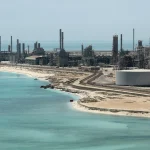
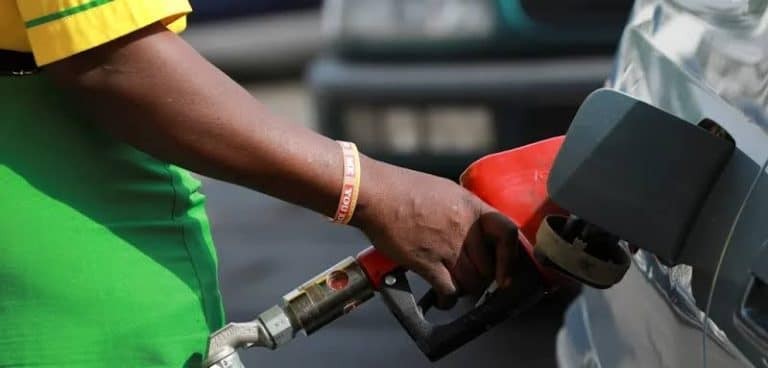
The Federal Competition and Consumer Protection Commission (FCCPC) has raised concerns over the continued high price of petrol across filling stations in Nigeria despite the recent decline in global crude oil prices.
EDITOR’S PICKS
- Akpabio Makes Demand From Senators Over State Police
- JUST IN: State Police Move Gains Momentum as Tinubu Sends Bill to Senate
- Malami Appears in Court Over ₦8.7bn Trial
EKO HOT BLOG reports that in a statement issued on Sunday, the commission noted that petroleum marketers were quick to increase pump prices when international crude prices surged but have been slow to reduce prices following the easing of global market pressures.
According to the FCCPC, petrol prices rose from between ₦800 and ₦900 per litre to as high as ₦1,350 and ₦1,500 during heightened tensions in the Middle East between April and May. Diesel prices also climbed to about ₦2,000 per litre during the same period.
The commission, however, observed that although geopolitical tensions have eased and global crude oil prices have declined, petrol is still selling for an average of about ₦1,200 per litre nationwide. It added that some local refiners continue to fix gantry prices between ₦1,025 and ₦1,075 per litre despite the improved market conditions.
The FCCPC said its review of gantry prices charged by local refiners, depot operators, marketers and retail outlets showed only marginal reductions that do not reflect the significant fall in international crude oil prices.
The Executive Vice Chairman and Chief Executive Officer of the FCCPC, Tunji Bello, in a statement signed by the commission’s Director of Corporate Affairs, Ondaje Ijagwu, questioned why consumers had yet to benefit from the reopening of the Strait of Hormuz and the resulting decline in global oil prices.
Bello acknowledged that domestic fuel prices are influenced by factors such as refining costs, foreign exchange rates, logistics, financing and distribution expenses. However, he stressed that a competitive market should ensure that cost savings are passed on to consumers.
He warned that the commission would investigate and sanction any conduct that undermines competition, exploits consumers or violates the Federal Competition and Consumer Protection Act.
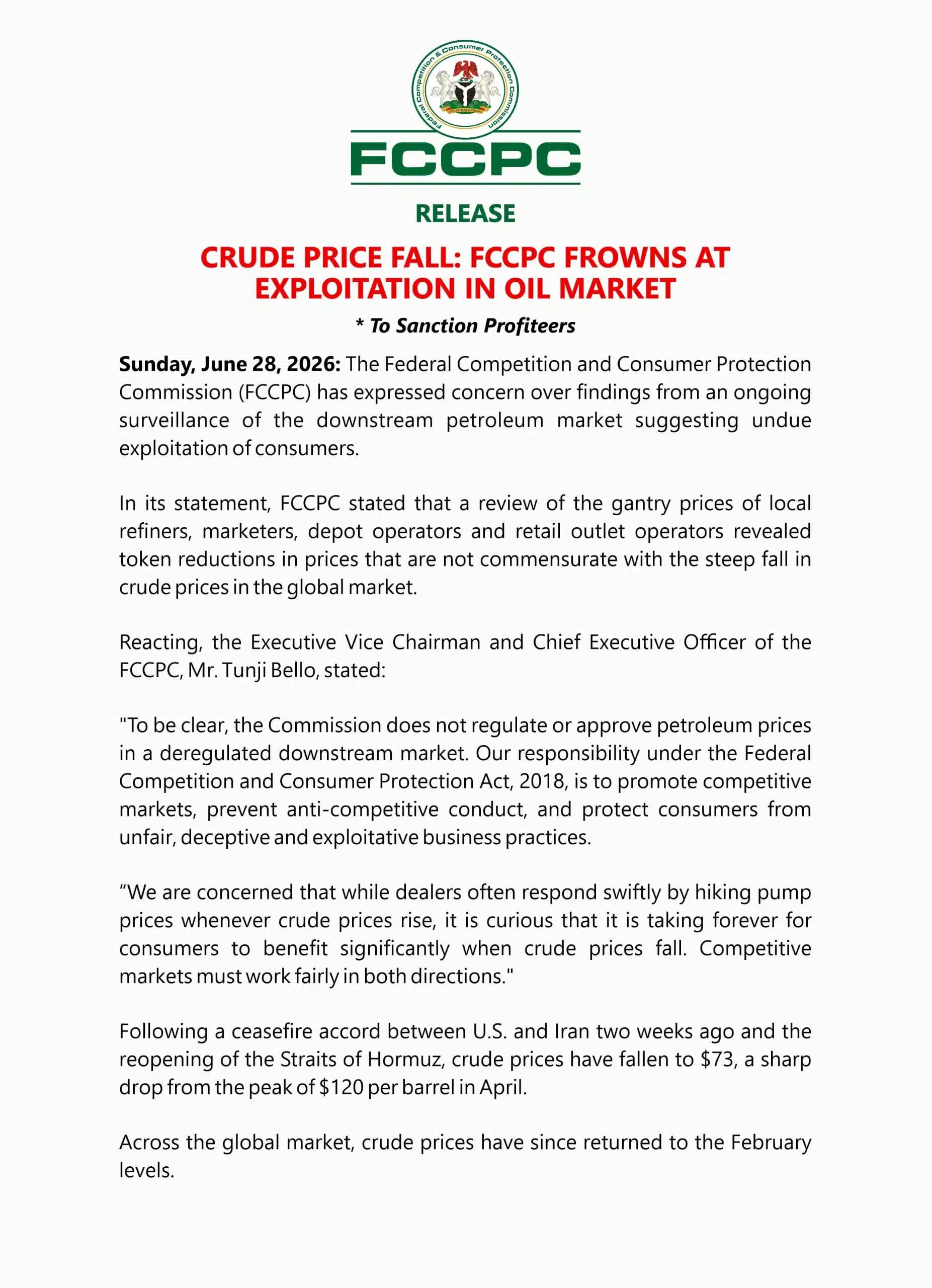
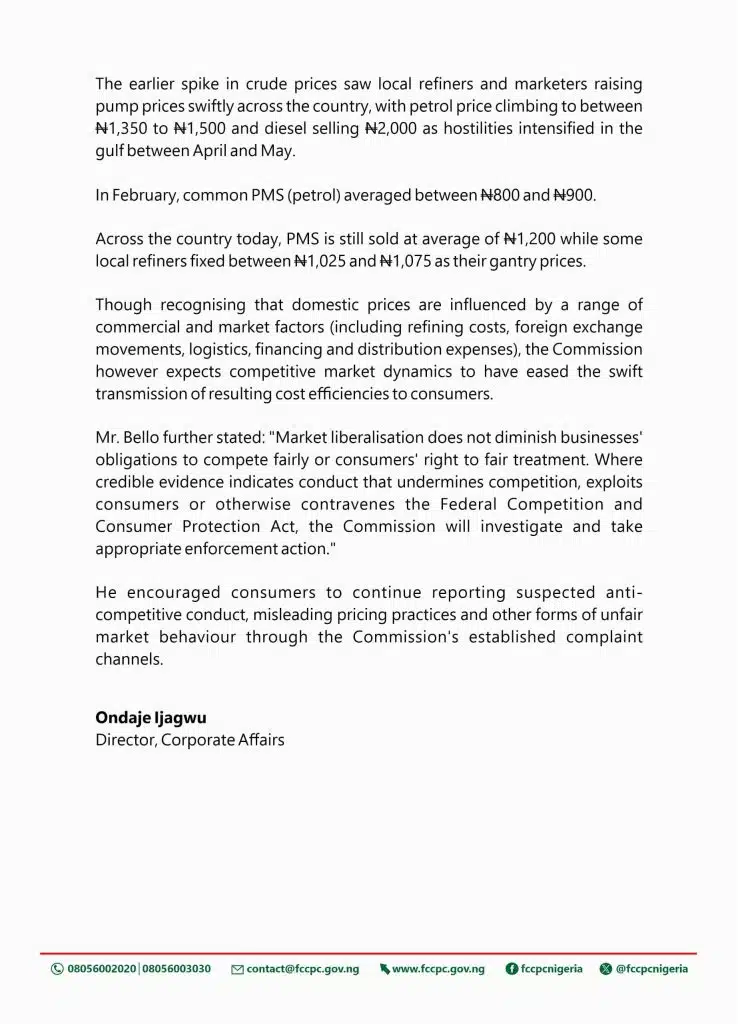 Bello also urged Nigerians to report suspected anti competitive practices, misleading pricing and other unfair market behaviour through the commission’s official complaint channels.
FURTHER READING
- Governor Abba Yusuf Pledges Kano’s Total Support For President Tinubu’s Re-Election Bid
- UN Estimates Nearly 6.8 Million People Affected by Devastating Twin Earthquakes in Venezuela
- NNPCL Cuts Petrol Price Second Time In Four Days
.