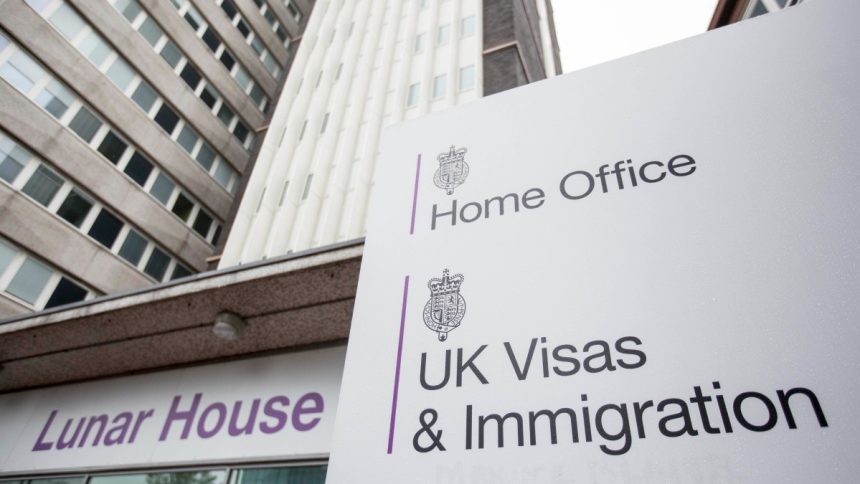
- Freshly compiled data from the United Kingdom Home Office reveals that a staggering 1,344,595 Nigerian visa applications were rejected between 2005 and the first quarter of 2026.
- This data secures Nigeria’s position as the second-most refused nationality globally behind India, accounting for a massive 44.4 percent of all UK visa rejections recorded across the African continent.
- Diplomatic experts tie the high volume of applications and subsequent rejections to the ongoing “Japa” phenomenon, where citizens seek relief abroad from domestic economic pressures.
A comprehensive statistical analysis of official United Kingdom Home Office data has revealed the massive scale of Nigeria’s migration hurdles, indicating that at least 1.34 million Nigerian entry clearance applications were denied over the past two decades.
Spanning from the first quarter of 2005 through the first quarter of 2026, the newly published immigration datasets underscore the friction within the visa processing pipeline.
EDITOR’S PICK
- Hamzat Appoints Obanikoro as Campaign DG Ahead of 2027 Lagos Governorship Race
- Tinubu’s State Police Plan Gains Momentum as Amendment Looms
- Residents Raise Alarm After Two Bodies Found in Lagos Waterway
Nigeria’s collective refusal rate over this 21-year timeline settled at 33.1 percent, a figure that is more than double the United Kingdom’s documented global rejection average of 14.8 percent.
Despite the high rejection volume, Nigeria simultaneously stands out as the largest single recipient of UK entry clearance visas in Africa, with 2,723,558 visas granted over the same period.
Globally, this massive volume of approvals positions Nigeria as the third-highest recipient of UK visas worldwide, trailing only behind India and China.
Within the African context, Nigeria completely dominates the immigration tables, comfortably outstripping other major nations such as South Africa, which recorded 1.63 million approvals, and Egypt with roughly 695,000 grants.
A closer inspection of the data reveals that short-term travel documents bore the brunt of the immigration denials. Standard visitor visas accounted for an overwhelming 83.8 percent of all rejections issued to Nigerian applicants, totaling 1,127,088 denied files.
In comparison, study visa rejections reached 130,712, work visa rejections stood at 41,410, and family-related path refusals sat at 12,217.
Immigration analysts point out that the rejection rates spiked significantly following April 2024, a period when the British government implemented a steep 48 percent increase in the minimum salary threshold for Skilled Worker visas, raising it from £26,200 to £38,700, while simultaneously rolling out severe restrictions on dependent routing options for students and care professionals.
Reacting to the demographic shifts, former Nigerian Ambassador to Singapore, Ogbole Amedu-Ode, observed that the high application volumes are direct indicators of domestic financial realities.
The retired diplomat noted that the widespread “Japa” phenomenon is intrinsically tied to macroeconomic indicators, meaning that application numbers will likely remain inflated until structural internal adjustments are achieved.
He added that while the sheer volume of refusals remains a cause for concern, the simultaneously high approval figures indicate that British entry clearance officers are simply responding to an unprecedented, post-pandemic surge in total application volumes from the West African subcontinent.