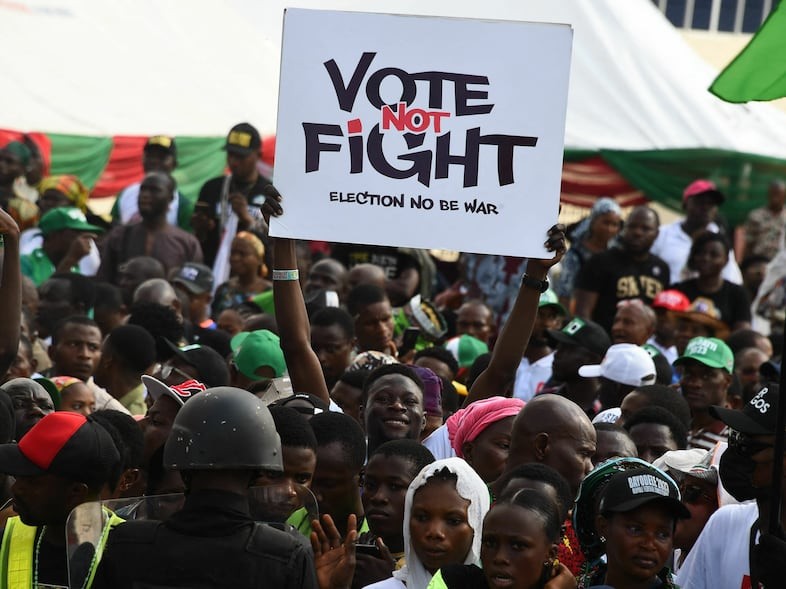
The Centre for the Promotion of Private Enterprise (CPPE) has warned that rising political and electioneering activities ahead of the 2027 general election could threaten Nigeria’s fragile economic recovery, fuelling inflation, raising foreign exchange demand and distracting policymakers from urgent reforms.
In its half-year economic outlook released on Sunday, the think tank, led by CEO Muda Yusuf, said the growing intensity of political activity presents “an important downside risk” to the economy in the second half of the year. It warned that election-related spending could inject fresh liquidity into the system, worsening inflationary pressure and putting more strain on the naira.
EDITOR’S PICKS
- Can “Waste Police” Fix Lagos’s Trash Epidemic?
- LAWMA Is Clearing Lagos’s Trash. But Who Stops the Next Pile?
Beyond the immediate financial risks, CPPE cautioned that policymakers could lose focus on economic governance and structural reforms as political attention shifts toward the 2027 polls, potentially stalling fiscal and institutional initiatives that are still in progress.
Recovery Intact, But Fragile
Despite the warning, CPPE maintained that Nigeria’s economy would likely continue its gradual recovery in the second half of 2026, driven by financial services, telecommunications, construction, trade and oil refining.
The organisation also projected that inflation would stay well below 2025 levels, with exchange rate stability supported by stronger dollar inflows, improved reserves and better market confidence.
But the think tank was careful to frame this recovery as fragile rather than secure, one that political spending and disruption could easily unsettle if left unmanaged.
Gains Yet to Reach Ordinary Businesses
CPPE’s report also highlighted a widening gap between macroeconomic stability and the real experience of businesses and households. It said the improvements recorded at the macro level have not translated into better productivity, job creation or living standards.
The organisation pointed to a familiar list of constraints still weighing down businesses: high interest rates, expensive energy, poor electricity supply, weak transport infrastructure, logistics inefficiencies and persistent insecurity. These, CPPE said, continue to limit investment and productivity despite the calmer macroeconomic picture.
It also flagged procurement delays, funding gaps and debt-service obligations as factors slowing down government capital spending, reducing how much impact fiscal policy can have on real economic activity.
“Macroeconomic stabilisation has not yet led to significant, broad-based improvements in productivity, competitiveness, employment and household welfare,” the report said, adding that businesses are still grappling with elevated costs and structural bottlenecks.
A Call for Deeper Reforms
CPPE argued that stable macroeconomic indicators, while important, are not enough on their own. It called for the next phase of government reform to focus squarely on cutting production costs, improving productivity and making Nigerian businesses more competitive.
Specifically, the think tank urged government to improve electricity supply, upgrade transport and logistics infrastructure, strengthen security in farming communities, and expand access to affordable long-term financing. It also called for faster budget implementation, warning that delays continue to blunt the effectiveness of government spending.
On revenue generation, CPPE cautioned against government leaning on new taxes to shore up its finances. Instead, it recommended that additional revenue come from efficiency-driven reforms, a signal that further tax hikes could deepen the pressure already facing struggling businesses.
FURTHER READING
- Men’s Health Week: What Nigerian Fathers Must Do To Stay Alive
- Inside the 37 Bills That Could Rewrite How Nigeria Is Governed
The organisation’s central message is one of caution: Nigeria’s economic recovery is real, but not guaranteed. With political activity set to intensify ahead of 2027, CPPE is urging the government to keep its focus on reform, protect policy consistency, and avoid letting electioneering pressures derail the gains made so far.
Philip Ibitoye is a Special Correspondent with EKO HOT BLOG. Click here to find daily analysis and critical insight on trending issues in Lagos and other parts of Nigeria.
Click to watch the video of the week below: