- The Transmission Company of Nigeria failed to meet the regulatory efficiency target set by the Nigerian Electricity Regulatory Commission for the first quarter of 2026, leading to billions in unrecovered revenue.
- The national grid’s average Transmission Loss Factor climbed to 7.96 percent, exceeding the allowable Multi-Year Tariff Order benchmark of 7.00 percent.
- Severe fluctuations in frequency and system voltage outside prescribed limits continue to threaten industrial machinery and erode overall power quality across the country.
Nigeria’s power sector suffered a significant financial setback in the first quarter of 2026, losing an estimated ₦2.61 billion due to persistent inefficiencies within the national electricity transmission network.
Eko Hot Blog reports that the regulatory body, NERC, revealed in its latest quarterly performance report that the Transmission Company of Nigeria failed to clear the efficiency benchmarks mandated under the current tariff framework.
EDITOR’S PICK
- Hamzat Appoints Obanikoro as Campaign DG Ahead of 2027 Lagos Governorship Race
- Tinubu’s State Police Plan Gains Momentum as Amendment Looms
- Residents Raise Alarm After Two Bodies Found in Lagos Waterway
This operational shortfall means that a substantial portion of the electricity generated by power plants was entirely lost as heat or dissipated along high-voltage transmission lines before ever reaching the distribution companies and final consumers.
According to NERC, the total financial impact of ₦2.61 billion consists of ₦257.91 million directly linked to transmission loss factor infractions and an additional ₦2.35 billion in regulatory penalties payable directly to generation companies.
These penalties arise because TCN is legally required to compensate GenCos for injected energy that cannot be billed to off-takers due to grid network deficiencies.
This multi-billion naira loss represents a strict financial penalty for the transmission service provider since the regulatory framework completely bars the utility from passing the costs of these inefficient network losses onto Nigerian electricity consumers.
The technical data indicates a clear decline in the physical performance of the grid infrastructure. The average Transmission Loss Factor recorded for the first quarter of 2026 reached 7.96 percent, representing an underperformance of 0.96 percentage points compared to the 7.00 percent maximum limit established in the 2026 Multi-Year Tariff Order.
Practically, this metric indicates that for every 100 megawatt-hours of electrical energy pushed onto the national grid, nearly 8 megawatt-hours vanished entirely within transmission lines or was swallowed up by basic consumption inside regional transmission substations.
This performance is visibly worse than the final quarter of 2025, where losses were tightly managed at 7.27 percent.
Compounding the financial drain of unbilled energy, the actual structural stability of the national grid’s frequency profile deteriorated during the review window.
While the national grid code establishes a standard operating frequency of 50Hz with a tight, safe operational boundary between 49.75Hz and 50.25Hz, the real-world daily frequency range expanded drastically to 1.61Hz.
System logs show daily lower frequencies plunging to 49.11Hz, while upper frequencies spiked to 50.72Hz. This widening frequency range represents a 26.77 percent increase in system instability compared to the previous quarter, indicating a highly volatile grid.
In tandem with unstable frequency cycles, the network buckled under severe voltage fluctuations that frequently broke past safe statutory boundaries.
The grid code stipulates a nominal high-voltage transmission standard of 330kV, keeping acceptable operations between 313.50kV and 346.50kV.
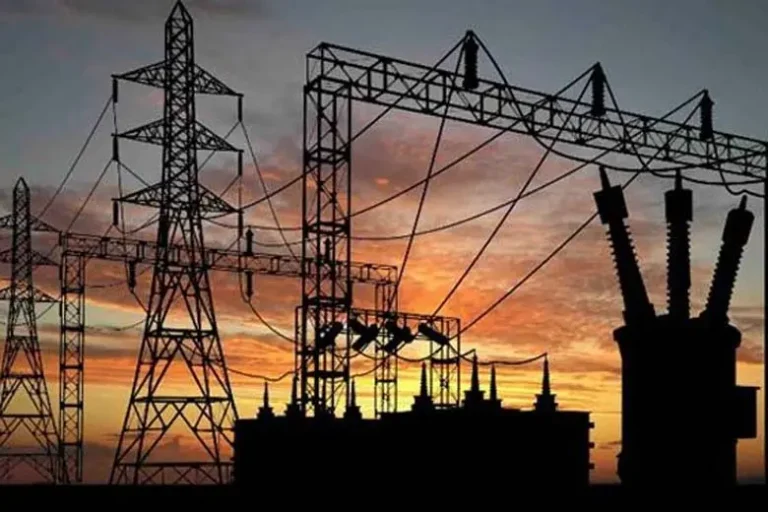
However, the transmission network recorded extreme operational averages during the quarter, hitting a low of 304.21kV and pushing up to a dangerous ceiling of 349.88kV.
These recurring voltage swings create deep technical risks for heavy-duty manufacturing plants, often causing sudden line trips, brownouts, and physical damage to sensitive machinery.
The regulatory findings serve as a stark reminder of the deep structural issues plaguing the country’s energy value chain. Despite ongoing capital investments aimed at expanding and reinforcing high-voltage infrastructure, the grid remains technically fragile.
As long as transmission losses, wild frequency shifts, and unstable voltage profiles continue to disrupt reliability, industrial off-takers will likely keep bypassing the national grid in favor of expensive, self-generated alternative power sources.
For the power sector to achieve financial self-sustainability, fixing the fundamental engineering limits of the transmission network remains an urgent priority.