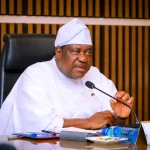
- Senior government officials, state executives, and global stakeholders gathered in Abuja to finalize frameworks for decentralizing Nigeria’s internal security architecture.
- Following the Senate’s passage of the 2026 Alteration Bill, policing responsibilities will move to the Concurrent Legislative List, giving state governments direct statutory control.
- Legislative leaders warned that creating local forces without independent funding pools or strong democratic barriers could lead to political weaponization.
The long-standing campaign for the decentralization of Nigeria’s internal security architecture received a major boost on Thursday, July 9, 2026.
Eko Hot Blog reports that top government leaders, state governors, federal lawmakers, and international experts gathered in Abuja to establish a definitive framework for state policing. The consensus emerged during the high-profile Town Hall on State Police and National Security.
EDITOR’S PICK
- Hamzat Appoints Obanikoro as Campaign DG Ahead of 2027 Lagos Governorship Race
- Tinubu’s State Police Plan Gains Momentum as Amendment Looms
- Residents Raise Alarm After Two Bodies Found in Lagos Waterway
Participants widely agreed that the nation’s current asymmetric security crises, ranging from terrorism in the North-East to widespread banditry and mass kidnappings, demand an urgent, localized response structure backed by robust constitutional safeguards.
This legislative momentum builds directly on recent actions taken by both the executive and legislative arms of the federal government. Just days prior, President Bola Tinubu inaugurated the Presidential Working Group on the National Policing Bill.
This group was tasked with drafting a comprehensive legal roadmap following the Senate’s historic passage of the Constitution of the Federal Republic of Nigeria (Alteration) (State Police) Bill, 2026.
The proposed constitutional amendment aims to officially move policing from the Exclusive Legislative List to the Concurrent Legislative List.
This critical shift will grant states the legal authority to manage local security, while still remaining within a unified, federally regulated system.
During the extensive panel sessions, the Chief of Defence Staff, Gen. Christopher Musa (retd.), emphasized that while intensive military actions are necessary to dismantle terrorist hubs, physical force alone cannot achieve lasting stability.
He argued that military campaigns account for only about 25 to 30 percent of successful counter-terrorism outcomes, while the remaining 70 percent relies heavily on non-kinetic strategies like community engagement and local intelligence.
The Defence Chief acknowledged that asymmetric warfare is incredibly complex because insurgent actors often blend seamlessly into local communities, making tip-offs from residents the single most vital asset for security forces.
Former Israeli Prime Minister Ehud Barak also supported the decentralization process, stating that officers recruited directly from the communities they serve possess an innate understanding of local geography, languages, and cultural norms.
Addressing widespread fears that governors might weaponize state police to suppress political opposition, Barak noted that such risks exist in any governance model.
He suggested that these concerns are best minimized through precise, detailed legislation that preserves Abuja’s overarching federal oversight. He also cautioned that advanced signal intelligence capabilities should remain strictly under central federal control due to high costs and potential national security risks.
Adding a crucial note of caution to the conversation, Senate Majority Leader Opeyemi Bamidele warned that financial autonomy will ultimately determine the success or failure of the entire security reform.
He explained that the upcoming constitutional amendment does not force every state to launch a police unit immediately, but simply opens the legal door for those ready to do so.
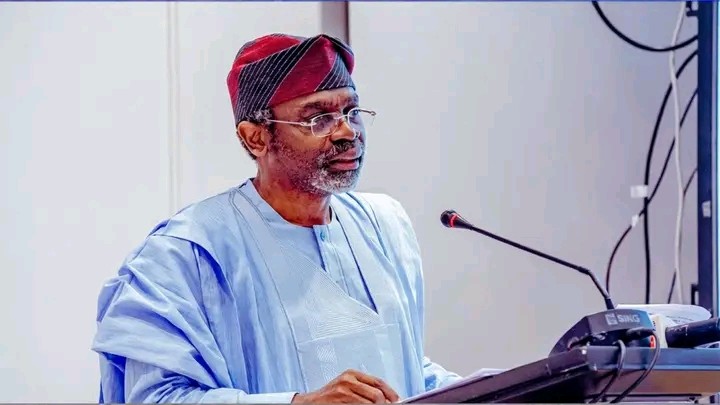
Bamidele stressed that without dedicated funding independent of an executive governor’s daily discretion, local forces could easily become vulnerable to influence from wealthy political figures, corporate entities, or criminal networks.
He proposed that the legislation include first-line revenue deductions to guarantee operational funds directly to state police commands.
State executives at the town hall strongly supported the immediate implementation of the bill. Anambra State Governor, Prof. Chukwuma Soludo, declared that the nation has moved past the stage of debating the necessity of state police, and must now focus entirely on building a workable operational model.
Similarly, Enugu State Governor, Peter Mbah, criticized the centralized police framework as outdated, noting that his administration had to invest heavily in tracking technology to cut local violent crime by over 90 percent.
Highlighting the frustration of current state leaders, Zamfara State Governor, Dauda Lawal, pointed out the irony of being called a “Chief Security Officer” while lacking the constitutional authority to issue direct operational orders to federal security personnel during active local emergencies.