- As Andy Burnham prepares to take office as the United Kingdom’s next prime minister, senior female Labour Party figures are calling for a strict 50:50 gender balance in his incoming cabinet.
- Despite systemic equality mechanisms, the Labour Party has never elected a female leader, in contrast to the Conservative Party which has been led by four women, including current leader Kemi Badenoch.
- A formal appeal from the Women’s Parliamentary Labour Party has pressed Burnham to reject Westminster’s historical “laddish” culture and ensure women hold genuine executive influence in government decision-making.
As Andy Burnham prepares to assume office as the United Kingdom’s next prime minister, he is facing immediate internal pressure to tackle what critics describe as an entrenched “boys’ club” culture within the ruling Labour Party.
Eko Hot Blog reports that a coalition of female lawmakers and party stalwarts is demanding that the incoming premier commit to a 50:50 gender balance across his first cabinet and Downing Street team.
EDITOR’S PICK
- Why Africa Still Cannot Win the FIFA World Cup Despite Its World Class Talent
- Man Allegedly Slits Father’s Throat, Mutilates Body in Anambra
- Lagos Court Convicts Director, Company Over N822.4m Fraudulent Conversion
The leadership transition has re-ignited a long-standing debate over representation within the party.
Despite possessing more systemic affirmative action policies than their political opponents, such as all-women shortlists for parliamentary candidate selection used since 1993, the Labour Party has still never elected a female leader.
This stands in contrast to the opposition Conservatives, who are currently led by Kemi Badenoch, the fourth woman to head her party following former Prime Ministers Margaret Thatcher, Theresa May, and Liz Truss.
Concerns about structural exclusion gained public traction following speculations that Burnham might return former high-profile male colleagues to frontline political roles.
Rumors of a political comeback for former foreign minister David Miliband, alongside figures like James Purnell and Ed Balls, have drawn pushback.
The group, who previously played recreational football together in a team dubbed the “Demon Eyes” during the late 1990s as young Tony Blair-era advisers, represents what critics warn could be a regression to old-school, male-dominated networks.
This anxiety is shared at high levels. Deputy party leader Lucy Powell recently acknowledged experiencing unpleasant behind-the-scenes briefings against senior female cabinet ministers in Downing Street, describing it as evidence of an active “boys’ club” operating at the peak of administrative power.
Statistically, British women have made massive strides in parliamentary representation over the last three decades. Prior to 1997, female lawmakers across all parties never constituted more than 10 percent of the House of Commons.
Today, there are 266 women MPs in the 650-seat parliament, with Labour holding 186 female-led seats (approximately 46 percent of its total caucus).
High-profile figures like Chancellor of the Exchequer Rachel Reeves, Foreign Secretary Yvette Cooper, and Home Secretary Shabana Mahmood currently occupy key cabinet portfolios.
However, female party leaders argue that physical presence does not automatically equate to structural influence.
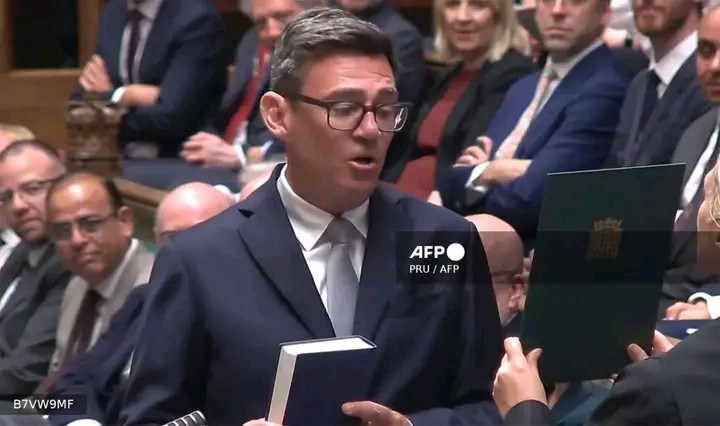
The Women’s Parliamentary Labour Party recently sent a letter to Burnham urging him to address systemic toxicity and misogyny starting from his first day in office.
Academic experts suggest that Labour’s failure to elevate a woman to the top post stems from historically prioritising class struggles over gender equality.
Experts note that Downing Street’s political culture has historically remained exclusionary, regardless of which party is in power.
However, analysts believe that Burnham’s transition could mark a watershed moment, given his past criticisms of traditional Westminster operations. Burnham has yet to issue an official response to the cabinet demands.