- Lagos has launched a compulsory building insurance scheme
- The initiative aims to improve building safety and protect lives and property
- The government says enforcement will be strengthened to ensure compliance
The Lagos State Government has launched the Lagos State Building Insurance Scheme (LAGBIS) as part of efforts to enforce compulsory building insurance and improve the safety of lives and property across the state.
Eko Hot Blog gathered that the Lagos State Government has launched the Lagos State Building Insurance Scheme (LAGBIS) as part of efforts to enforce compulsory building insurance and improve the safety of lives and property across the state.
EDITOR’S PICK
- Tinubu Approves Army Expansion, Recruitment of 28,000 Personnel
- Aregbesola Claims Record as First Nigerian Governor to Serve Eight Years Without Owning a House
- Ikosi-Ejinrin LCDA Commissions Fully Equipped NSCDC Divisional Headquarters, Donates Patrol Vehicle and Motorcycle to Boost Security
Governor Babajide Sanwo-Olu, represented by the Deputy Chief of Staff, Sam Egube, unveiled the initiative on Friday in Lagos, describing it as a major step toward strengthening accountability in the construction sector and enhancing public confidence in the state’s built environment.
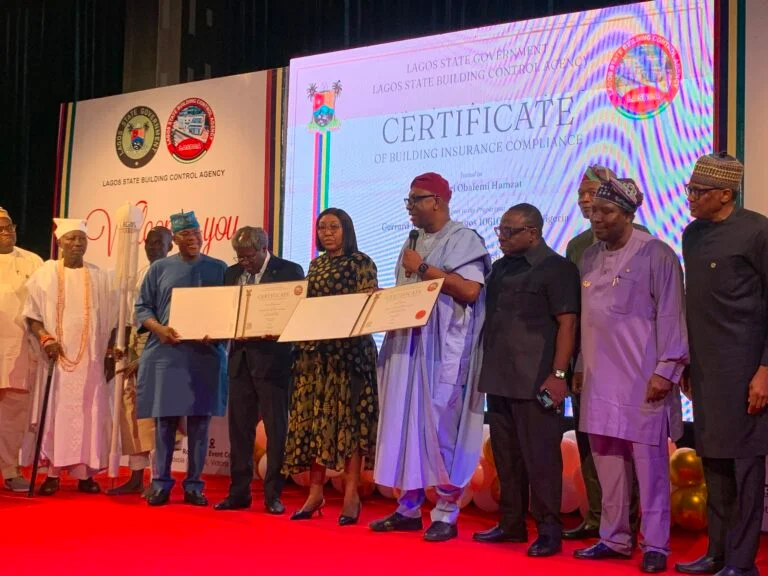
He said the scheme reflects the government’s commitment to ensuring that rapid urban development is accompanied by adequate safety measures.
According to him, development can only be meaningful when it prioritises the protection of lives and property.
Sanwo-Olu noted that Lagos has witnessed significant growth in residential, commercial and infrastructure projects, adding that every new development must meet safety standards.
He revealed that the state recorded 171 building collapses between 2011 and 2025, accounting for more than half of such incidents nationwide. He added that six building collapses recorded in the first half of 2025 claimed 14 lives.
The governor said the state had strengthened oversight through the Lagos State Building Control Agency (LASBCA), which has expanded inspections, improved enforcement and increased compliance with building regulations.
He disclosed that LASBCA had identified more than 27,000 distressed buildings and demolished 349 unsafe structures before they could collapse.
Sanwo-Olu explained that the newly introduced LAGBIS would provide a technology-driven platform to ensure eligible buildings are properly insured against approved risks while protecting property owners, occupants and construction workers.
Although compulsory building insurance is already backed by the Insurance Act and Lagos State building regulations, he said compliance has remained low, stressing that the government would intensify enforcement.
He also urged licensed insurance companies to partner with the state government to ensure the successful implementation of the scheme.
Earlier, LASBCA General Manager, Florence Gbaye, described LAGBIS as a major milestone in the state’s efforts to improve building safety and strengthen regulatory compliance.
She said the initiative would support a more sustainable approach to building management, reduce risks associated with structural failures and ensure properties are adequately insured.
Gbaye explained that buildings covered by the scheme would be identified and notified by LASBCA, while the insurance process would be integrated into the state’s Electronic Physical Planning Permit Processing System to improve transparency and ease compliance.
She added that the scheme would also reduce the financial burden on government during emergencies by enabling quicker recovery and reconstruction for affected businesses, families and communities.
The event was attended by government officials, property developers, engineers and other stakeholders in the construction and built environment sectors.
Governor Babajide Sanwo-Olu, represented by the Deputy Chief of Staff, Sam Egube, unveiled the initiative on Friday in Lagos, describing it as a major step toward strengthening accountability in the construction sector and enhancing public confidence in the state’s built environment.
He said the scheme reflects the government’s commitment to ensuring that rapid urban development is accompanied by adequate safety measures.
According to him, development can only be meaningful when it prioritises the protection of lives and property.
Sanwo-Olu noted that Lagos has witnessed significant growth in residential, commercial and infrastructure projects, adding that every new development must meet safety standards.
He revealed that the state recorded 171 building collapses between 2011 and 2025, accounting for more than half of such incidents nationwide. He added that six building collapses recorded in the first half of 2025 claimed 14 lives.
The governor said the state had strengthened oversight through the Lagos State Building Control Agency (LASBCA), which has expanded inspections, improved enforcement and increased compliance with building regulations.
He disclosed that LASBCA had identified more than 27,000 distressed buildings and demolished 349 unsafe structures before they could collapse.
Sanwo-Olu explained that the newly introduced LAGBIS would provide a technology-driven platform to ensure eligible buildings are properly insured against approved risks while protecting property owners, occupants and construction workers.
Although compulsory building insurance is already backed by the Insurance Act and Lagos State building regulations, he said compliance has remained low, stressing that the government would intensify enforcement.
He also urged licensed insurance companies to partner with the state government to ensure the successful implementation of the scheme.
Earlier, LASBCA General Manager, Florence Gbaye, described LAGBIS as a major milestone in the state’s efforts to improve building safety and strengthen regulatory compliance.
She said the initiative would support a more sustainable approach to building management, reduce risks associated with structural failures and ensure properties are adequately insured.
Gbaye explained that buildings covered by the scheme would be identified and notified by LASBCA, while the insurance process would be integrated into the state’s Electronic Physical Planning Permit Processing System to improve transparency and ease compliance.
She added that the scheme would also reduce the financial burden on government during emergencies by enabling quicker recovery and reconstruction for affected businesses, families and communities.
The event was attended by government officials, property developers, engineers and other stakeholders in the construction and built environment sectors.
FURTHER READING