- The Nigeria Customs Service urged lawmakers to review the country’s import waiver regime
- It also called for amendments to the Customs Act 2023 after three years of implementation
- Customs said stronger laws and reforms will improve trade, transparency and revenue collection
The Nigeria Customs Service (NCS) has called on the National Assembly to undertake a comprehensive review of Nigeria’s import waiver and concession framework, arguing that lawmakers should determine whether the incentives still deliver the economic benefits for which they were introduced or have become too costly for government revenue.
Eko Hot Blog gathered that the Comptroller-General of Customs, Bashir Adeniyi, also appealed for a review of the Nigeria Customs Service Act 2023, noting that three years of implementation have exposed areas that may require amendments to align with the country’s rapidly changing trade environment.
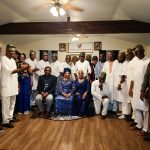
Adeniyi made the appeal on Wednesday in Abuja during a two-day retreat organised for the Senate Committee on Customs. The event, themed *“Legislative Oversight in the Context of Nigeria Customs Service Modernisation and Reforms,”* focused on strengthening collaboration between the legislature and the customs service.

He urged lawmakers to broaden the scope of their oversight by paying greater attention to the digital systems driving customs operations rather than concentrating mainly on individual cargo transactions.
According to him, parliamentary oversight should assess issues such as automated risk management, valuation systems, cargo clearance timelines and the effectiveness of tax exemptions, instead of focusing solely on isolated operational activities.
Speaking on the current waiver and concession regime, Adeniyi said a considerable volume of imported goods enters Nigeria under government-approved exemptions, adding that it was the responsibility of lawmakers to determine whether such incentives remained beneficial.
He maintained that while Customs implements government policies, the National Assembly should evaluate whether the concessions continue to achieve the objectives for which they were established.
“A substantial portion of trade comes into the country through waivers and concessions granted for policy reasons. Whether these incentives are still serving their original purpose is a matter for legislative consideration, and we welcome such a review,” he said.
His remarks come weeks after he disclosed that import duty exemptions approved by the Federal Government had reached unprecedented levels.
During an earlier investigative hearing by the Senate Committee on Finance, Adeniyi revealed that Import Duty Exemption Certificate approvals climbed to about ₦34 trillion in 2025. He explained that nearly 60 per cent of the approvals were granted for military hardware imports, which qualified for duty waivers because of the country’s security challenges.
The Customs boss also called for a post-implementation review of the Nigeria Customs Service Act 2023, describing the law as the foundation of the agency’s ongoing reforms.
He explained that after three years of implementation, there was now enough practical experience to determine which provisions were working effectively and which required adjustment.
According to him, lawmakers now have an opportunity to assess whether the legislation remains adequate for the realities of modern international trade.
Adeniyi stressed that the ongoing customs modernisation programme is designed to replace manual procedures and personal discretion with transparent, technology-driven systems capable of producing consistent outcomes regardless of the officer handling a transaction.
He said initiatives such as the indigenous B’Odogwu customs platform and the Trade Modernisation Project were intended to improve transparency, strengthen accountability and reduce opportunities for delays and manipulation in cargo processing.
The Comptroller-General noted that electronic processing allows every transaction and decision to be tracked, making it easier to identify delays and improve operational efficiency.
Although he highlighted the agency’s impressive financial performance, Adeniyi cautioned against using revenue figures alone to measure Customs’ success.
He disclosed that the Service generated ₦7.277 trillion in revenue in 2025, exceeding its annual target by 10.24 per cent, while collections between January and May 2026 stood at ₦3.35 trillion.
However, he argued that exchange rate movements could artificially inflate revenue figures, insisting that sustainable institutional reforms and improved trade facilitation provide a more accurate measure of performance.
He further appealed for sustained legislative backing for customs reforms, warning that automation often encounters resistance because it reduces discretionary powers that some individuals seek to preserve.
According to him, consistent support from the National Assembly would strengthen ongoing reforms and make it more difficult for vested interests to frustrate modernisation efforts.
Adeniyi also encouraged lawmakers to evaluate Customs using measurable trade outcomes, such as cargo release times and operational efficiency, rather than the number of meetings or administrative activities carried out by the agency.
Earlier, Chairman of the Senate Committee on Customs, Senator Jibrin Isah, commended the Nigeria Customs Service for surpassing its 2025 revenue target.
He described the achievement as evidence that ongoing reforms were producing positive results, noting that the Service generated about ₦7.3 trillion against an approved target of ₦6.5 trillion.
Isah assured the Customs Service of continued legislative support, promising that the National Assembly would provide the necessary legal backing to strengthen reforms and remove obstacles affecting the agency’s operations.
He also congratulated Adeniyi on his re-election as Chairman of the World Customs Organization Council, describing the feat as international recognition of Nigeria’s growing influence in global customs administration.
The Nigeria Customs Service Act 2023 replaced decades-old customs legislation and introduced major reforms, including legal recognition for electronic cargo processing, advance rulings, Authorised Economic Operator status and a new funding framework for the Service.
Since the law came into effect, the agency has accelerated its digital transformation through the deployment of the B’Odogwu customs platform and the Trade Modernisation Project, both aimed at improving transparency, reducing cargo clearance time, enhancing risk management and increasing revenue collection.
With its latest appeal, the Customs Service is seeking legislative support to ensure that both the existing legal framework and Nigeria’s longstanding import waiver system remain effective and responsive to the realities of modern global trade.