- Iran has urged the United States to accept defeat as tensions over the Strait of Hormuz remain high
- Trump warned Americans to expect higher fuel prices while the conflict continues
- Oil shipments through the strategic waterway have dropped sharply amid rising fears of a wider regional conflict
Iran has challenged the United States to accept what it described as defeat in the ongoing conflict, while President Donald Trump warned Americans that fuel prices could remain elevated as the war continues.
Eko Hot Blog gathered that Iranian Deputy Foreign Minister Kazem Gharibabadi said on Saturday that Tehran would maintain control over traffic through the strategic Strait of Hormuz until Washington accepted the outcome of the conflict and met Iran’s conditions.
EDITOR’S PICK
- Osun Election: INEC Reports 94.5% Polling Units Opened on Time
- THEDSF Visits Alara of Ilara Kingdom, Seeks Royal Support for Youth Mobilisation
- Super Falcons Miss Women’s World Cup for First Time
The remarks came as diplomatic efforts to end the war remained stalled, with negotiations between Iran and the United States showing little sign of resuming.
Iranian Foreign Minister Abbas Araqchi also said Tehran had not yet decided whether to return to negotiations with Washington. He maintained that the United States would have to meet certain conditions before shipping could resume normally through the Strait of Hormuz, a vital global oil route.
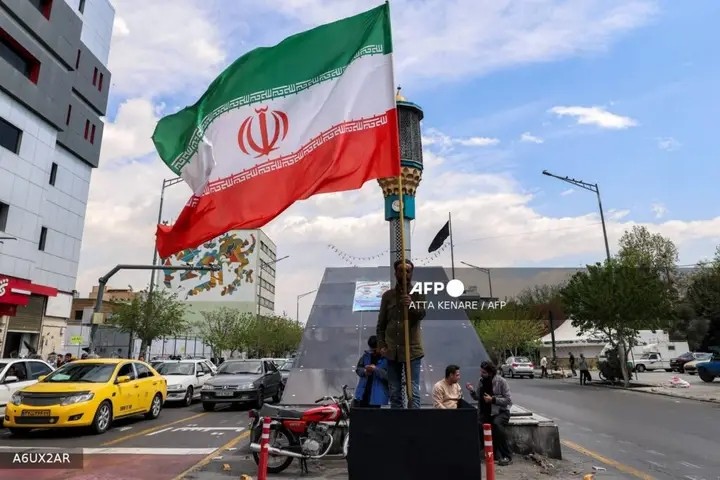
The waterway handled about one-fifth of the world’s oil supplies before the conflict, making the disruption a major concern for global energy markets.
Trump, speaking at a political rally in Garden City, New York, on Friday, acknowledged that Americans could face higher petrol costs while the conflict continues.
He defended the economic impact, arguing that paying somewhat more for fuel was worthwhile if it prevented Iran from obtaining a nuclear weapon.
Trump also claimed that the United States would take control of the Strait of Hormuz after defeating Iran, further escalating his rhetoric toward Tehran.
The president has repeatedly shifted between threats of further military action and suggestions that a peace agreement could be reached.
The conflict has already pushed fuel prices higher in the United States. The average price of a gallon of gasoline stood at about $4.08 on Friday, representing a 29 per cent increase from the same period last year, according to the American Automobile Association.
Crude oil prices also climbed on Friday, with benchmark Brent crude on track for a weekly gain of about 6 per cent, while West Texas Intermediate was headed for a rise of approximately 5.4 per cent.
Iran has also begun feeling the economic consequences of the confrontation. Iranian President Masoud Pezeshkian blamed rising inflation on the US blockade of Iranian ports and restrictions on the country’s oil exports.
Meanwhile, maritime traffic through the Strait of Hormuz has dropped sharply.
Ship-tracking analysis by Kpler showed that only two vessels crossed the waterway on Friday, with no crude oil shipments recorded. Before the war, more than 130 vessels passed through the strait on an average day.
Some vessels may have crossed without transmitting their tracking signals, but the overall level of traffic remains significantly below normal.
Iran has warned that vessels entering the waterway without its permission could face missile or drone attacks.
The United Arab Emirates also accused Iran of attacking another vessel operated by the Abu Dhabi National Oil Company while it was travelling through the strait on Friday.
The incident followed two other reported incidents involving ADNOC vessels the previous evening.
The United Kingdom Maritime Trade Operations centre separately reported that a bulk carrier was struck by an unidentified projectile in the Strait of Hormuz, although it was unclear whether the report referred to the same incident.
Efforts to revive a tentative agreement reached in June to end the conflict have also faltered.
Araqchi said Iran did not consider the earlier arrangement a ceasefire that could simply be extended, describing the situation as a new phase of the conflict.
Meanwhile, renewed attacks by Iran-backed Houthi fighters in Yemen have heightened fears that the conflict could spread further across the region.
Yemen’s internationally recognised government said the Houthis fired six ballistic missiles at the Red Sea port of Mocha on Friday, killing four civilians.
FURTHER READING