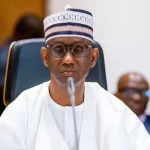
- Oyedele defended the government’s $5bn financing deal
- He said the facility will help refinance costly debt
- The minister said more details will soon be published
Finance Minister Taiwo Oyedele has defended the Federal Government’s $5 billion financing arrangement with First Abu Dhabi Bank, rejecting demands for a separate disclosure of how the funds will be spent.
Eko Hot Blog gathered that Oyedele spoke in Abuja during a media briefing, where he maintained that the transaction had received the necessary approvals and was primarily designed to help the government refinance more expensive debt with cheaper financing.
EDITOR’S PICK
- Osun Election: INEC Reports 94.5% Polling Units Opened on Time
- THEDSF Visits Alara of Ilara Kingdom, Seeks Royal Support for Youth Mobilisation
- Super Falcons Miss Women’s World Cup for First Time
The Federal Government recently accessed about $1.5 billion from the facility as its first drawdown. The wider $5 billion Total Return Swap arrangement was approved by the National Assembly on March 31, 2026, with the financing expected to support government obligations, including the 2026 budget and infrastructure spending.

The arrangement has attracted attention from financial analysts and international institutions, including the International Monetary Fund and Fitch Ratings, which have raised concerns about transparency and the risks associated with derivative-based borrowing.
Responding to questions about whether the government would publish a detailed spending plan for the funds, Oyedele said there was no reason to treat the First Abu Dhabi Bank facility differently from other government borrowing arrangements.
He explained that information on government expenditure would be made available through the normal public financial reporting process, rather than creating a special disclosure framework for the facility.
The minister also pushed back against suggestions that the financing was obtained without sufficient legislative oversight. According to him, the transaction went through the Federal Executive Council before being presented to the National Assembly for approval.
He argued that the involvement of the National Assembly demonstrated that the borrowing was not carried out secretly or outside established government procedures.
Oyedele further explained that the government was deliberately accessing the facility in stages instead of drawing the entire $5 billion at once. He said taking more money than immediately required would create additional financial costs because interest would have to be paid on funds that had not yet been deployed.
The minister said the financing structure also differed from conventional borrowing through fixed-rate bonds. He explained that the First Abu Dhabi Bank arrangement operates on a flexible interest-rate structure, meaning the cost to the government can rise or fall depending on movements in the market.
According to Oyedele, this flexibility could benefit Nigeria if interest rates decline, unlike older fixed-rate obligations where the country remains locked into the original borrowing cost.
He noted that some of Nigeria’s Eurobonds were issued at double-digit interest rates but now trade at significantly lower yields. However, because those bonds were issued on fixed terms, the government cannot automatically benefit from the decline in market rates.
Oyedele said the Abu Dhabi Bank facility was therefore structured to provide greater flexibility while offering a lower overall cost compared with some existing government debt.
He stressed that the central purpose of the transaction was not simply to increase government borrowing, but to refinance more expensive obligations and reduce the cost of servicing Nigeria’s debt.
Under the arrangement, the government is required to provide securities valued at about 133 per cent of the amount drawn as collateral.
The financing structure has nevertheless remained a subject of concern among international observers. The IMF previously warned that total return swaps and similar derivative arrangements could make it more difficult to monitor a government’s financial obligations and assess its exposure in real time.
Fitch Ratings also raised concerns that the facility could add to Nigeria’s sovereign debt risks while making public debt reporting less transparent.
Oyedele dismissed the concerns that the transaction lacked proper oversight, saying the government had considered the financial implications before proceeding.
He added that the Ministry of Finance and the Debt Management Office would publish a set of frequently asked questions on their websites to provide additional information about the facility and address concerns surrounding its structure.
The minister said the document would give Nigerians and other interested parties a clearer understanding of the arrangement, its purpose and how the government intends to manage the financing.
Oyedele maintained that the facility was receiving disproportionate attention compared with other forms of government borrowing, insisting that its main objective remained the reduction of financing costs and better management of Nigeria’s debt obligations.
FURTHER READING