At a May Day summit on May 1, 2026, the CEO of leading Nigerian fintech Moniepoint, Tosin Eniolorunda, sparked controversy and conversations when he suggested that Nigerian graduates are poorly equipped for the labour market and are not globally competitive, noting that his company is struggling to fill 500 vacancies.
But the Federal Ministry of Education, under the leadership of Dr. Tunji Alausa, is acknowledging the dearth of digital skills and doing something about it.
EDITOR’S PICKS
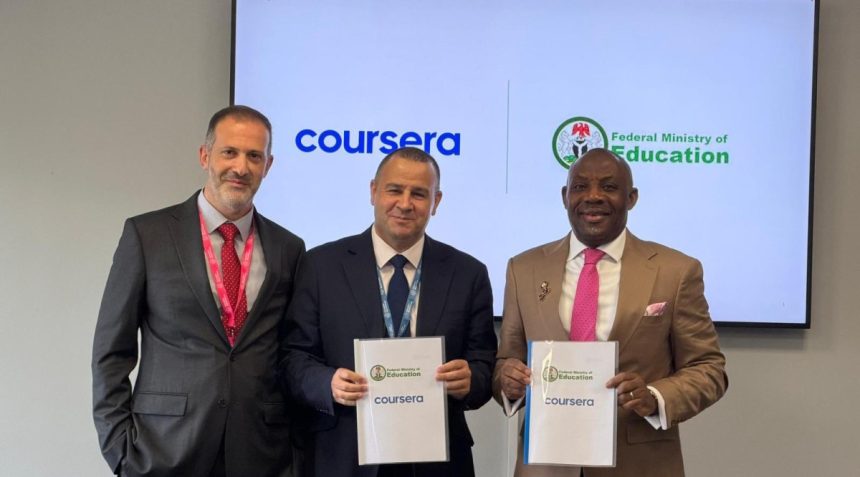
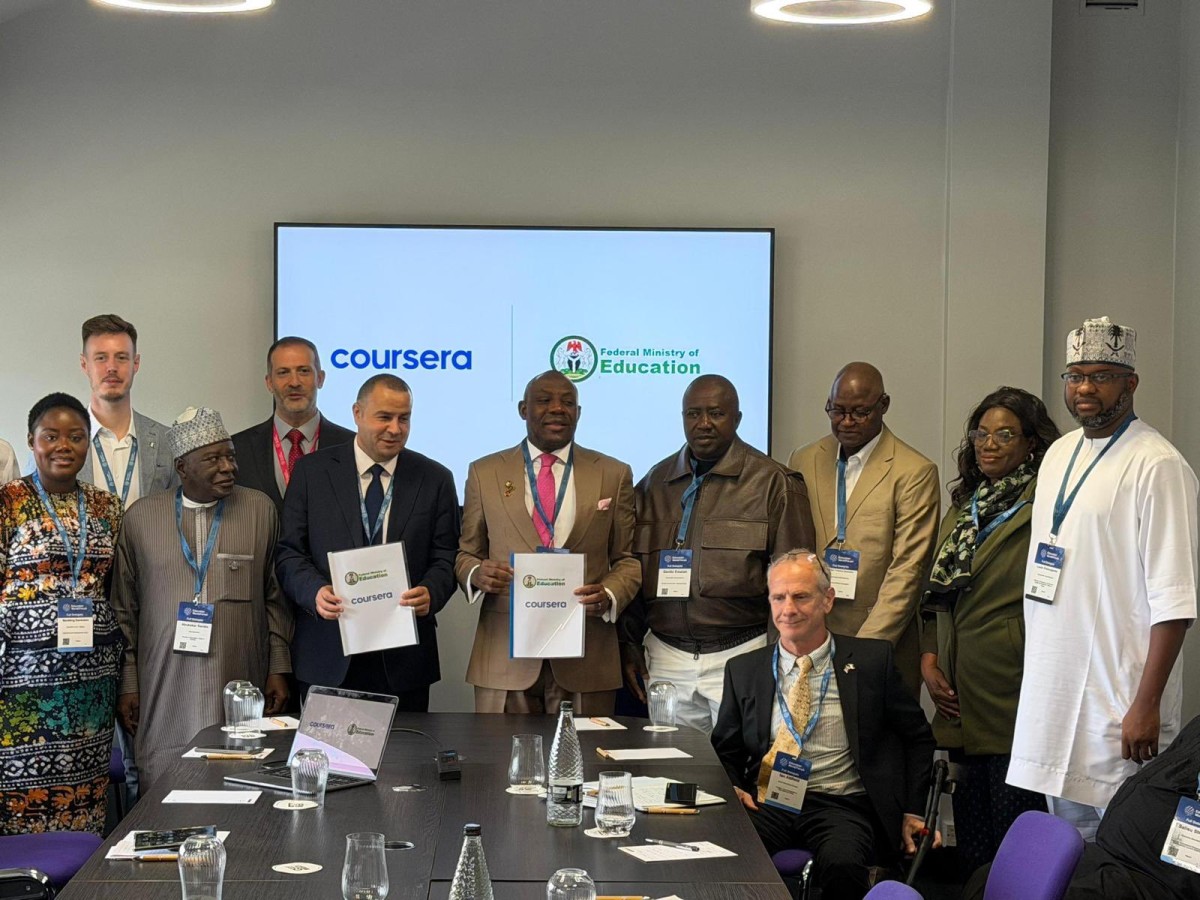
On the sidelines of the Education World Forum 2026 in London between May 17 and 20, Dr. Alausa, the Minister of Education, signed a landmark partnership with Coursera, one of the top online learning platforms globally for professional certificates, to launch the Digital Training Academy (DTA), a major initiative designed to equip students in tertiary institutions with globally competitive digital skills.
On the sidelines of the Education World Forum 2026 in London, I signed a landmark partnership with @coursera to launch the Digital Training Academy (DTA), a major initiative designed to equip Nigerian youths with globally competitive digital skills.
Through this programme, young… pic.twitter.com/CqBSOU43Uv
— Dr. Tunji Alausa (@DrTunjiAlausa) May 21, 2026
The agreement, which Alausa described as “a covenant between government and Nigerian youth,” is one of the most detailed and ambitious digital skills interventions the federal government has announced in recent memory and its terms reveal a programme that goes further than most initial reports suggested.
What the Agreement Covers
Under the deal, the Federal Ministry of Education has paid for 36,000 licences across Coursera and Pluralsight, worth several billions of naira, giving eligible participants six months of free online training across some of the most in-demand fields in the global tech economy: Artificial Intelligence (AI) and Machine Learning (ML), Data Science, Cybersecurity, Cloud Computing, Software Engineering, IT Automation, Software Methodology, and Natural Language Processing.
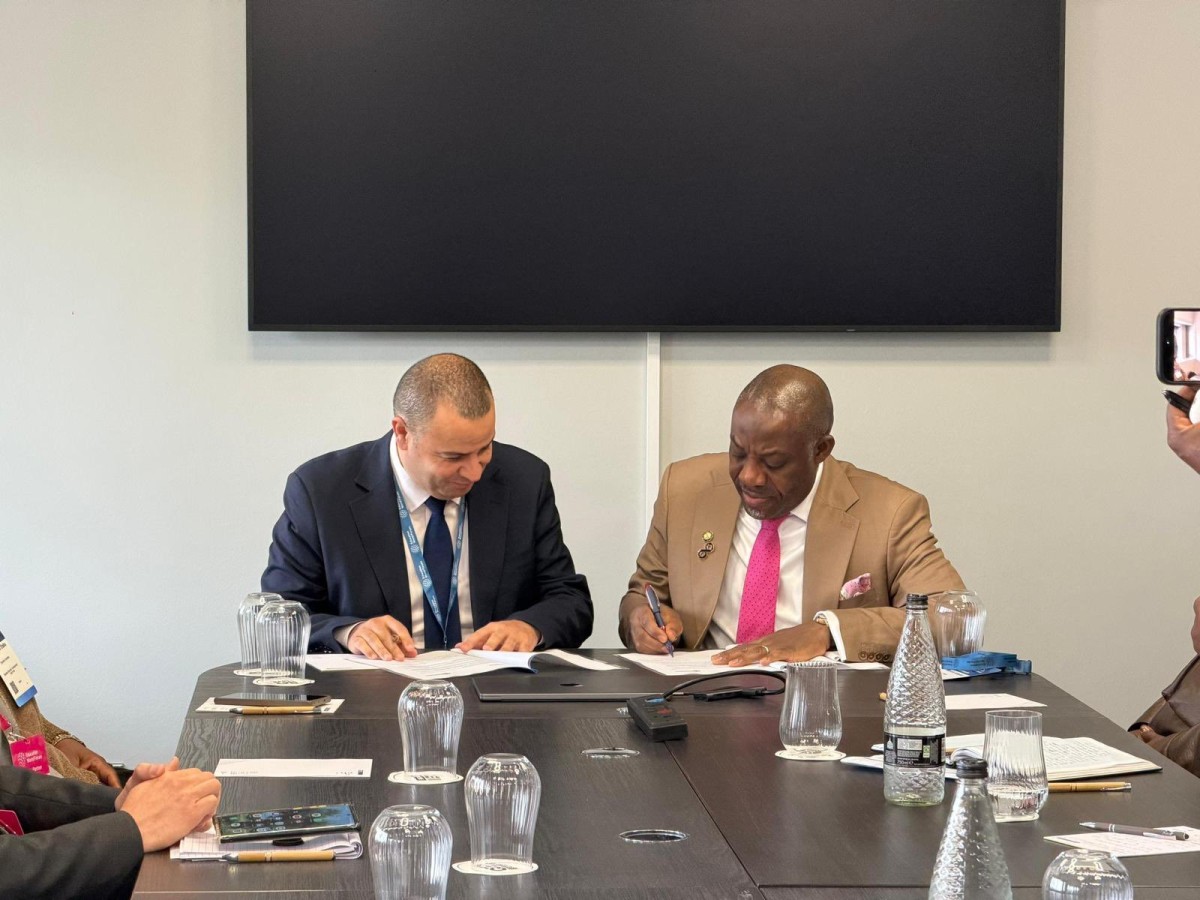
“This is one of the largest government funded digital skills investments in Nigeria’s history… We are building a generation of young Nigerians that can compete, lead and thrive in the global digital economy.,” the minister said upon the signing of the Coursera agreement.
But the government’s commitment does not stop at training access. Upon completion, the Ministry of Education will also fund each participant’s international certification from globally recognised bodies including Google, Microsoft, IBM, and Huawei, whichever the participant chooses.
These are credentials that carry weight with employers both in Nigeria and internationally.
Who Qualifies?
The programme is targeted squarely at final-year students in Nigerian tertiary institutions and recent graduates. This focus on the transition point between education and the labour market appears deliberate, addressing the skills gap precisely where it is most consequential.
According to the minister, implementation will be managed in partnership with the National Open University of Nigeria (NOUN) and Yaba College of Technology (YABATECH).
NOUN’s nationwide reach is expected to ensure access across all geopolitical zones, while YABATECH will provide industry-focused facilitation and mentorship throughout the programme.
Part of a Broader Strategy
The Coursera agreement is not a standalone intervention. It sits atop a broader skills drive the Alausa-led ministry has been building since 2025, anchored by the Technical and Vocational Education and Training (TVET) programme.
Launched in May 2025, TVET attracted over 90,000 applications within days of its portal going live and has since verified nearly one million candidates for training across 25 trades — from solar photovoltaics to fashion, hospitality, and construction — delivered through more than 2,600 accredited centres nationwide.
Where TVET targets hands-on, trade-based skills for a broad population, the DTA is aimed at tertiary-educated youth entering a technology-driven labour market. Together, they reflect a two-track human capital strategy under President Bola Tinubu’s Renewed Hope Agenda.
What Students Stand to Gain
For eligible students and graduates, the proposition is free access to structured, globally benchmarked digital training, followed by funded certification from some of the world’s most recognised technology companies at no personal cost.
In a context where professional certifications from Google or Microsoft can cost tens of thousands of naira and often represent the difference between a competitive and non-competitive CV, the government absorbing that cost is significant.
Alausa has acknowledged, however, that access alone is not the measure of success.
“What truly changes lives is completion, support and accountability,” he said at the signing.
FURTHER READING
Whether the programme delivers on that standard — tracking participants through to certification rather than merely enrolment — will be the real test of its ambition.
Philip Ibitoye is a Special Correspondent with EKO HOT BLOG. Click here to find daily analysis and critical insight on trending issues in Lagos and other parts of Nigeria.
Click to watch the video of the week below: