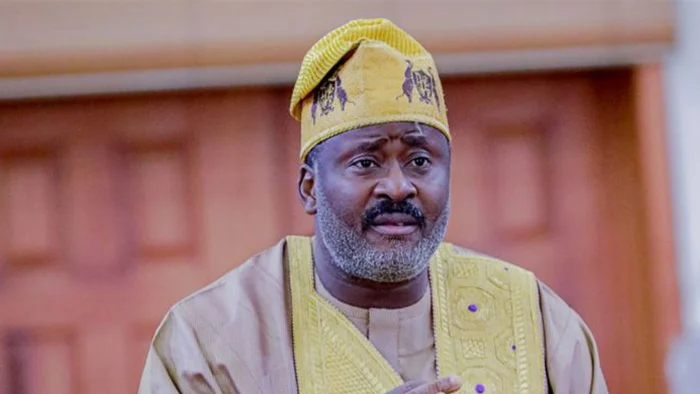
On Wednesday morning, as delegates gathered at Paddington Mini Stadium along Western Avenue in Surulere, the end of Desmond Elliot’s decade-long legislative career was already in motion.
By midday, the three-term lawmaker had either withdrawn from the APC primary for Surulere Constituency I — citing the intimidation and exclusion of his supporters — or, as a party chieftain promptly countered, had simply lost badly and called a press conference to save face.
EDITOR’S PICKS
Either version ends the same way: the actor-turned-politician who first won his seat in 2015 will not be returning to the Lagos State House of Assembly. The result is newsworthy enough. But it is hard to stare at Wednesday’s outcome without asking what made it so predictable.
When you cross the machine, the machine remembers
The most consequential moment in Elliot’s political life may not have been Wednesday, it was January 2025, when the Lagos Assembly moved to impeach Speaker Mudashiru Obasa. Elliot was among the lawmakers alleged to have signed or supported the impeachment notice. What followed was damaging.
President Tinubu personally raised Elliot’s name with Chief of Staff Femi Gbajabiamila, who later told an APC stakeholders’ meeting that he nearly lost his job because of the lawmaker. The DSS reportedly got involved. Gbajabiamila also accused Elliot of fanning religious tensions in Surulere — an extraordinary charge from a man who had been his political patron.

Elliot subsequently claimed he thought the impeachment had Tinubu’s blessing; that he was in South Africa when it unfolded; that he could not abandon his colleagues without consensus.
These explanations may all be true, and they are all beside the point. In Lagos APC politics, where loyalty to the central power structure is the primary currency, the perception of disloyalty is as fatal as the act itself. Elliot spent the weeks before the primary publicly apologising to Gbajabiamila on television. The apology came too late and, to the dominant faction, too obviously.
Party supremacy is not a slogan
Elliot reportedly refused repeated calls to step down for Barakat Odunuga-Bakare, a former Special Adviser on Housing to Governor Sanwo-Olu who had the visible backing of the Gbajabiamila-aligned faction. Every other aspirant in the race stepped aside for her. Elliot stood alone.
His campaign director-general publicly defected to Odunuga-Bakare’s camp before election day.
In Lagos APC, when the party’s dominant structure settles on a candidate, staying in the race is not courage, it is miscalculation. Party supremacy in this context is not merely about formal rules; it is about reading the room accurately and understanding that the room had already moved on.

Know where your support actually ends
Elliot built a public identity on the strength of his celebrity and his claimed grassroots connection to Surulere. But celebrity is not a political machine. His supporters were allegedly blocked from voting centres; his security detail was withdrawn without explanation; LGA officials loyal to him were reportedly removed from their positions. Whether or not every allegation is accurate, the underlying reality is clear: when the enforceable power in a constituency turns against an incumbent, personal popularity provides very limited shelter. Elliot appeared to believe his name on a ballot was sufficient. It was not.
FURTHER READING
The lesson from Surulere on Wednesday is not simply that one lawmaker lost a primary. It is that in Lagos APC — as in most Nigerian party structures — political survival depends on knowing exactly how far your skis extend before you push off. Desmond Elliot pushed too far, too late, with too little cover. The rest was inevitable.
Philip Ibitoye is a Special Correspondent with EKO HOT BLOG. Click here to find daily analysis and critical insight on trending issues in Lagos and other parts of Nigeria.
Click to watch the video of the week below: