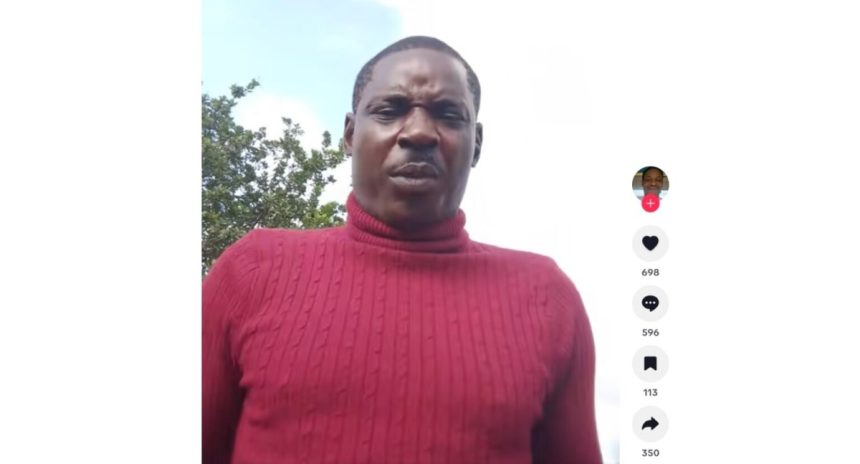
A Nigerian police officer has threatened to kill anyone who films him on duty and in doing so, has answered a question that many Nigerians already knew the answer to.
Officer Newton Isokpehi, identified through his TikTok profile, posted a video warning members of the public against recording police officers during operations.
EDITOR’S PICKS
Any day I’m on duty as a Nigerian police officer, let anyone record me. That person will provide the officer who gave them the order to be filming us, because I will clear everybody down"
– Man suspected to be a personnel says
I hope the Nigeria @PoliceNG are seeing this? pic.twitter.com/VUjPf39O9D
— Chude (@Chude_ND1) May 21, 2026
Armed and in uniform, he addressed the camera in Pidgin English: “Any day I’m on duty with my rifle as an officer let somebody video me. Let that Oga that gave you an order to video us, he’ll come and bury you.”
He later posted a second video apologising, saying the remarks were made in frustration. The apology has done little to quiet the outrage.
@actor459
The timing is instructive. Less than two months ago, the head of the police’s Complaint Response Unit, Anietie Iniedu, publicly endorsed a Federal High Court ruling affirming Nigerians’ constitutional right to record officers on duty.
The court, ruling on a public interest suit in Warri, ordered that officers must wear visible name tags, display force numbers, and stop harassing citizens who film them. Iniedu called it “transformative.” He said it would shift the CRU from reactive complaint-handling to proactive accountability.
Newton Isokpehi is the reality check.
Rights on Paper, Rifles on the Street
There is a familiar Nigerian joke buried in this situation, though it is not funny: you have freedom of speech, but freedom after speech is not guaranteed. The same logic applies here. A court can affirm your right to film. The police hierarchy can endorse it. The Inspector-General can declare the era of impunity over. But none of that means the officer on the street — armed, exhausted, and resentful — has received or accepted the memo.
This is not an isolated incident. It is a microcosm. Police hostility to being recorded is not the exception in Nigeria; it is the default. The proliferation of smartphones has made encounters harder to erase, but it has not made them safer to document.
Officers have confiscated phones, assaulted bystanders, and in some cases detained citizens whose only offence was holding a camera. Isokpehi was simply reckless enough to say on TikTok what many of his colleagues have communicated through action.
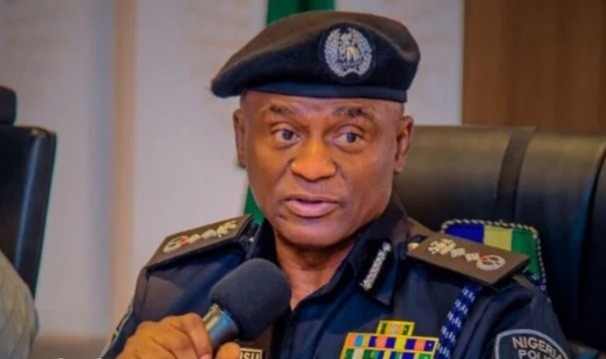
That is the structural rot Inspector-General Tunji Disu has inherited and which no press statement, court ruling, or CRU endorsement can quickly fix.
Reform directives issued from Abuja do not automatically alter the behaviour of officers on checkpoints in Delta, Edo, or anywhere else. A workforce shaped by decades of impunity, inadequate oversight, and a complaints system that rarely produced real consequences does not transform because a new IG says it should.
The Welfare Grievance Is Real But It Is Not an Excuse
Isokpehi’s outburst was wrapped in genuine grievance.
He spoke of 26 years in service, bullet wounds on his body, colleagues who did not survive operations, families of fallen officers denied their benefits. “Monkey de work, Baboon de chop,” he said, and on welfare, he is not entirely wrong. Nigerian police officers are frequently underpaid, under-equipped, and undervalued by the same state that deploys them into dangerous situations. Hurt people hurt people.
But that context, however real, does not license a death threat against citizens exercising a constitutional right. Poor welfare explains a broken system; it does not excuse an armed officer threatening to kill those who document it. Both things can be true: the government has failed its officers, and those officers cannot be permitted to take that failure out on the public.
The Test Is Discipline, Not Condemnation
Isokpehi apologised. The Force spokesperson, Anthony Placid, has not reacted to the threat to shoot unarmed civilians.
The pattern is now well-established: a video surfaces, outrage follows, the police condemn the officer or promise a probe, and the moment passes. Whether Isokpehi faces any meaningful disciplinary consequence will say more about IGP Disu’s reform agenda than any press release. The CRU’s expanded capacity, its UNODC backing, its judicial mandate, all of it amounts to little if an officer can threaten to shoot citizens for filming him and walk away with an apology accepted.
FURTHER READING
Nigerians have the right to film police officers. Whether they can do so and survive it remains, for now, a different question entirely.
Philip Ibitoye is a Special Correspondent with EKO HOT BLOG. Click here to find daily analysis and critical insight on trending issues in Lagos and other parts of Nigeria.
Click to watch the video of the week below: