- federal government’s failure to promptly address ASUU’s longstanding demands
- the union appreciates the government’s return to the discussion table
- These include the finalisation of the renegotiated 2009 agreement
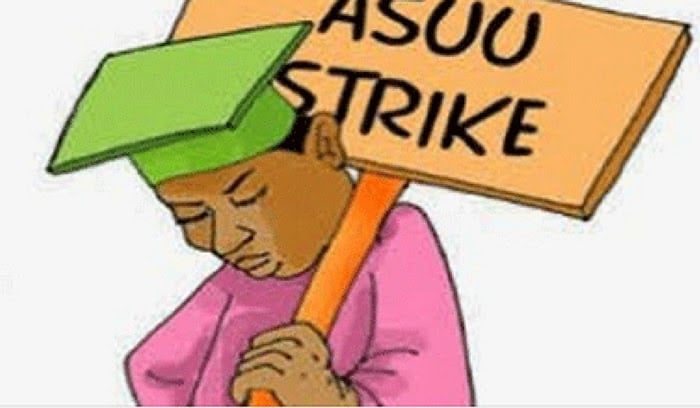
The Academic Staff Union of Universities (ASUU) has announced the suspension of its two-week warning strike.
Eko Hot Blog gathered that the union’s National President, Prof. Chris Piwuna, made the announcement during a press briefing in Abuja on Wednesday, following a National Executive Council (NEC) meeting that lasted through the night and ended at 4:00 am.
EDITOR’S PICK
- Lassa Fever Kills 172 in Nigeria, NCDC Confirms 924 Cases Across 21 States
- INEC Chairman Amupitan To Resume Next Week Ahead of Anambra Poll
- Fire Outbreak Destroys Shops at Alaba Market In Lagos
Prof. Piwuna explained that the strike was initially declared due to the federal government’s failure to promptly address ASUU’s longstanding demands. While some progress has been made, the union acknowledged that more work is still needed.

He noted that negotiations regarding the renegotiation of the 2009 FGN-ASUU agreement had resumed, and the union appreciates the government’s return to the discussion table.
“The decision to suspend the strike is in response to efforts by students, parents, and the Nigeria Labour Congress,” he said. “Although the issues are not fully resolved, NEC resolved to suspend the warning strike as a sign of goodwill.”
ASUU had commenced the warning strike on Monday, October 13, to press for several demands. These include the finalisation of the renegotiated 2009 agreement, payment of withheld salaries for three and a half months, improved funding and revitalisation of public universities, and an end to the alleged victimisation of lecturers at LASU, Prince Abubakar Audu University, and FUTO.
Additional demands include payment of outstanding salary arrears ranging from 25% to 35%, release of promotion arrears accumulated over four years, and settlement of withheld third-party deductions such as union dues and cooperative contributions.
FURTHER READING