- Why Benin Sought Nigeria’s Support During Coup Attempt
- Foreign Minister Bakari explains rebels hid inside barracks near crowded neighbourhood.
- ECOWAS support ensured threat was neutralised while protecting regional democratic order.
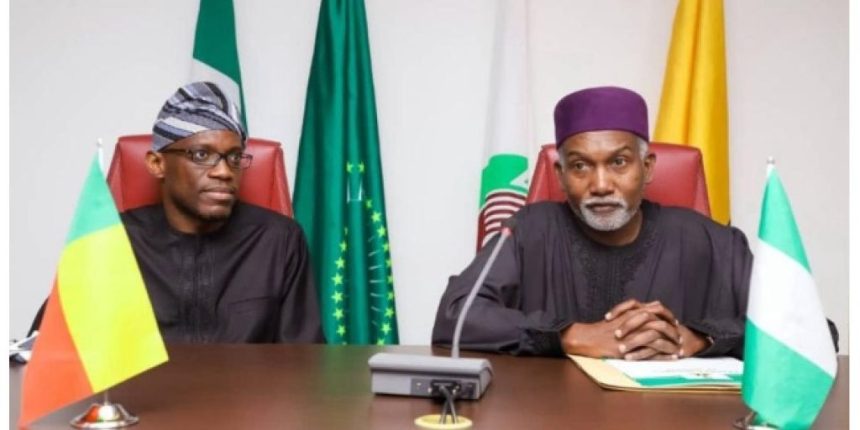
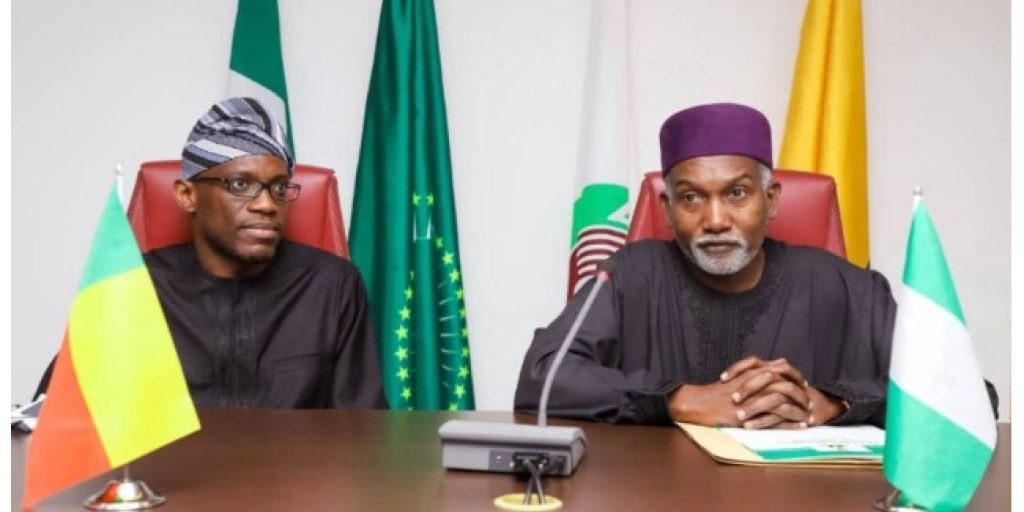
Benin Republic’s Foreign Minister, Olushegun Bakari, says Nigeria’s swift intervention, alongside support from other West African nations, was crucial in preventing what could have been a major bloodbath during the recent coup attempt in his country.
EDITOR’S PICKS
- Trump Says Zelenskyy Stalling U.S. Peace Plan
- Oluremi Tinubu Predicts Nigeria’s Rise to Prosperity
- Why Nigeria’s Military Helped Foil Coup Attempt in Benin Republic
EKO HOT BLOG reports that speaking in Abuja on Thursday at the ECOWAS Council of Ministers summit, Bakari explained that although Benin’s military repelled the initial assault, external support was needed to contain the threat without risking mass civilian casualties.
He revealed that the insurgents had taken positions inside a military barracks located within a densely populated neighbourhood, creating a dangerous situation for residents.
Bakari said the decision to call for assistance was driven by strategic and humanitarian concerns rather than an inability of the Beninese military to act.
“Why did we ask for support, especially from Nigeria. It was mainly because the area where they had established themselves in a military barracks was surrounded by civilians. We didn’t want to risk significant casualties. If we had let our military enter there, the casualties would have been very high,” he said.
He confirmed that Nigeria, Ghana, Côte d’Ivoire and Sierra Leone were approached for help under ECOWAS protocols.
“Their support was crucial to ensure that we could neutralise the threat with minimal loss of life. We did not want to engage in an all-out assault that could have led to many civilian deaths,” he added.
Bakari said the coup attempt began around 3 a.m. on Sunday when rebels attacked the presidential residence. The Beninese Republican Guard quickly pushed them back.
He added that although the rebels made an attempt to seize the national television station, loyal forces regained control almost immediately.
“Our defence forces, the Republican Guard, blocked them. They fought back and then withdrew into a military camp. So, when we started discussions for the intervention of Nigeria and others under the ECOWAS protocol, our military had already pushed them back. The coup had already failed,” he said.
Bakari praised President Bola Tinubu and other regional leaders for acting promptly to prevent the insurgents from gaining control of key national assets, including the airport.
He described the coordinated response as a strong defence of democratic values within the region.
“It is important for all of us within our community, and especially for the two leaders of Benin and Nigeria, to clearly show that the ECOWAS region is still an area where democracy prevails,” he said. “We show that in our region and environment, we cannot accept those who attack democracy.”