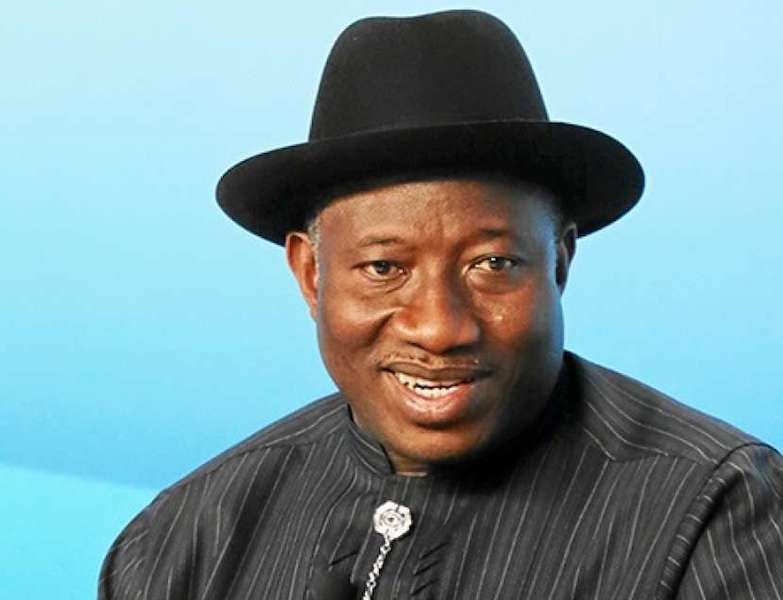
Last Friday, former President Goodluck Jonathan formally opposed a lawsuit seeking to prevent him from contesting the 2027 presidential election.
The suit, filed before the Federal High Court in Abuja, is asking the court to permanently stop Jonathan from participating in the 2027 presidential race.
EDITOR’S PICKS
At the heart of the legal dispute is whether Jonathan, having taken the oath of office twice as president, remains constitutionally eligible to contest another election under Sections 1 and 137(3) of the Nigerian Constitution.
The plaintiff maintained that the Independent National Electoral Commission (INEC) lacks the constitutional authority to accept the former president’s nomination for the 2027 election or any future presidential contest.
But will the court rule Jonathan ineligible? EKO HOT BLOG reviews previous cases that could foretell what the court’s verdict would be.
The First Challenge: 2012–2013
The current lawsuit is not the first attempt to bar Jonathan from contesting another election. The argument goes back more than a decade.
In 2012, a lawyer, Cyriacus Njoku, filed a suit at the FCT High Court in Abuja seeking to stop Jonathan from contesting the 2015 presidential election. Njoku argued that Jonathan’s first oath of office on May 6, 2010 — when he stepped in following the death of President Umaru Musa Yar’Adua — should count as a presidential term. Combined with his 2011 election victory, Njoku said Jonathan had exhausted the constitutional two-term limit.
The court disagreed. In its March 2013 judgement, Justice Mudashiru Oniyangi held that section 137(1)(b) of the constitution, which disqualifies anyone elected president at two previous elections, did not apply to Jonathan. The reason: Jonathan had only won one election. His 2010 assumption of office was constitutional succession, not an electoral process.
Njoku appealed. In March 2015, a five-member Court of Appeal panel upheld the lower court’s decision, ruling that Jonathan’s succession to the presidency after Yar’Adua’s death could not be deemed an election “especially for the purpose of taking away a right that has been vested.”
At that point, the law appeared firmly on Jonathan’s side.
When the Constitution Changed the Game
Three years later, however, Nigeria’s lawmakers moved to close the gap those judgements had left open.
In 2018, the National Assembly introduced the fourth alteration to the 1999 Constitution, adding section 137(3). The provision states that a person sworn in to complete the tenure of an elected president “shall not be elected to such office for more than a single term.”
The amendment was a direct response to situations like Jonathan’s. Under the old legal framework, courts had distinguished between succession and election. The new provision effectively collapsed that distinction for future purposes: complete someone else’s term, and you are only entitled to one more of your own.
On paper, this significantly weakens Jonathan’s position in any new legal challenge. But there is a catch.
The 2022 Ruling and the Retroactivity Problem
When the Jonathan eligibility debate resurfaced in 2022, plaintiffs filed a suit at the Federal High Court in Yenagoa, Bayelsa State, asking the court to bar him from contesting the 2023 election. This time, they relied squarely on section 137(3).
Jonathan’s legal team did not dispute that the provision existed. Instead, they argued it could not be applied to him retroactively, since his right to contest had already accrued before the amendment came into force in June 2018.
The court accepted that argument. The judge held that section 137(3) could not retroactively disqualify Jonathan and that he had only been elected once — in 2011. The 2010 oath, again, was treated as succession.
That ruling has not been tested at the Court of Appeal or the Supreme Court. And that is precisely where things get uncertain. A different court, or a higher court reviewing the question afresh, could reach a different conclusion. Courts have latitude to interpret the spirit of constitutional provisions, not just their timing. If a court decides that the intent of section 137(3) was to permanently foreclose Jonathan’s eligibility regardless of when it came into force, the retroactivity shield could fall.
What Happens Next
Jonathan’s legal team, led by Chris Uche (SAN), is currently pushing for the latest suit to be struck out entirely. They argue the issue has already been settled by courts of competent jurisdiction and that the new suit amounts to relitigating decided questions.
Justice Peter Lifu adjourned proceedings until May 11 — which is today, Monday — for hearing on both the preliminary objection and the substantive suit.
FURTHER READING
If the preliminary objection fails, the case proceeds to full hearing. At that point, the retroactivity question — and whether any court is willing to revisit it — becomes the central battle. Previous decisions favour Jonathan. But they have not come from the Supreme Court, and until they do, the door remains open.
Philip Ibitoye is a Special Correspondent with EKO HOT BLOG. Click here to find daily analysis and critical insight on trending issues in Lagos and other parts of Nigeria.
Click to watch the video of the week below: