For decades, Nigeria’s universities have handed out honorary doctorates like campaign souvenirs — to wealthy donors, political allies, and serving public officials whose only qualification was proximity to power or the size of their cheque.
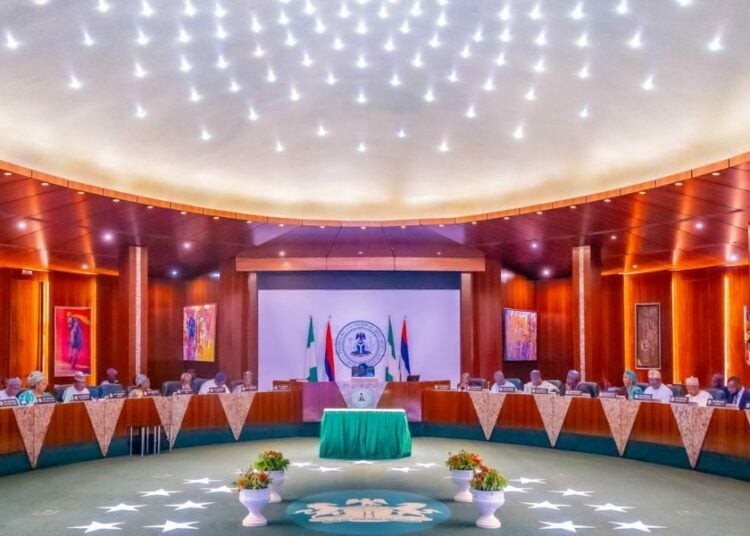
On Wednesday, the Federal Executive Council (FEC) drew a line.
EDITOR’S PICKS
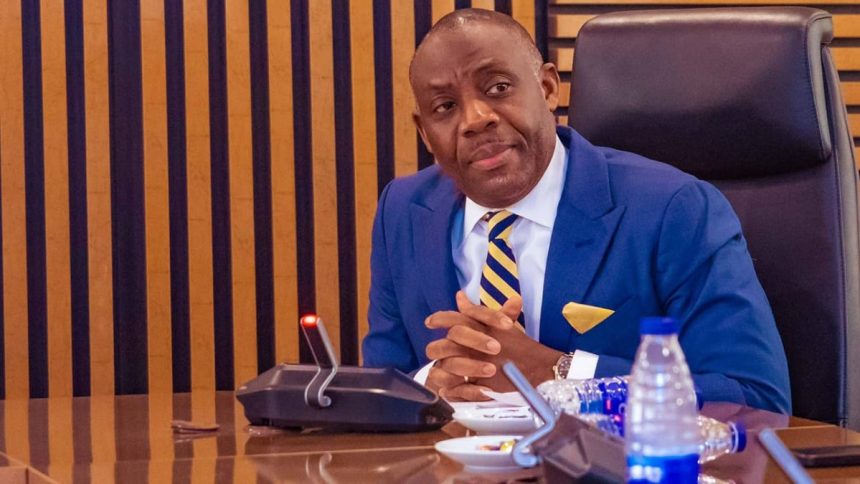
Minister of Education, Tunji Alausa, announced that FEC had approved a uniform policy barring recipients of honorary degrees from prefixing “Dr” to their names in official, academic, or professional contexts.
Going forward, an honorary degree must be cited after the name — in full — with the words “honorary” or “Honoris Causa” clearly stated. Misrepresenting an honorary doctorate as an earned academic credential will now be treated as academic fraud, with legal and reputational consequences attached, according to Alausa.
The policy also restricts honorary degrees to four types: Doctor of Laws (LL.D), Doctor of Letters (D.Lit), Doctor of Science (D.Sc), and Doctor of Humanities (D.Arts). Universities without active PhD-awarding programmes are barred from conferring honorary degrees altogether.
A Problem Long in the Making
The abuse did not emerge overnight. Nigeria’s academic community has raised alarms about the commercialisation of honorary degrees for well over a decade.
In 2012, the Association of Vice-Chancellors of Nigerian Universities attempted a self-regulatory response through what became known as the Keffi Declaration — a set of guiding principles meant to curb indiscriminate conferrals. It failed. Without legal or executive backing, the declaration was largely ignored, and the practice continued unchecked.
The result has been a quiet but corrosive erosion of public trust in academic titles. When a politician or business executive routinely introduces himself as “Dr” on the basis of an honorary award, the distinction between earned scholarship and institutional flattery collapses.
Every researcher who spent years in a laboratory or at a library desk defending a thesis finds their credential sharing space and public perception with someone who simply wrote a cheque or attended a convocation.
The FG’s intervention is therefore not bureaucratic overreach. It is a correction that should have come sooner.
Enforcement Will Be the Real Test
Policy declarations are only as strong as their implementation. The government has indicated that the Federal Ministry of Education, working through the National Universities Commission (NUC), will issue guidelines, monitor convocation ceremonies, and publish an annual list of legitimate honorary degree recipients. Alausa also flagged plans to collaborate with the media to discourage improper title attribution.
These are credible mechanisms on paper. The harder task is cultural. In Nigeria, titles carry enormous social weight. “Dr” before a name signals status, authority, and respectability in a way that few other prefixes do. Recipients of honorary degrees — many of them influential figures — will not quietly surrender the prefix. Some institutions, particularly private universities dependent on donor goodwill, may resist enforcement.
Alausa’s response to concerns about university autonomy was direct: “Autonomy does not equate to the right to break the law in this country.” That framing is important. It signals that the government intends to treat non-compliance as a legal matter, not merely an academic one.
What It Means for Academic Credibility
At its core, this policy is about restoring a basic principle: that a doctorate signifies demonstrated intellectual work, not gratitude or patronage. By giving the Keffi Declaration the executive authority it always lacked, the FG has transformed a well-meaning but toothless resolution into enforceable law.
Nigeria’s universities are competing for continental and global relevance. That ambition is undermined every time a convocation stage becomes a platform for rewarding political loyalty.
FURTHER READING
Wednesday’s FEC approval will not fix Nigeria’s deeper challenges in higher education — funding gaps, infrastructure deficits, brain drain — but it addresses something equally fundamental: the integrity of the academic title itself.
That is a reform worth making.
Philip Ibitoye is a Special Correspondent with EKO HOT BLOG. Click here to find daily analysis and critical insight on trending issues in Lagos and other parts of Nigeria.
Click to watch the video of the week below: