- The tanker, believed to be part of a covert fleet used to transport sanctioned Russian energy supplies
- The incident reportedly occurred near Maltese waters and is suspected to have involved a sea drone attack
- They warn that if the ship leaks or explodes, it could trigger fires and long-term pollution
A Russian tanker carrying liquefied natural gas, already under international sanctions, is currently drifting uncontrolled in the Mediterranean Sea.
Eko Hot Blog gathered that the vessel has no crew on board and has suffered severe structural damage, including a large breach in its hull, raising fears of a potential environmental catastrophe.
EDITOR’S PICK
- Why Return of Lagos Monthly Sanitation Exercise is Long Overdue
- Four Killed as Truck Crashes Into Bus on Lekki–Epe Expressway
- Uzodimma: Tinubu Reforms Prevent Fuel Crisis
Italian authorities, along with eight other European Union nations, have urged the European Commission to intervene. One Italian official described the ship as an “environmental time bomb,” warning of the serious threat it poses.
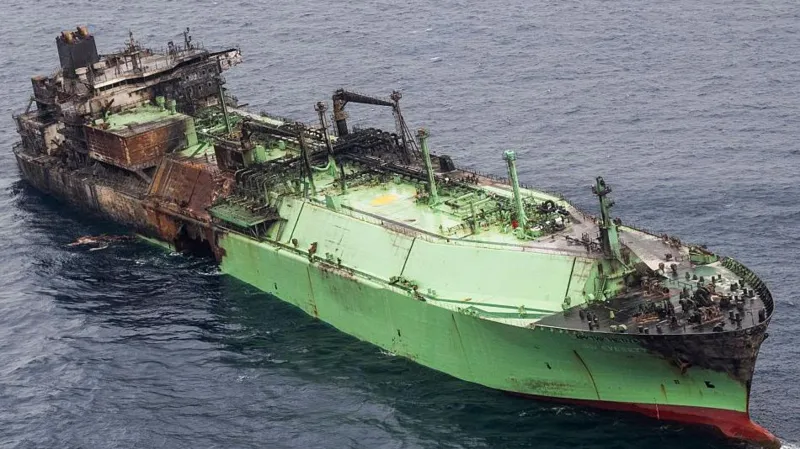
The tanker, believed to be part of a covert fleet used to transport sanctioned Russian energy supplies, was heavily damaged earlier this month.
The incident reportedly occurred near Maltese waters and is suspected to have involved a sea drone attack. Ukraine has not confirmed any involvement.
Since the attack, the vessel has been drifting southward, moving away from Italian waters and the island of Lampedusa toward Libya. Officials in both Italy and Malta are closely tracking its path.
A senior Italian government official stated in a radio interview that the situation carries “enormous risks,” adding that the ship could potentially explode at any time.
Reports indicate it is still holding large quantities of liquefied natural gas, along with hundreds of tonnes of fuel oil and diesel.
As of the latest update, the tanker was located roughly 45 nautical miles from Italian territorial waters and about 25 miles from Libya’s designated search-and-rescue zone.
The ship had originally departed from a northern Russian port in February. In early March, it caught fire following multiple explosions. Russia has accused Ukraine of carrying out the attack, labeling it an act of terrorism, though Kyiv has not responded to the claims.
Ukraine has previously considered such vessels legitimate targets, arguing that they help Russia bypass sanctions and fund its war efforts. These tankers often operate with tracking systems turned off to avoid detection.
At the same time, Russia has continued to target Ukraine’s civilian energy infrastructure, leaving many without heating or electricity during winter months.
There has been a noticeable rise in attacks on Russian-linked tankers in recent months.
Ukrainian intelligence previously claimed responsibility for damaging several ships in the Black Sea, and another tanker was reportedly struck in the Mediterranean shortly afterward.
It has now been about two weeks since the damaged vessel was abandoned. Its crew was rescued by the Libyan coastguard, but the tanker itself remains adrift and hazardous.
Environmental organizations have expressed deep concern. They warn that if the ship leaks or explodes, it could trigger fires and long-term pollution in a region known for its rich biodiversity and protected marine life.
FURTHER READING