- Electric Car Prices Fall For First Time In Four Years
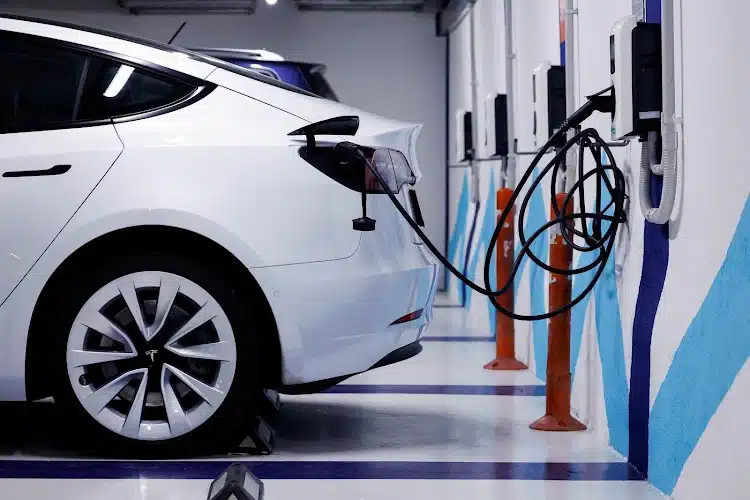
- EV sales increased to 19 percent across EU and Norway.
- EU emission policies pushing automakers to produce more affordable electric vehicles.
The average price of electric vehicles in Europe declined in 2025 for the first time in four years, helping to drive increased sales across the region, a new report released on Thursday, March 12, has revealed.
EDITOR’S PICKS
- Governor Ahmadu Fintiri Defects To APC As Atiku’s Son Refuses To Dump PDP
- Should Governors Have To Join Ruling Party for ‘Greater Federal Support’?
- FEDSA National Pays Courtesy Visit to Lekki LCDA Chairman, Applauds Free JAMB Initiative
EKO HOT BLOG reports that the development comes as the European Union prepares to debate proposals that could weaken climate targets for car manufacturers, including a planned ban on new petrol and diesel vehicles by 2035.
According to a report by clean transport advocacy group Transport & Environment, electric vehicles accounted for about 19 per cent of all new cars sold across the European Union and Norway in 2025.
The figure marked a significant rise from the roughly 14 per cent recorded in 2024, reflecting growing demand for electric vehicles across the region.
The organisation said the increase was partly driven by a reduction in the average cost of electric cars.
Its analysis showed that the average price of electric vehicles across the bloc fell by about four per cent, equivalent to €1,800, bringing the average cost down to around €42,700 ($49,390).
The decline was largely attributed to the introduction of smaller and more affordable electric car models into the market.
Transport & Environment credited the European Union’s emission reduction policies for pushing car manufacturers to make electric vehicles more accessible to consumers.
The group noted that strict carbon dioxide emission targets had forced manufacturers to expand their electric vehicle offerings and compete more aggressively on pricing.
“Even if the automotive industry doesn’t like to admit it, the EU’s CO2 standards have enabled hundreds of thousands of Europeans to access more affordable electric cars,” the organisation stated.
Under the European Union’s regulations, automakers risk paying significant fines if they fail to meet prescribed emissions targets.
The report further indicated that car manufacturers have either met or are on track to meet the 2025 to 2027 emission targets, which represent the first milestone towards the bloc’s long term climate goals.
The development comes despite concerns raised by the automotive industry that the region’s climate policies may be too ambitious.
European Union environment ministers are expected to meet next week to deliberate on a proposal that could relax the planned 2035 ban on the sale of new petrol and diesel vehicles.
Several automakers have argued that the target may be difficult to achieve under current market conditions.
One of the major barriers to electric vehicle adoption has historically been the higher upfront cost compared with traditional combustion engine cars.
However, Transport & Environment said price parity between electric vehicles and conventional cars could be achieved by 2030 if the European Union maintains its current emission policies.
The organisation warned that weakening the targets could slow down progress in making electric vehicles widely affordable.
The issue is expected to dominate discussions in Brussels in the coming weeks.
Under proposals presented in December, car manufacturers would be required to cut exhaust emissions from new vehicles by 90 per cent from 2021 levels by 2035, instead of the previously planned 100 per cent reduction.
The proposals also include “super credits” for small and affordable electric vehicles manufactured within the European Union, a mechanism designed to make it easier for automakers to meet emission targets.
However, the region’s automotive lobby, the European Automobile Manufacturers’ Association, has called for additional concessions.
The association is pushing for the intermediate 2030 emissions target to be spread over five years instead of the three years proposed by the European Commission, among other policy adjustments.