
The National Assembly took landmark steps on Thursday toward establishing state police. The House of Representatives approved the State Police Bill with overwhelming support during plenary, with 289 lawmakers voting in favour, in a session presided over by Speaker Tajudeen Abbas.
The Senate also advanced a bill seeking to establish state police and devolve policing powers to state governments, passing it through second reading, with the legislation subsequently referred by Senate President Godswill Akpabio to the Senate Ad-hoc Committee on the Review of the 1999 Constitution for further scrutiny.
EDITOR’S PICKS
The bill enjoys broad support among senators across political divides. Senate President Akpabio noted that a final vote would be conducted at a future sitting.
But make no mistake: state police does not come into existence the moment both chambers vote and President Bola Tinubu assents to it. The passage of the bill is only the first step in a longer constitutional process. Several more hurdles stand between Thursday’s votes and any officer wearing a state police badge.
Why it is a constitutional amendment, not an ordinary bill
The bill is titled “A Bill for an Act to Alter the Constitution of the Federal Republic of Nigeria, 1999 to Provide for the Establishment of State Police and for Related Matters (Sixth Alteration) Bill, 2026.”
That framing matters. Because policing is currently an exclusive federal matter under the 1999 Constitution, establishing state police requires altering the constitution itself, not simply passing a law. That distinction makes the process considerably more demanding.
The two-thirds threshold at the National Assembly
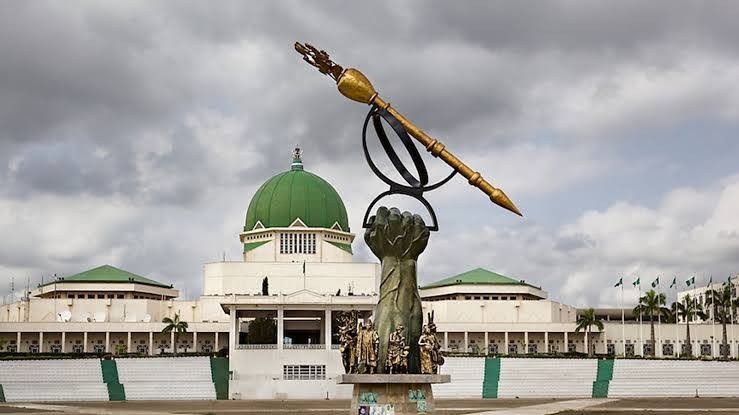
Under Section 9(2) of the 1999 Constitution, for a constitutional alteration to be valid, it must be passed by votes of not less than two-thirds majority of all members of each House of the National Assembly.
The House cleared that bar on Thursday. The Senate must do the same when it moves to a final vote after its committee completes its work.
The test at 36 state assemblies
Once both chambers of the National Assembly pass the bill with the required majority, it does not go straight to the President. The bill must first be transmitted to the 36 State Houses of Assembly for approval by at least two-thirds, meaning at least 24 state assemblies must individually pass resolutions endorsing the constitutional alteration.

Senate Leader Opeyemi Bamidele expressed confidence that the proposal would receive the required support, noting that many governors had already endorsed the initiative. Still, getting 24 separate legislative chambers to vote, within a reasonable timeframe and without political reversals, is no small undertaking.
Presidential assent
After approval by at least two-thirds of the state Houses of Assembly, the bill must subsequently receive presidential assent.
Bamidele noted that “the President is also with us and cannot wait for the bill to come for assent.” President Tinubu’s support is therefore not in doubt, but it remains a formal and necessary step.
Implementation is a separate question entirely
Even after assent, the constitutional amendment only creates the legal framework for state police to exist.
Funding arrangements, recruitment structures, state-level legislation, and the relationship between state and federal police commands would all need to be worked out separately, potentially through additional legislation or executive action by individual state governments.
The National Assembly has said it aims to complete the amendment and secure presidential assent before the commencement of political campaigns for the next general election. That timeline is ambitious.
FURTHER READING
For now, Thursday’s votes are a significant political signal, but Nigerians looking to see state police on the ground still have a long road ahead.
Philip Ibitoye is a Special Correspondent with EKO HOT BLOG. Click here to find daily analysis and critical insight on trending issues in Lagos and other parts of Nigeria.
Click to watch the video of the week below: