- He emphasized that a project of this scale requires careful and detailed assessment before any approval can be granted
- Akume further revealed that preliminary feedback had already been received from security agencies
- In addition, the panel is expected to evaluate the project’s financing structure
Nigeria’s Federal Government on Thursday set up a multi-agency committee to examine the viability of a proposed $200bn gas-powered high-speed rail network expected to stretch roughly 4,000 kilometres nationwide.
The Secretary to the Government of the Federation, George Akume, inaugurated the committee in Abuja, stating that its responsibility is to thoroughly review a proposal submitted by a consortium led by De-Sadel Nigeria Limited in collaboration with China Liancai Petroleum Investment Holdings Limited, Eko Hot Blog gathered.
EDITOR’S PICK
- Easter Celebration: Sanwo-Olu Encourages Love, Sacrifice, Coexistence
- Enough Is Enough Defend Yourselves’ – CAN Urges Northern Christians
- NLC Orders Street Protests Over Minimum Wage
According to Akume, the ambitious project is designed to connect key commercial hubs such as Lagos, Abuja, Kano, and Port Harcourt. He explained that it is structured as a phased development plan combining rail construction with gas production, electricity generation, and transmission systems.
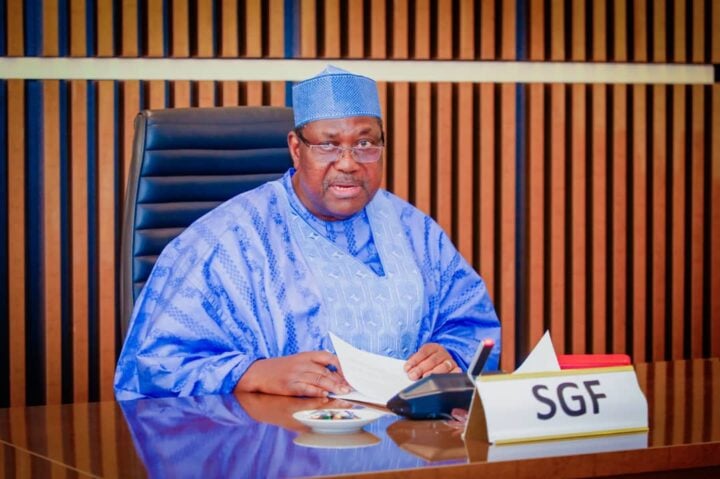
He emphasized that a project of this scale requires careful and detailed assessment before any approval can be granted, noting that it must meet national priorities and comply with existing laws and regulations.
Akume further revealed that preliminary feedback had already been received from security agencies, financial intelligence bodies, and regulatory institutions, highlighting the importance of a coordinated and comprehensive evaluation process.
The committee’s mandate includes verifying the financial capacity of the promoters by confirming proof of funds and reviewing all submitted financial documentation. It will also assess the technical feasibility, legal framework, and environmental impact of the proposed development.
In addition, the panel is expected to evaluate the project’s financing structure, the qualifications of its technical partners, adherence to regulatory standards, and any potential security or financial risks.
Akume stated that the committee will consolidate findings from various agencies to identify possible threats related to national security, financial crimes, or reputational concerns, and recommend safeguards where necessary.
He added that the group will also review governance structures tied to the proposed public-private partnership arrangement.
The committee is ultimately tasked with producing a fact-based, objective report that will guide the Federal Government in deciding whether to proceed with the project.
FURTHER READING