- EDITOR’S PICKS
- What Is Hantavirus?
- What Triggered Global Concern?
- What Authorities Know So Far
- Why Argentina Has Become Central to the Investigation
- Why Cruise Ship Outbreaks Raise Unique Concerns
- Why Scientists Are Watching the Andes Strain Closely
- Symptoms Health Officials Are Monitoring
- How Hantavirus Usually Spreads
- What Makes The MV Hondius Hantavirus Outbreak Different From Previous Cases
- What the WHO and CDC Are Saying
- FURTHER READING
The outbreak has drawn international attention not only because of the reported fatalities, but because health agencies across multiple countries are now simultaneously tracing contacts, monitoring potentially exposed travelers, and investigating whether limited interpersonal spread may have occurred during or after the voyage.
EDITOR’S PICKS
- JAMB Delists 23 CBT Centres, Warns 89 After Mock UTME Review
- NASA Astronauts Return to Earth After First Human Trip to the Moon in 50 Years
- INEC Shifts Nationwide Voter Revalidation Until After 2027 General Election
While officials continue to stress that the overall public risk remains low, epidemiologists say the situation stands out because hantavirus outbreaks are usually isolated, environmentally linked, and geographically contained.
Investigators are still working to determine whether infections originated entirely from rodent exposure, close interpersonal contact, or a combination of both.
However, in this report, we will delve deeper into everything that an individual should know.
What Is Hantavirus?
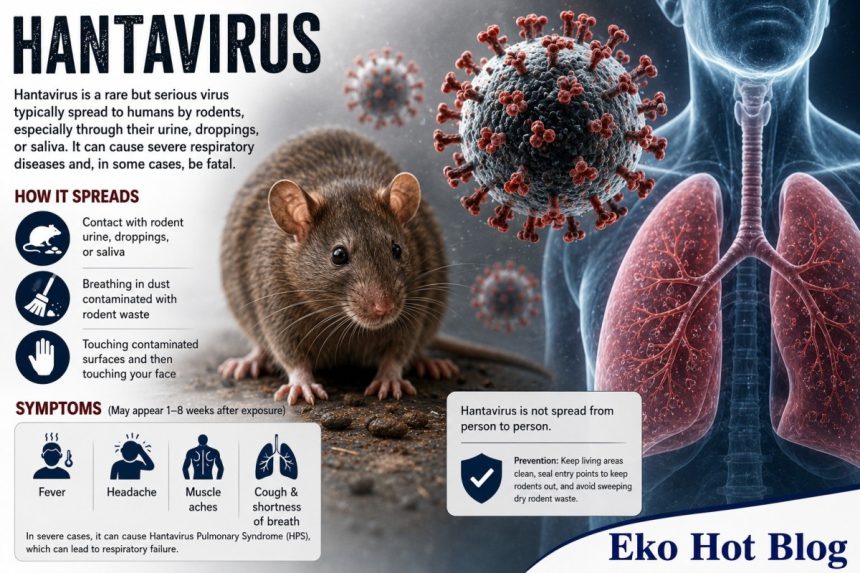
Hantavirus is a rare but potentially deadly virus primarily spread to humans through contact with infected rodents, especially their urine, droppings, or saliva. People can become infected by inhaling contaminated particles in the air, touching contaminated surfaces, or in rare cases, through rodent bites.
The virus belongs to a family of viruses carried by different rodent species around the world. In the Americas, hantavirus infections are most commonly linked to Hantavirus Pulmonary Syndrome (HPS), a severe respiratory disease that can rapidly become life-threatening.
Early symptoms often resemble the flu and may include:
- Fever
- Muscle aches
- Fatigue
- Headaches
- Nausea and vomiting
What Triggered Global Concern?
Health concerns escalated after passengers aboard the MV Hondius reportedly began developing severe flu-like symptoms during an Atlantic expedition voyage that departed from Ushuaia, Argentina, in April.
The outbreak became significantly more concerning after:
- Multiple passengers reportedly developed respiratory complications
- At least three deaths were linked to the outbreak
- Travelers from several countries disembarked before authorities fully understood the situation
- The suspected virus strain was identified as the Andes variant
- Several countries launched contact-tracing operations simultaneously
That level of coordinated international monitoring is unusual for hantavirus outbreaks, which historically tend to involve isolated clusters rather than cross-border investigations.
The involvement of the Andes strain has also intensified scrutiny because it remains one of the only hantavirus variants ever linked to limited human-to-human transmission under specific conditions.
What Authorities Know So Far
According to international monitoring reports and public health updates:
- At least five infections have been confirmed
- Several suspected cases remain under investigation
- More than ten countries are monitoring potentially exposed individuals
- Some passengers reportedly required medical evacuation
- The vessel itself remained under health supervision during parts of the investigation
Authorities are still attempting to establish the precise origin of exposure.
Current investigations are focusing heavily on southern Argentina, where hantavirus activity has historically been recorded and where some passengers reportedly visited remote outdoor locations before boarding the vessel.
Health experts say the early phase of the outbreak became especially difficult to track because passengers dispersed internationally before the full scale of the situation became clear.
Why Argentina Has Become Central to the Investigation
Investigators believe some infected passengers may have contracted the virus before boarding the ship.
Areas receiving particular attention include:
- Wildlife excursion sites
- Hiking regions in Patagonia
- Rodent-prone tourist environments
- Remote areas around Ushuaia and southern Argentina
Recent reports have also pointed to increased hantavirus activity within parts of Argentina itself.
Authorities there have reportedly expanded rodent surveillance operations, increased environmental testing, intensified monitoring in southern provinces and begun tracing possible tourism-related exposure routes.
These developments have strengthened suspicions that the outbreak may initially have originated from land-based environmental exposure before potentially spreading among travelers in close proximity.
Why Cruise Ship Outbreaks Raise Unique Concerns
Cruise vessels present unique challenges during infectious disease investigations because passengers often spend extended periods in shared environments before symptoms fully emerge.
Public health experts say expedition-style cruises can become particularly difficult to manage during outbreaks due to:
- Confined shared spaces.
- Close passenger interaction.
- Delayed symptom recognition.
- International passenger movement.
- Limited onboard medical capacity.
- The speed at which travelers disperse globally after disembarkation.
Unlike localized outbreaks that remain confined to a single region, cruise-related incidents can rapidly evolve into multinational investigations within days.
The MV Hondius case reflects how modern travel can complicate containment efforts even when dealing with relatively rare viruses.
Health agencies in these countries are conducting contact tracing, monitoring possible exposures, and advising potentially affected individuals to watch for symptoms.
Why Scientists Are Watching the Andes Strain Closely
Most hantaviruses spread from rodents to humans and rarely move beyond isolated cases.
The Andes strain is different because previous outbreaks have shown evidence suggesting limited person-to-person transmission under certain circumstances.
Researchers believe transmission may occur through:
- Prolonged close personal contact.
- Exposure to bodily fluids.
- Shared confined environments.
- Caregiving situations involving infected individuals.
Even so, experts stress that the virus is nowhere near as contagious as highly transmissible respiratory diseases such as COVID-19 or influenza.
Health authorities continue to describe the broader public threat as low.
Still, scientists say any outbreak involving the Andes strain attracts immediate attention because of the unanswered questions surrounding its transmission dynamics.

Symptoms Health Officials Are Monitoring
Early hantavirus symptoms often resemble common viral illnesses, making detection difficult during the initial phase.
Doctors are monitoring for symptoms including:
- Fever
- Muscle pain
- Chills
- Fatigue
- Headaches
- Nausea
- Vomiting
- Dry cough
- Shortness of breath
Medical experts warn that symptoms can worsen rapidly after the early stage of infection.
In severe cases, patients may develop hantavirus pulmonary syndrome (HPS), a dangerous condition that can cause fluid accumulation in the lungs and serious respiratory complications.
There is currently:
• No approved vaccine.
• No universally effective antiviral treatment.
• No guaranteed cure.
Treatment primarily focuses on supportive hospital care, oxygen therapy, respiratory assistance, and intensive monitoring.
Doctors say early medical intervention can significantly improve survival chances.
How Hantavirus Usually Spreads
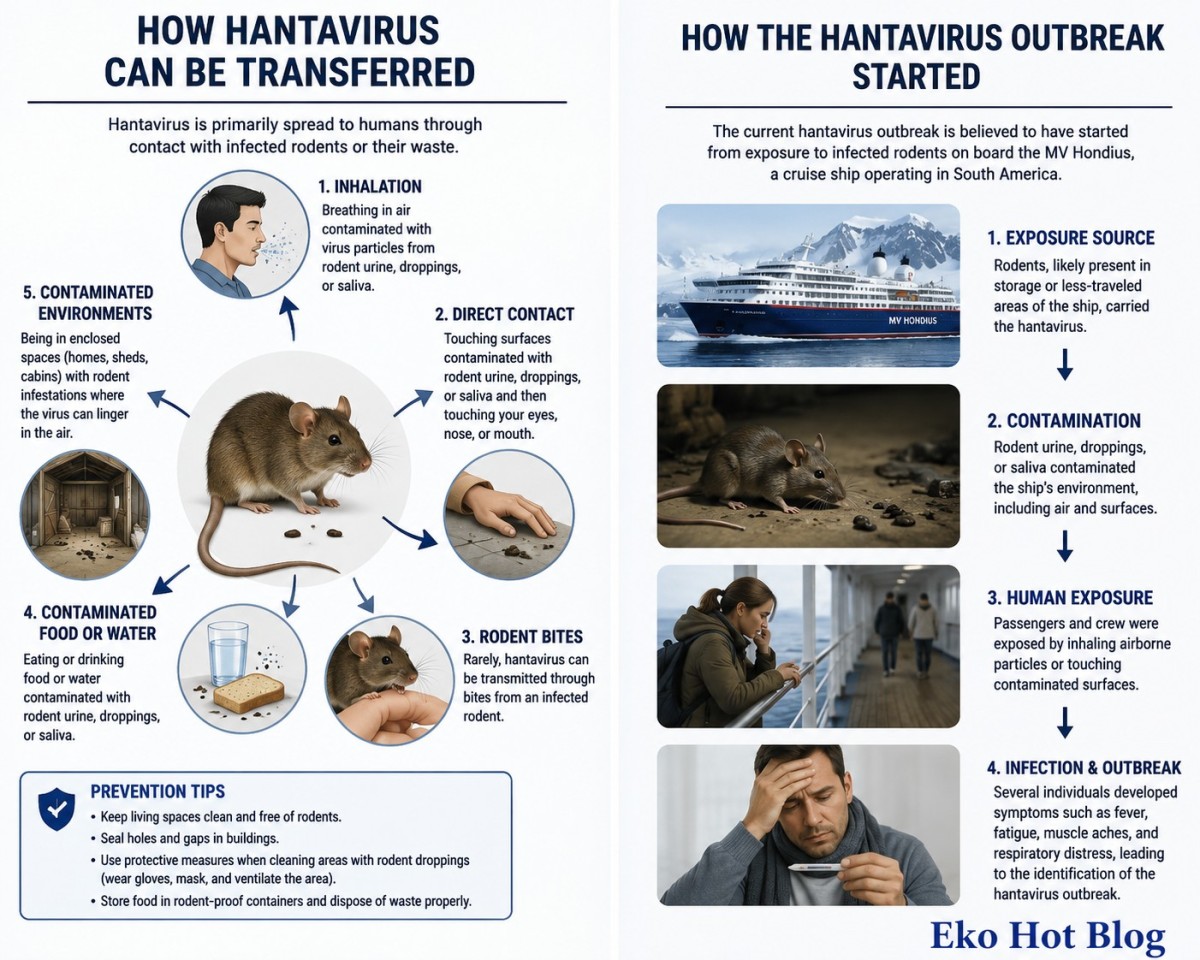
According to health agencies including the CDC, most infections occur through exposure to infected rodents or contaminated environments.
Common transmission routes include:
- Inhaling contaminated dust particles
- Exposure to rodent urine or droppings
- Cleaning enclosed rodent-infested spaces
- Touching contaminated surfaces
- Rare rodent bites or scratches
Human-to-human transmission remains extremely uncommon and is primarily associated with the Andes strain.
What Makes The MV Hondius Hantavirus Outbreak Different From Previous Cases
Several factors have made the MV Hondius outbreak stand out internationally.
These include:
- The involvement of an international expedition cruise ship.
- Exposure concerns spanning multiple countries.
- Suspected person-to-person transmission.
- Multiple fatalities within a travel setting.
- Passenger movement before full detection
- Simultaneous multinational contact-tracing operations.
Public health specialists say outbreaks involving internationally mobile travelers are especially difficult to contain during the earliest stages of investigation.
The combination of rare viral transmission concerns and international travel has made the incident particularly sensitive for health authorities.
What the WHO and CDC Are Saying
The World Health Organization and national public health agencies have attempted to prevent unnecessary panic while continuing active investigations.
Current assessments suggest:
• The outbreak remains limited.
• Widespread community transmission has not been detected.
• The virus spreads far less efficiently than pandemic respiratory viruses.
• Most infections still appear linked to environmental exposure.
However, health officials are continuing to monitor the situation closely because the Andes strain occupies a rare category within hantaviruses due to previous evidence of limited human-to-human transmission.
Authorities say the international response is largely precautionary but necessary given the unusual characteristics of the outbreak.
For epidemiologists, the MV Hondius incident represents the kind of outbreak that rapidly attracts worldwide attention: a rare virus, possible human transmission, fatalities, and international travel intersecting before authorities could fully assess the threat.
For now, health agencies continue to emphasize that the outbreak does not represent a pandemic-level event.
Still, the global response surrounding the MV Hondius outbreak demonstrates how even relatively rare viruses can trigger widespread concern when uncertainty, international movement, and severe illness converge at the same time.