- He concluded by urging Nigerians to take responsibility for strengthening party structures
- Gambari also criticised the ease with which politicians switch parties without consequences
- He also cited the experiences of the National Party of Nigeria and the Peoples Democratic Party
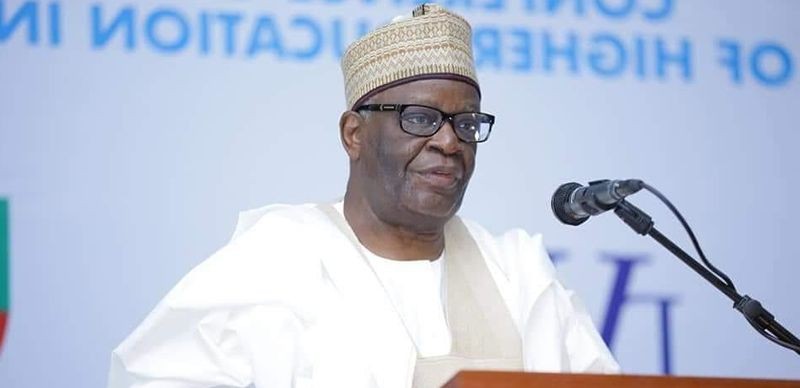
Former Chief of Staff to President Muhammadu Buhari, Prof. Ibrahim Gambari, has dismissed fears that Nigeria is sliding into a one-party state, insisting that history shows such ambitions have never endured in the country.
Eko Hot Blog reports that Gambari, while speaking with journalists in Abuja on Wednesday, argued that Nigeria’s real democratic challenge is not the dominance of one political party but the persistent weakness of political parties themselves, which he said lack ideology, internal democracy and genuine grassroots participation.
EDITOR’S PICK
- Akande at 87: Adewole Hails Elder Statesman
- Lagos Assembly Approves ₦4.44 Trillion Budget for 2026
- NANS Mobilises Nationwide Protest Over Tax Reform Law
The diplomat and scholar, who is the founder and chairman of the Savannah Centre for Diplomacy, Democracy and Development, said repeated attempts to impose dominant-party rule in Nigeria have always collapsed, often creating instability rather than progress.
According to Gambari, political parties in the country largely function as temporary platforms for accessing power, rather than principled institutions anchored on ideas and values.
He recalled how the Northern People’s Congress dominated the First Republic, noting that its influence did not translate into national cohesion or development but instead contributed to political breakdown.
He also cited the experiences of the National Party of Nigeria and the Peoples Democratic Party, both of which at different times projected long-term control of power. “The NPN believed it would rule indefinitely, yet it didn’t last.
The PDP once boasted of governing for 60 years. Where are they today?” he asked, stressing that political ambition and elite rivalry always fracture attempts at one-party dominance.
Gambari warned that Nigeria should learn from its political history before new crises emerge, urging citizens and leaders alike to focus on rebuilding political parties from the ground up.
He lamented the decline of party culture, recalling that in the First Republic, party membership was active and structured, with members holding cards, paying dues and participating in candidate selection. That bond between leaders and followers, he said, has largely disappeared.
The former Foreign Affairs Minister maintained that strong, ideologically driven and well-organised parties are the surest safeguard against any one-party temptation. “Weak parties, not a one-party state, are the real threat to Nigeria’s democracy,” he said, describing many parties today as mere “flags of convenience.”
Gambari also criticised the ease with which politicians switch parties without consequences, noting that ideological differences once made defections significant. He contrasted this with other democracies where elected officials who defect lose their seats and must seek fresh mandates.
He concluded by urging Nigerians to take responsibility for strengthening party structures, warning that continued apathy would only deepen the crisis of representation.
His comments come amid growing concerns over mass defections to the ruling APC, fears the party has repeatedly denied, with President Bola Tinubu and APC leaders insisting there is no agenda to impose a one-party system.
FURTHER READING