- Trump has threatened severe economic consequences against countries that provide support to Iran
- The warning comes amid continuing tensions over the war and disruptions around the Strait of Hormuz
- Iran has maintained that it is open to dialogue but will not surrender to U.S. pressure
U.S. President Donald Trump has warned that countries providing financial, commercial or logistical support to Iran could face severe economic penalties as Washington seeks to bring an end to the conflict involving Iran and Israel.
Eko Hot Blog gathered that Trump issued the warning on Wednesday as the prolonged war continued to disrupt regional stability and global trade.
EDITOR’S PICK
- Osun Election: INEC Reports 94.5% Polling Units Opened on Time
- THEDSF Visits Alara of Ilara Kingdom, Seeks Royal Support for Youth Mobilisation
- Super Falcons Miss Women’s World Cup for First Time
The conflict has resulted in thousands of deaths and raised concerns over the security of the Strait of Hormuz, a crucial shipping route through which a significant share of the world’s oil trade passes.
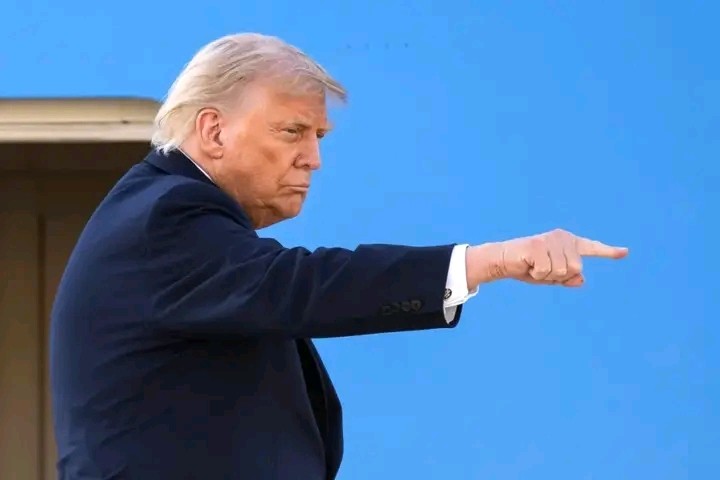
In a social media post, Trump threatened to impose what he described as unprecedented economic pressure on any country whose institutions or businesses provide assistance to Iran.
He warned that governments, companies, airports and financial institutions that offer what he called a “lifeline” to Tehran could face major economic consequences from the United States.
Trump, however, did not identify any specific country or explain the precise measures his administration would introduce against nations that violate the warning.
His latest threat comes as efforts to end the conflict have repeatedly struggled to produce a lasting ceasefire. Two ceasefire arrangements announced in April and June were intended to reduce hostilities and restore normal commercial shipping through the Strait of Hormuz, but both agreements collapsed shortly after being announced.
Although Israel has scaled back its direct involvement in the fighting, tensions remain high across the region, with the conflict continuing to affect international energy markets and trade routes.
The warning also comes against the backdrop of Iran’s long history of surviving American sanctions. Tehran has faced extensive economic restrictions from Washington since the 1979 Islamic Revolution, yet the country has continued to maintain significant trading relationships with several nations.
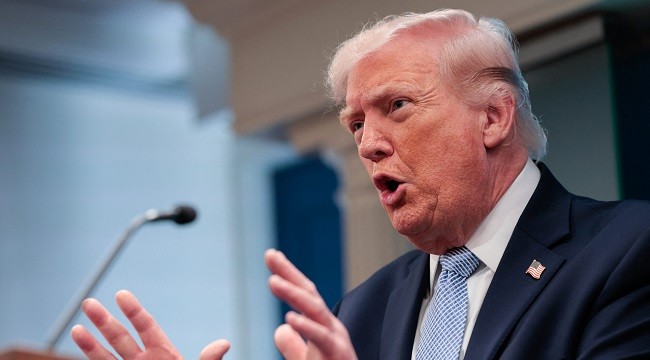
One of the countries that could face pressure from the new U.S. threat is China, which remains a major buyer of Iranian crude oil. Data from analytics firm Kpler showed that China purchased more than 80 per cent of Iran’s exported oil in 2025.
Any attempt by Washington to impose additional economic restrictions on China could, however, create another major confrontation, given the importance of Chinese exports to the U.S. economy and Beijing’s control over supplies of critical minerals, including rare-earth materials.
The United Arab Emirates has already taken steps to distance itself from economic dealings with Iran. On Tuesday, the UAE announced the suspension of trade activities, commercial exchanges and financial transactions with Iran until further notice.
The decision followed a statement from the UAE defence authorities that two missiles launched from Iran had been detected and fell into the sea. Iranian authorities rejected the report as unfounded.
Meanwhile, Iranian officials have continued to signal that Tehran is willing to engage in diplomatic discussions with Washington but remains unwilling to accept what it considers surrender terms.
Mohammad Mokhber, an adviser to Iran’s Supreme Leader, said Iran remained open to dialogue but would not interpret negotiations as capitulation. He also maintained that military pressure and economic sanctions would not force Tehran to abandon its position.
There have also been conflicting messages from Washington regarding whether negotiations with Iran are currently taking place.
Trump said on Tuesday that there were no talks with Tehran. However, his son-in-law and special envoy, Jared Kushner, had indicated a day earlier that discussions remained active and had become more substantial.
A major issue in any potential negotiations is Iran’s nuclear programme. Trump is seeking to secure Iran’s stockpile of highly enriched uranium and negotiate tighter restrictions on the country’s nuclear activities.
The proposed agreement would replace the 2015 nuclear deal from which Trump withdrew the United States in 2018. Iran has consistently maintained that its nuclear programme is intended for peaceful purposes and has rejected accusations that it is pursuing nuclear weapons.
With the conflict continuing to affect regional security, energy supplies and international trade, Trump’s latest warning signals Washington’s readiness to expand economic pressure beyond Iran to countries and organisations seen as supporting Tehran.
FURTHER READING