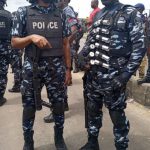
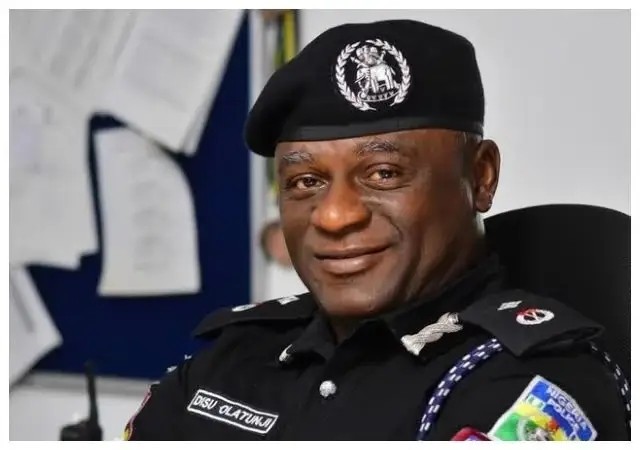
- The Inspector General of Police, Olatunji Disu, has declared a personal and professional resolve to completely outlaw all tinted vehicles across Nigeria, warning that heavily darkened windows have become a major catalyst for violent crimes.
- Nigerian Bar Association President, Afam Osigwe (SAN), has fiercely opposed the renewal and commercialisation of tinted glass permits, condemning the police’s use of private companies to extract recurring fees from motorists.
- Following a high-level meeting in Abuja, IGP Disu formally aligned with the NBA on policing reforms, promising to dismantle illegal “black markets in suretyship” where stations force suspects to buy bail using senior civil servants.
The Inspector General of Police, Olatunji Disu, has initiated a sweeping policy shift targeting heavily tinted vehicles nationwide, identifying them as a primary weapon of choice for kidnappers, armed robbers, and notorious “one-chance” syndicates.
Eko Hot Blog reports that speaking during a high-stakes meeting with leadership from the Nigerian Bar Association (NBA) in Abuja on Tuesday, the police chief asserted that vehicles with fully darkened glasses, including front windscreens, pose an unacceptable risk to national security and directly compromise the physical safety of law enforcement officers on duty.
EDITOR’S PICK
- Hamzat Appoints Obanikoro as Campaign DG Ahead of 2027 Lagos Governorship Race
- Tinubu’s State Police Plan Gains Momentum as Amendment Looms
- Residents Raise Alarm After Two Bodies Found in Lagos Waterway
The security directive follows a sharp pushback from NBA President Afam Osigwe (SAN), who visited the police headquarters to challenge the operational transparency and legal basis of the current tinted permit framework.
While Osigwe clarified that the NBA fully supports police regulation of vehicle tints to maintain visibility, the legal body strongly objects to the administration turning tinted glass approvals into an ongoing revenue-generating venture.
The NBA president questioned why vehicle captured in a centralized national database should require recurring renewals, while heavily criticizing the involvement of private, third-party companies in collecting permit administrative fees on behalf of the police force.
Defending his rigid stance, IGP Disu shared empirical data from his tenure as the Commissioner of Police for the Federal Capital Territory (FCT) to illustrate the dangerous nexus between vehicle tinting and violent crime.
He revealed that during an aggressive campaign against FCT one-chance operators, the command successfully impounded 27 syndicate vehicles, out of which 25 or 26 were heavily tinted to conceal the identities of the criminals and their victims from passersby.
“People are moving around with very, very dark vehicles. There is no way that is acceptable anywhere in the world,” Disu maintained, noting that only persons with verifiable security or medical reasons are legally entitled to exemptions under the law.
Even with an approved permit, he warned that the police will no longer tolerate pitches of total opacity and will roll out nationwide enforcement strategies in due course.
Beyond the vehicular security dispute, the interactive forum served as a battleground for critical human rights reforms, with the NBA president raising the alarm over punitive bail conditions across various police divisions.
Osigwe lamented that many stations now systematically deny suspects their freedom by insisting that sureties must be directors or senior civil servants.
This trend, he explained, has successfully engineered a highly lucrative “black market in suretyship,” where desperate families are forced to pay exorbitant fees to corrupt bureaucrats who act as professional proxies.
Furthermore, Osigwe rebuked law enforcement agencies for continuously resisting statutory facility inspections mandated under the Administration of Criminal Justice Act (ACJA) by judges and magistrates.
In a highly candid response that underscored a mutual commitment to accountability, IGP Disu conceded to the NBA’s structural criticisms regarding custody management.
The police boss admitted that enforcing restrictive, localized bail requirements like demanding civil servant directors is entirely outside official police training and code of conduct manuals.
Reaffirming that bail is free and that any responsible citizen, including women, is legally qualified to stand as a surety, the IGP pledged to send immediate administrative circulars to all commands to eliminate the predatory practice.
He assured the legal community that the police force will actively cooperate with judicial officers to guarantee total compliance with human rights guidelines across all detention facilities.