- I’ll Spend My Last 343 Days in Office Serving Lagos With Commitment – Sanwo-OluSanwo-Olu
- Says Lagos Contributes One-Third of Nigeria’s GDP
- Seeks Special Status for Lagos, Says State Bears National Burden
Governor Babajide Sanwo-Olu of Lagos State has disclosed that he has 343 days left to complete his constitutionally guaranteed eight-year tenure, pledging to remain committed to serving residents with the same passion that marked the beginning of his administration, Eko Hot Blog reports.
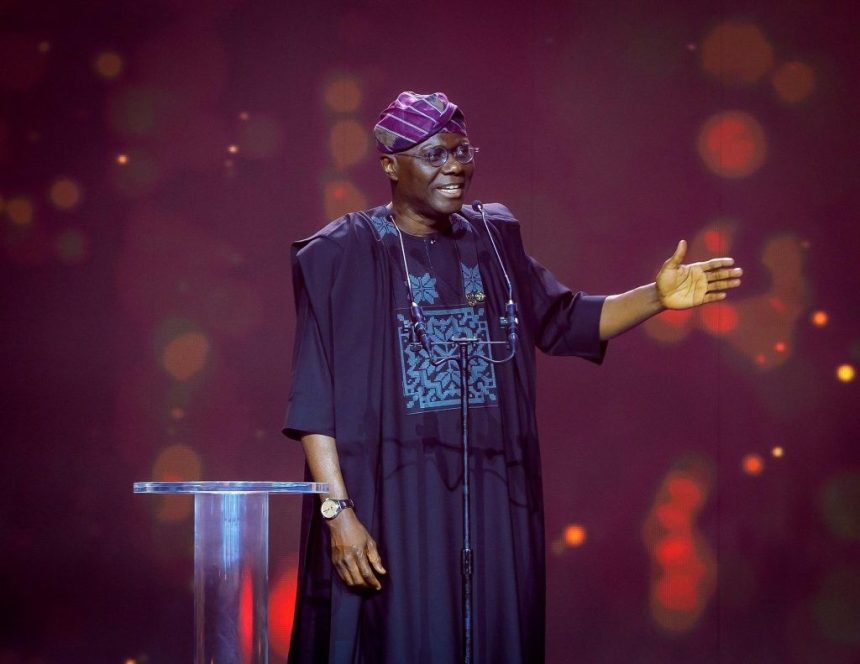
Speaking at the Geo-Economic Optimization Summit 2026 organised by the Citadel School of Government, founded by the Presiding Overseer of the Citadel Global Community Church, Pastor Tunde Bakare, the governor said the reality of his approaching departure from office has strengthened his resolve to finish strongly.
Delivering a keynote address titled “From South-West Nigeria to the Globe: Lagos State as a Geoeconomic Hub,” Sanwo-Olu noted that he had spent 2,579 days in office and intends to maximise the remaining period of his administration.
“Today marks my 2,579th day in the service of Lagosians. By the grace of God, I have 343 days left in office, and I intend to spend every one of them with the same passion, determination and spirit of service with which I began,” he said.
Sanwo-Olu, who assumed office on May 29, 2019, and was re-elected in 2023, is expected to conclude his second and final term on May 29, 2027.
Reflecting on his administration’s achievements, the governor described Lagos as a sub-national economy carrying responsibilities comparable to those of a sovereign nation, noting that the state contributes about one-third of Nigeria’s Gross Domestic Product and ranks as Africa’s second-largest metropolitan economy after Cairo, Egypt.
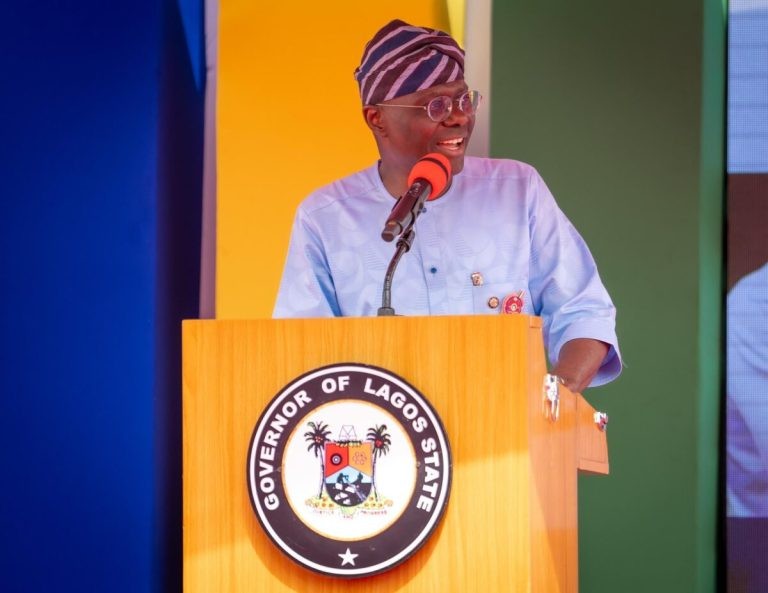
He said Lagos has built a diversified economy driven by sectors such as finance, technology, logistics, trade, creative industries and the blue economy, adding that its Atlantic coastline has historically positioned the state as Nigeria’s gateway to global commerce.
According to him, geoeconomics involves strategically deploying trade, investment, infrastructure, finance, technology and talent to drive prosperity and influence, stressing that Lagos remains central to Africa’s emerging economic narrative.
Sanwo-Olu highlighted major infrastructure projects, including the Lekki Deep Sea Port, the Dangote Refinery, the Lekki Free Zone, the Blue and Red Rail Lines, and ongoing investments in road and power infrastructure, as initiatives reinforcing Lagos’ status as a regional economic powerhouse.
He described the Lekki Deep Sea Port as one of the world’s most modern ports and a critical asset for regional trade under the African Continental Free Trade Area, while commending the Dangote Refinery for helping reposition Nigeria from an importer to a producer and exporter of refined petroleum products.
The governor also pointed to Lagos’ growing reputation as a technology and innovation hub, noting that the city hosts the highest concentration of startups in Africa and has produced more tech unicorns than any other African city.
He further highlighted the state’s cultural influence through Nollywood, Afrobeats, fashion and literature, citing the restoration of the National Theatre and plans for a Lagos Film City in Epe as part of efforts to strengthen the creative economy.
Despite these strides, Sanwo-Olu acknowledged challenges associated with rapid urbanisation and population growth, disclosing that Lagos’ population has risen from less than one million in 1960 to over 24 million, placing significant pressure on housing, transportation and public services.
He renewed his call for a constitutional special status for Lagos, arguing that the state’s strategic importance to the national economy and the burden of hosting millions of Nigerians warrant additional support.
“We continue to press the case for a special status designation for Lagos. We believe Lagos deserves that recognition, and we will continue to seek a constitutional provision to guarantee it,” he said.
Sanwo-Olu expressed confidence in Lagos’ future, stating that investments in mass transit, climate resilience, digital governance and sustainable development would position the state among the world’s leading cities.
“At the end of the 343 days, I will take a bow. But until then, I will continue to serve with the same passion and commitment to ensure Lagos becomes even better and more prosperous than we met it,” he added.
Pastor Tunde Bakare, founder and Board Chairman of the Citadel School of Government, described Lagos as a model for other states, saying its development trajectory demonstrates how strategic leadership, institutional continuity and sound economic planning can transform a sub-national entity into a globally competitive economic hub.